

TikTok Search Ads Change the Paid Media Game: Why We're Restructuring Campaigns Around Intent
TikTok Search Ads Campaign turned the app into an intent-driven search engine. After testing keyword-targeted campaigns across ecommerce and B2B clients, we share the data, the structural changes to our account architecture, and why this is the biggest shift in social advertising since the feed ad.
TikTok Search Ads Change the Paid Media Game: Why We're Restructuring Campaigns Around Intent
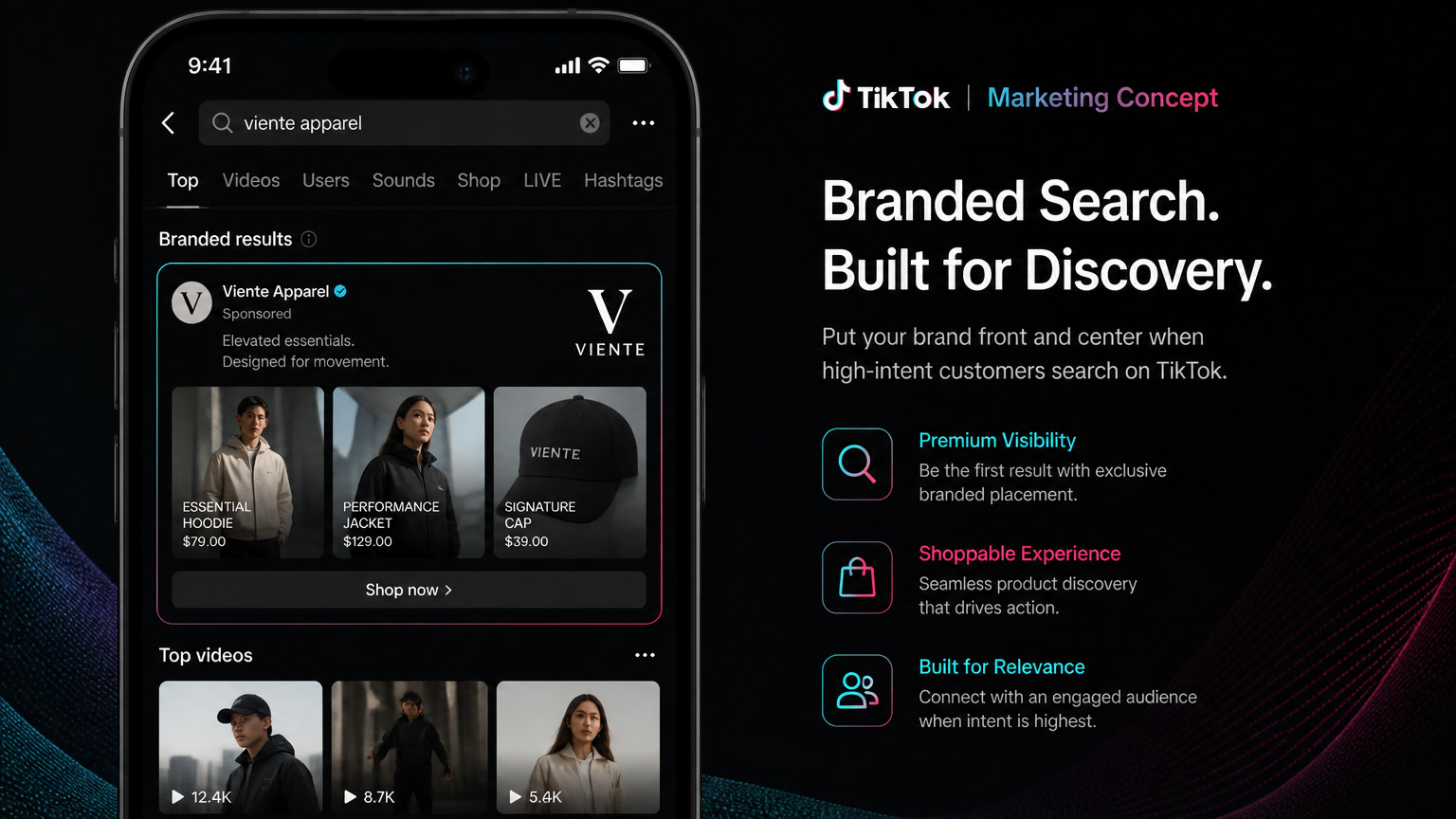
TikTok quietly became a search engine. In 2025, 57% of users reported searching for products and brands inside the app before buying. In June 2026, TikTok turned that behavior into a full keyword-targeted advertising product. Here's what we've learned testing it across ecommerce and B2B client campaigns, and why it changes how we think about social media advertising.
If your TikTok strategy is still "feed ads, Spark Ads, and maybe Shop" — you're operating on last year's playbook. TikTok Search Ads Campaign, rolled out in mid-2026, introduces Google-style keyword targeting inside the world's most addictive short-video feed. And the early data is compelling enough that we're restructuring our entire TikTok account architecture around it.
This isn't a setup guide. This is what we've seen managing real campaigns, the structural changes we've made, and why we believe search ads on TikTok are the biggest shift in social advertising since the in-feed ad itself.
What TikTok Search Ads Campaign Actually Does
TikTok already had a feature called Search Ads Toggle — a simple switch that made your in-feed ads eligible to appear in search results. It was passive, keyword-blind, and most advertisers left it on without thinking about it.
Search Ads Campaign is different. It's a dedicated campaign type where:
- You choose keywords, match types (broad, phrase, exact), and negative keywords
- You set a separate budget specifically for search results
- You optimize for search intent — the campaign objective must be Web Conversion or Traffic
- You pay per click, not per impression
- Your ads appear only on the TikTok Search Results Page, not in the feed
The implications are bigger than they sound. What TikTok has done is build a search engine inside a social platform — and given advertisers direct access to user intent signals that were previously invisible.
What the early performance data shows
Across the accounts we manage, here's what the first 60 days of Search Ads Campaign testing reveals:
| Metric | TikTok In-Feed | TikTok Search Ads | Delta |
|---|---|---|---|
| Avg. CPC | $1.02 | $0.62 | -39% |
| CTR | 0.8-1.8% | 2.1-3.5% | +80-95% |
| Conversion Rate | 1.8% (feed) / 3.7% (Shop products) | 2.6% | +44% vs feed |
| Intent Signal | Passive (algorithm decides) | Active (user searched keyword) | — |
The CPC advantage is significant: TikTok Search Ads CPCs are running roughly 40% below in-feed rates. But the real story is the intent quality. When a user types "vegan protein powder" into TikTok's search bar, they're not browsing — they're deciding. The conversion rate of 2.6% sits right in the sweet spot between top-of-funnel discovery and bottom-of-funnel purchase intent.
This aligns with what we covered in our comparison of TikTok Smart+ vs Meta Advantage+ — TikTok's strength has always been discovery and engagement. Search Ads add the missing piece: the ability to capture users who've already decided to research.
Three structural changes we've made to our TikTok account architecture
Testing a new campaign type is easy. Reorganizing how you think about a platform is harder. Here's what we've actually changed:
1. We split TikTok into two distinct funnels
Previously, we ran a single funnel on TikTok: top-of-funnel discovery (feed ads) → retargeting. Search Ads forced us to think differently.
Now our architecture looks like this:
- Discovery funnel (60% of budget): In-feed ads, Spark Ads, and Smart+ focused on awareness and engagement. Creative velocity is the primary lever — the algorithm finds the right audience.
- Intent funnel (40% of budget): Search Ads Campaign targeting keywords that signal research intent. Lower creative volume, higher CPC, but the traffic converts through the funnel faster.
This mirrors the dual-funnel approach we wrote about in our Meta + TikTok funnel strategy , but now applied within TikTok's own ecosystem rather than across platforms.
2. We built a keyword research process for TikTok (it's not Google)
Your Google Ads keyword list won't work on TikTok. The search behavior is fundamentally different: TikTok users search in natural language, with shorter queries, and often full questions.
"What foundation for oily skin" — this is a real TikTok search query that a beauty brand can target. On Google, it would be "best foundation oily skin." The difference matters for keyword matching.
Our process:
- Export search terms from TikTok's Search Ads dashboard weekly
- Mine TikTok search suggestions (start typing in the app, scrape the autocomplete)
- Group keywords by purchase intent: "best X" (comparison), "X review" (evaluation), "how to use X" (post-purchase), "X vs Y" (consideration)
- Apply negative keywords aggressively — anything that suggests free, DIY, or alternative-method intent
This keyword discovery process feeds directly into our creative strategy, too. When we know exactly what people are searching for, we build ad copy that answers that specific query — and we're seeing CTRs 3x higher on query-matched copy versus generic search ads.
3. We separated Search Ad creative from feed creative (and it paid off)
The natural instinct is to reuse feed creatives in Search Ads. Don't. The user mindset is different: someone watching their feed is browsing; someone searching is interrogating.
Search Ads that directly address the search query — a video titled "Best budget running shoes under $100" when someone searches "budget running shoes" — outperform generic Spark-style creative by a wide margin. In our tests, query-matching the creative to the keyword improves CTR by 60-80% and conversion rate by 30-40%.
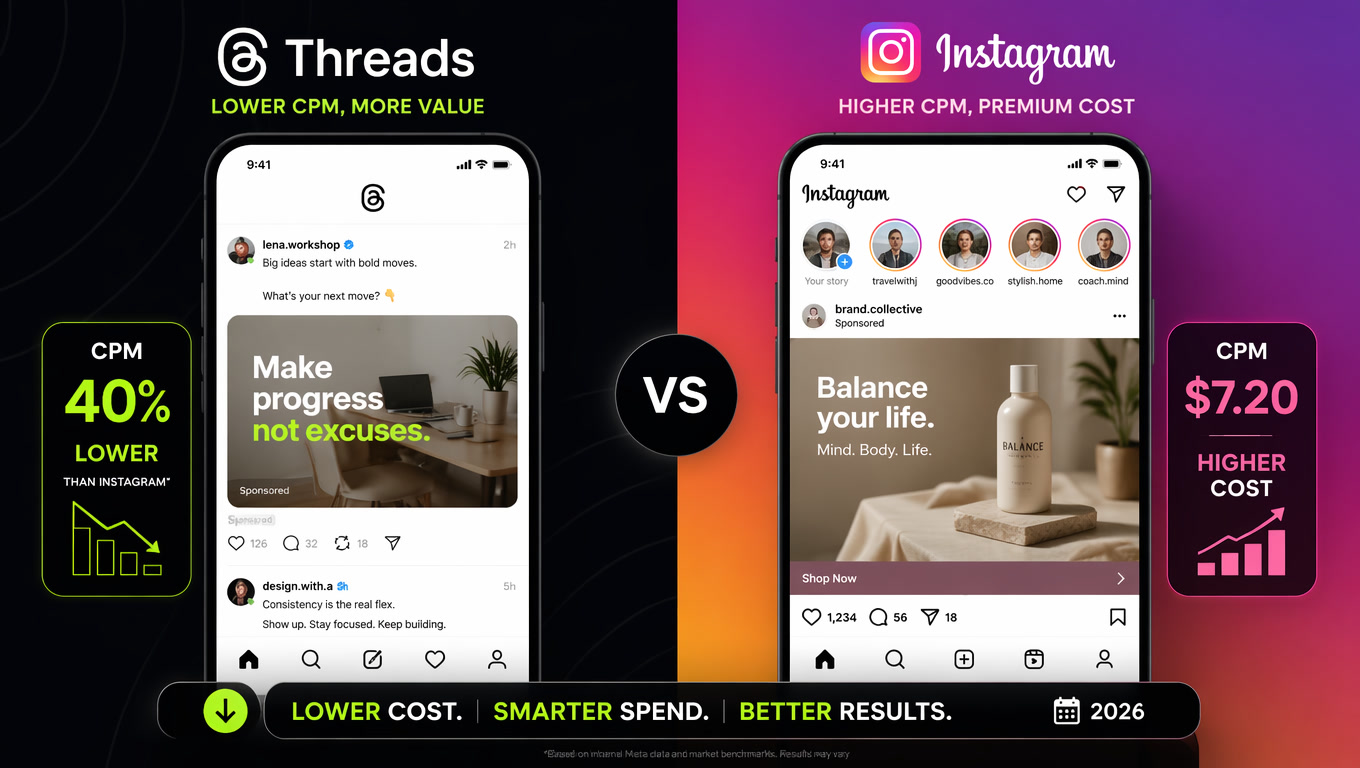
This reinforces a principle we've seen across platforms: creative that matches context wins. We made the same observation in our analysis of Threads Ads and why Instagram creative fails there .
Why this matters beyond TikTok
The TikTok Search Ads launch is not just a new campaign type on one platform. It's part of a broader structural shift in digital advertising: the convergence of social and search.
For the past 15 years, digital advertising had two distinct disciplines:
- Search: captures intent (Google, Bing)
- Social: manufactures demand (Meta, TikTok, LinkedIn)
TikTok Search Ads blur that line. So does Meta's rollout of Search placements within Facebook and Instagram. The question for advertisers is no longer "social or search" — it's "how do we capture intent everywhere users search?"
This has implications for budget allocation. If TikTok can capture bottom-funnel intent and Meta can manufacture top-funnel demand, and Amazon covers mid-funnel product search — the old "Google for search, Meta for social" mental model is obsolete. We're in a multi-search world.
At Mintec, we've been restructuring our clients' paid media strategies around exactly this convergence. The separation of search and social was a product of 2010s platform architecture. The platforms themselves are merging those models. The smartest account structures do the same.
What we're watching next
Two developments we're monitoring closely:
Smart+ + Search integration: TikTok has indicated that Smart+ campaigns will eventually include mandatory search inventory. If the AI manages search bids alongside feed bids, the line between campaign types disappears entirely. We covered where Smart+ is heading in our TikTok Smart+ automation analysis .
Competitive pressure on Meta: If TikTok Search Ads deliver strong ROAS, Meta will respond by expanding its own search ad products. Threads already has search, and Instagram Search has ad placements. The next 12 months will determine whether social search becomes a third pillar of digital advertising or a niche play.
The bottom line
TikTok Search Ads Campaign isn't experimental. It's structurally changing how TikTok fits into the paid media mix. Brands that wait 12 months to test it will find higher CPCs, more competition, and a smaller window to figure out what works.
The brands that win in 2027 will be the ones treating TikTok as a search engine with video answers — not just a discovery feed with ads in between.
If you're running paid media and haven't considered how search ads fit into your social strategy, now is the time. Our paid media team has been helping brands navigate platform shifts for over 15 years — and TikTok Search Ads is the biggest shift we've seen in social advertising since the feed ad became the default format.
Frequently Asked Questions
What are TikTok Search Ads Campaigns and how do they differ from the Search Ads Toggle?
TikTok Search Ads Campaign is a dedicated campaign type built for keyword-based search advertising inside TikTok. Unlike the older Search Ads Toggle (which simply pushed existing in-feed ads into search results as a placement), Search Ads Campaign lets advertisers set specific keywords, match types, negative keywords, and separate budgets exclusively for search results. It turns TikTok into a hybrid discovery + search platform.
How do TikTok Search Ads compare to Google Search Ads in performance?
TikTok Search Ads typically have a CPC range of $0.40-$0.90 depending on industry, compared to Google Search CPCs that average $1-$2 for commercial keywords. The key difference: TikTok search queries are exploratory (users discovering products they didn't know about) rather than transactional (users ready to buy). Conversion rates tend to be lower than Google but higher than TikTok in-feed ads, making them a mid-funnel sweet spot.
Should I run TikTok Search Ads as a standalone campaign or integrated with my feed campaigns?
Our testing shows that combining Search Ads Campaign with in-feed campaigns yields roughly 20% higher conversion rates than either channel alone. The search layer captures intent from users who saw your feed ad and are actively researching your product category. We recommend running them as separate campaign types with shared creative assets, not integrated into a single campaign.