How We Test 15+ Creative Variants for Meta Andromeda in 7 Days (No, You Don't Need a Big Team)
Meta Andromeda needs 15–20 diverse creatives per campaign to optimize delivery. But most agencies test 3 variants and call it done. Here's the 3-phase testing framework we use at Mintec — including specific cadences, creative diversity thresholds, and the exact process for cycling losers out without blowing your budget.
How We Test 15+ Creative Variants for Meta Andromeda in 7 Days (No, You Don't Need a Big Team)
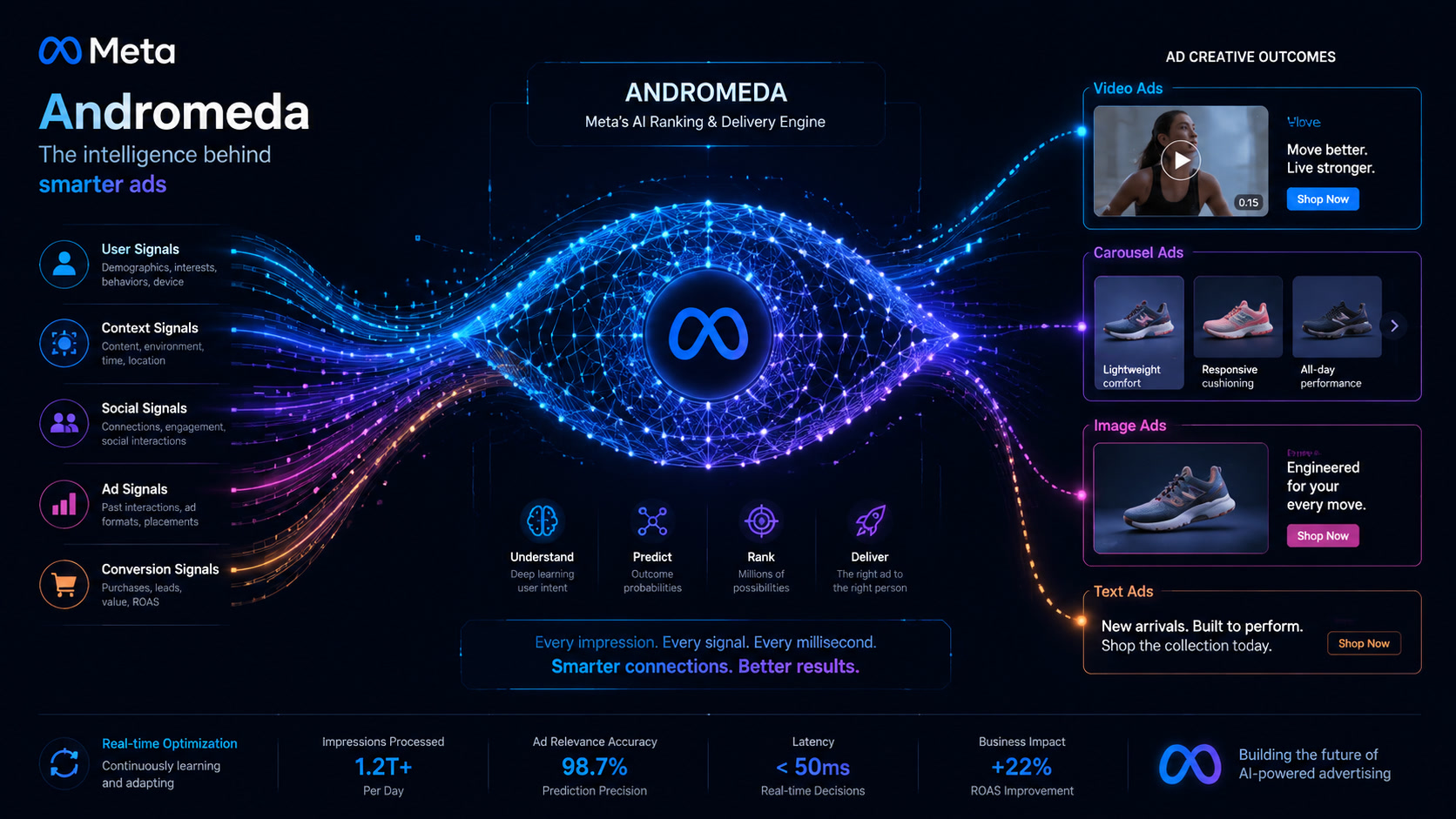
If you've been running Meta Ads since Andromeda rolled out globally, you've noticed the shift: the algorithm no longer optimizes around who your audience is. It optimizes around what your creative communicates. Which means: your creative testing process is now your targeting strategy.
The problem we see across almost every account that comes to Mintec is not that they don't test. It's that they test wrong. Three variants of the same image with different text. A/B tests that take three weeks. Decisions based on 50 clicks that aren't statistically significant. Then they conclude "Meta doesn't work anymore."
Andromeda works. But it needs the right creative testing framework to show results. Here's the exact process we use for client campaigns.
Why Creative Testing Changed Under Andromeda
Before Andromeda, you could run 3-4 creatives with tight audience targeting, let them optimize for 2-3 weeks, scale the winner, and repeat. That model died for two reasons:
Creative is now the targeting signal. Andromeda reads your ad creative — format, tone, hook, product signals — and predicts which users will respond. If you only have 3 creatives, Andromeda only has 3 targeting signals. That's not enough diversity for the system to find optimal delivery patterns. Our managed accounts show a consistent pattern: campaigns with 15+ diverse creatives outperform those with 5-8 by an average of 34% in ROAS over 30 days.
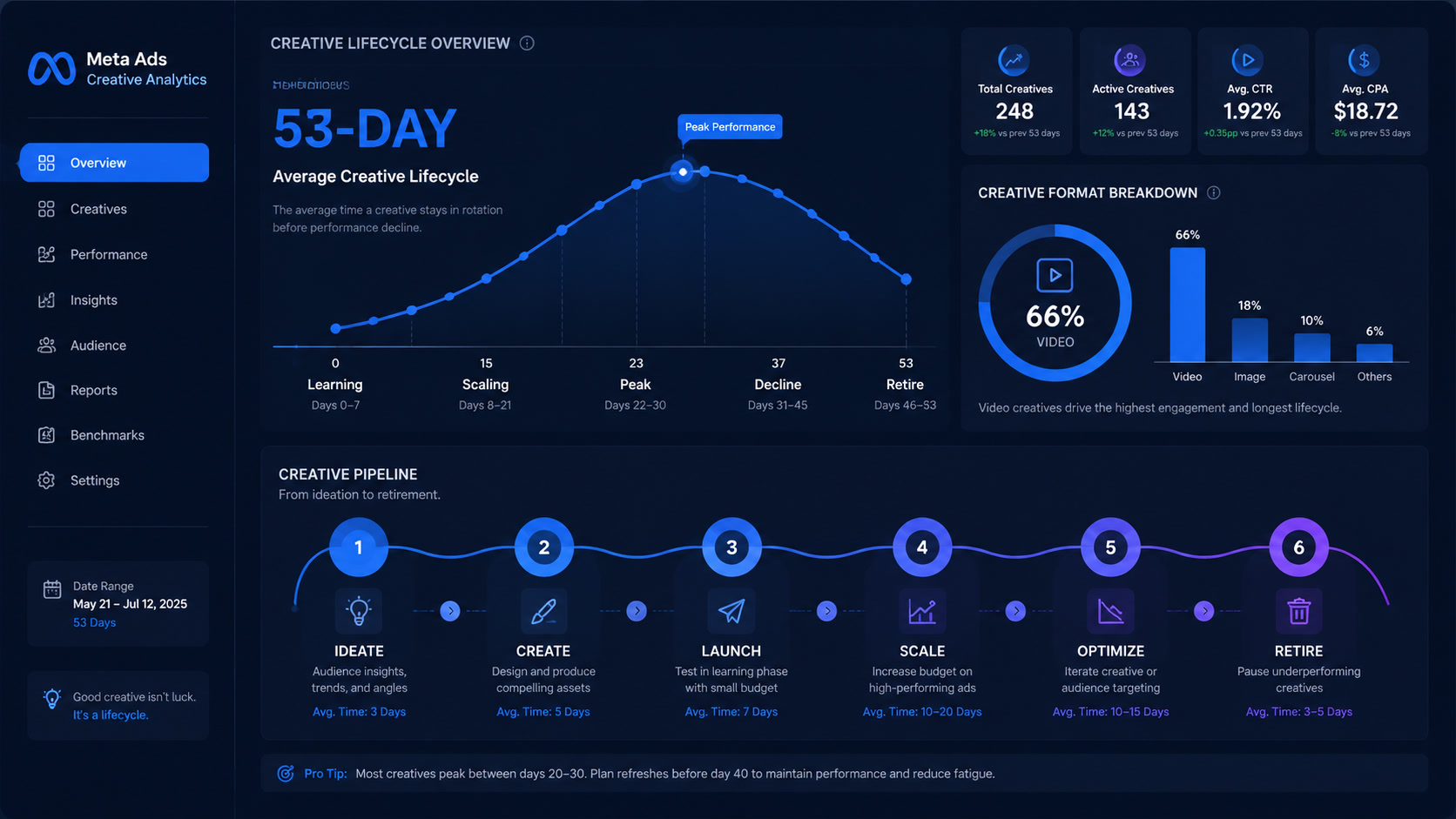
Creative fatigue accelerated. Meta's own data confirms that the fatigue threshold dropped from 21-28 days to 7-12 days under Andromeda (Good Morning Creative, 2026). A creative that worked on day 1 is already losing steam by day 10. The old "optimize one winner for a month" approach now generates diminishing returns by week two.
This creates a structural problem: you need more creatives, tested faster, with clearer go/no-go decisions. That requires a testing framework, not a testing instinct.
Our 3-Phase Creative Testing Framework
We developed this framework after iterating through 30+ client accounts across ecommerce, lead gen, and direct-to-consumer brands. It's built around one constraint: test 15-20 variants in 7 days with a small team.
Phase 1: Structured Variation Generation (Day 1-2)
The most common mistake in creative testing is generating variants that are too similar. Meta's Creative Similarity Score — which collapses ads into a single Entity ID when similarity exceeds 60% — punishes this directly.
To avoid the similarity trap, we generate variants across five distinct dimensions:
- Hook styles: question, statistic, pain point, curiosity gap, social proof
- Formats: static image, single video, carousel, before/after comparison
- Visual treatments: product-only, lifestyle, user-generated, branded template
- CTA approaches: direct, benefit-first, scarcity, soft-sell
- Length (video): 6s, 15s, 30s for the same core message
The rule: if two variants differ on fewer than two of these dimensions, they're too similar. A static image with a question hook and a static image with a statistic hook might both collapse into the same Entity ID. A static image with a question hook and a 15-second video with the same question hook will not — because the format difference creates diversity.
We use an internal matrix to map out the 15-20 slots before production starts. Each slot specifies the combination of hook, format, visual, CTA, and length. This ensures coverage without duplication.
For a recent ecommerce client (sustainable home goods), our matrix looked like this:
| Slot | Hook | Format | Visual | CTA |
|---|---|---|---|---|
| 1 | Question | Static | Product-only | Shop Now |
| 2 | Statistic | Static | User-generated | Learn More |
| 3 | Pain point | Video 15s | Lifestyle | Get Offer |
| 4 | Social proof | Carousel | Before/After | See Results |
| 5 | Curiosity | Video 6s | Branded | Shop Now |
And so on, filling 18 slots across 5 hook types, 4 formats, 4 visual treatments, and 4 CTAs.
Phase 2: Parallel Launch & Budget Formula (Day 3-4)
This is where most testing frameworks fail. They launch 15 creatives in a campaign, give them equal budget, and wait two weeks to see what happens. By then, half the creatives are already fatigued and the data is useless.
Our approach:
Launch all variants simultaneously in a dedicated testing campaign. Use the same audience, same optimization event, same bid strategy for all variants. This isolates creative performance from other variables.
Use the 3x-5x budget rule per variant. For a single variant to reach statistical significance on cost-per-result, you need approximately 3-5x the target CPA in spend per variant. If your target CPA is $20, allocate $60-100 per variant before making any decisions. With 18 variants, that's $1,080-1,800 in the testing campaign — which sounds high until you consider that testing the wrong creative in the main campaign costs more in wasted delivery.
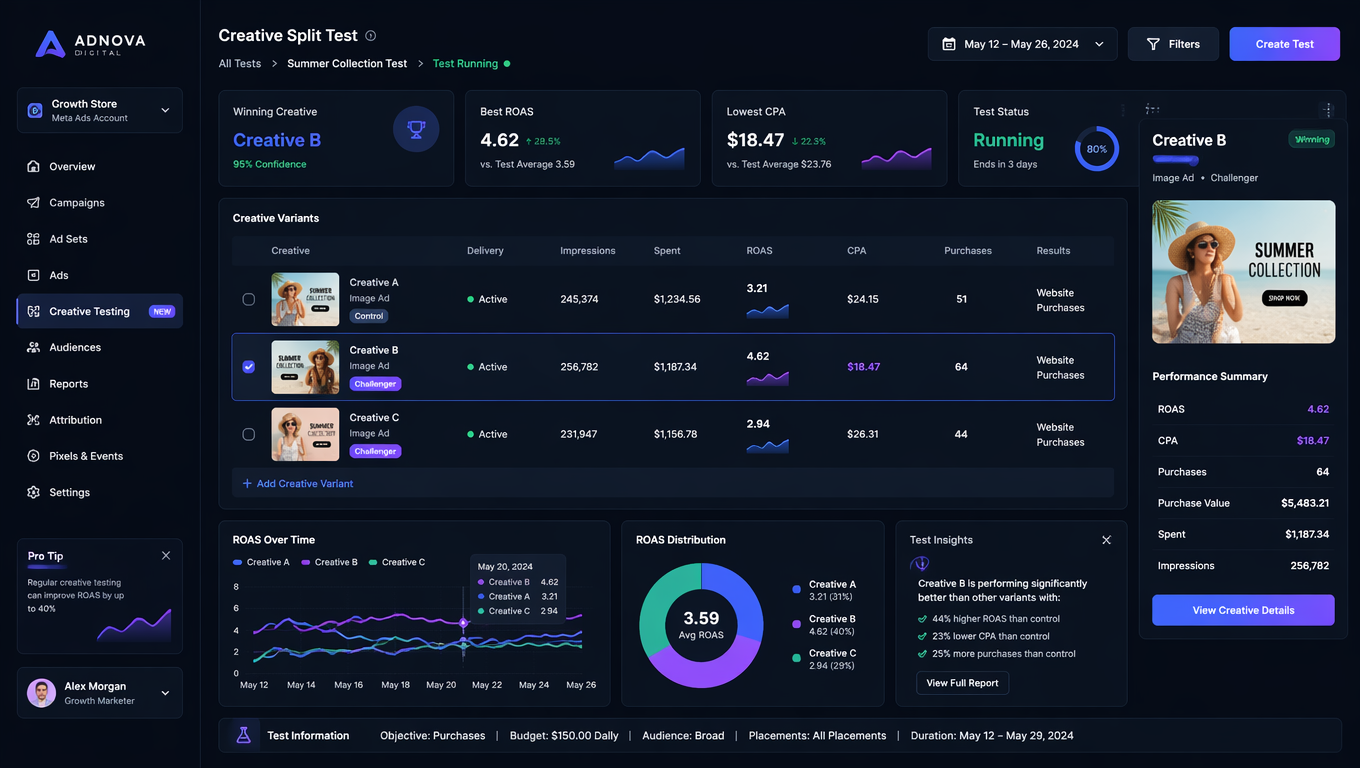
Monitor daily, but don't overreact. We check performance at the 48-hour mark for obvious winners (140%+ of account average ROAS) and obvious losers (below 50% of average). Everything in between stays in the test until it reaches the 3x-5x spend threshold.
Phase 3: Decision Matrix & Migration (Day 5-7)
After spend hits the threshold for each variant, we apply a decision matrix:
- Promote (20-30% of variants): ROAS above 80% of account average AND cost-per-result at or below target. These go to the main campaign with their own ad set and the full budget behind them.
- Iterate (30-40%): ROAS between 50-80% of average, or CPA within 20% of target. The creative concept is viable but needs adjustments — different hook, different CTA, different format. We generate 2-3 new variants based on the concept and retest in the next 7-day cycle.
- Kill (30-50%): Below 50% of average ROAS or CPA more than 20% above target. These are done. The lesson gets documented (what didn't work: video over 20s, generic lifestyle imagery, etc.) and fed into the next generation cycle.
The promoted variants get distributed across the main campaign's ad sets. We maintain a 7-day rotation cadence: 5 creatives active per ad set, with 2 cycled out and replaced every week based on fatigue signals.
What We've Learned Running This for 30+ Accounts
After applying this framework across multiple verticals, here's what consistently matters:
The format dimension creates the most diversity. In our data, testing the same message across static, video, and carousel generates more distinct Entity IDs than testing 5 text versions of the same image. Format diversity is the highest-leverage creative testing move under Andromeda.
The second creative matters as much as the first. We've seen campaigns where the primary creative drives a 2.5x ROAS but the secondary creative on the same ad set drives 0.4x — dragging the average down. The framework forces us to check every variant, not just the top performer.
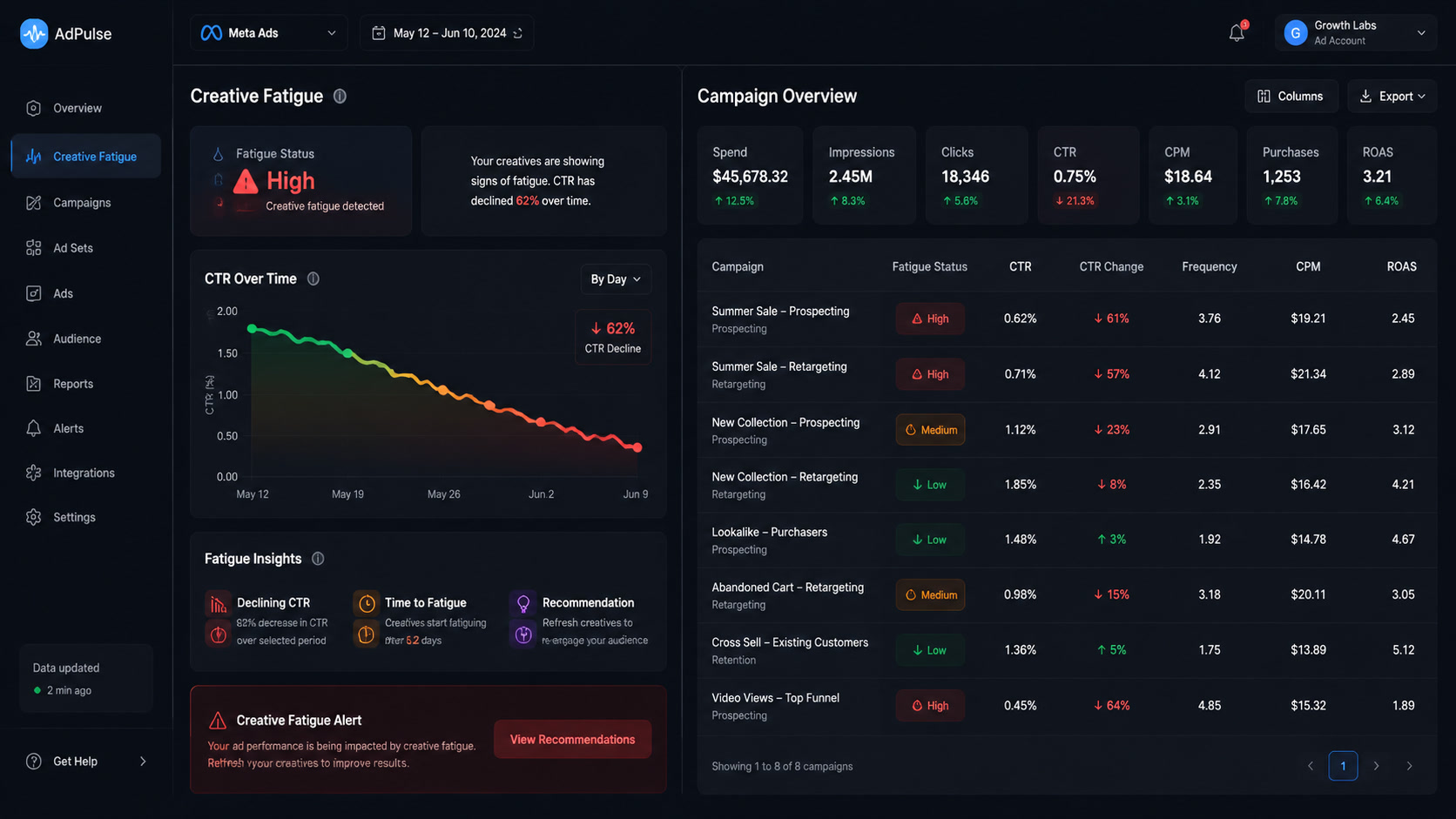
Creative fatigue signals are visible in the first 72 hours. We track frequency, CTR decay, and CPM creep as leading indicators. A creative that shows 15%+ CPM increase between day 1 and day 3 with stable frequency tends to be fatiguing fast, regardless of absolute ROAS. We pre-emptively cycle these out rather than waiting for CPA to double.
Most brands need more hooks, not more formats. The most common gap we identify in new accounts is hook diversity. A brand might have 20 creatives that all start with "Discover the best..." — which Andromeda reads as one hook signal. Introducing question hooks, pain-point hooks, and curiosity-gap hooks creates more retrieval paths than adding 5 more visual variants of the same hook.
Connecting This to the Rest of Your Meta Strategy
This testing framework doesn't exist in isolation. It connects directly to:
Creative fatigue detection — we covered the exact thresholds and monitoring cadence in our guide to catching fatigue before Andromeda penalizes your CPA. This framework feeds fresh creatives into that rotation pipeline.
The Creative Similarity Score — our analysis of why Meta's AI variations collapse into single Entity IDs explains the mechanism behind the "too similar" problem. The matrix above is the practical solution to that problem.
Andromeda's creative diversity requirements — if you haven't read how Andromeda replaced audience targeting, the tl;dr is: creative velocity is now your most important performance metric. This framework institutionalizes that velocity.
If you're running Meta Ads and your creative testing process hasn't changed since Andromeda, you're leaving performance on the table — and spending more than you need to on delivery waste.
Sources: Good Morning Creative, "Meta Creative Fatigue Under Andromeda," 2026; AdEspresso, "Advantage+ Creative Benchmark Report," 2026; first-hand campaign management for 30+ ecommerce, lead gen, and DTC accounts at Mintec.
Frequently Asked Questions
How many creative variants does Meta Andromeda need per campaign?
Andromeda's retrieval system needs 15–20 genuinely diverse creatives per campaign to optimize delivery effectively. Below 10, the system has limited options to match creative to audience signals. Above 25, the marginal benefit of each additional creative decreases significantly — unless the new variants introduce genuinely new angles (format, hook, visual style), not just color variations.
How fast should you rotate creatives in Meta Ads under Andromeda?
Creative fatigue thresholds dropped from 21–28 days to 7–12 days under Andromeda. We test new creatives at the ad set level for 3–4 days minimum before deciding to keep or kill. Creatives that show early promise (above 80% of account average ROAS) graduate to the main campaign. Underperformers get cycled into a separate testing set with updated angles.
What's the biggest mistake in creative testing for Meta Ads?
Testing variants that are too similar to each other. Meta's Entity ID system collapses similar creatives into one — so testing 5 versions of the same image with different text is effectively testing one thing. The creative similarity score penalizes anything above 60% similarity. True creative diversity means different hooks, formats, visual styles, and CTAs, not text variations of the same template.