AI Search Now Runs on Three Separate Citation Rulebooks — Here's the Data
New CiteLens study of 320 buyer queries reveals Google AI Mode and Perplexity cite 89–93% from Google's top-10 organic results, while ChatGPT only pulls 30% from the same pool. Claude lands at 53%. One GEO strategy won't work for all four engines.
AI Search Now Runs on Three Separate Citation Rulebooks — Here's the Data
In early July 2026, a study called CiteLens ran 320 real buyer queries through four AI search engines — ChatGPT, Perplexity, Claude, and Google AI Mode — then checked where every single cited source actually ranked in Google and Bing's organic results.
The finding is straightforward and worth sitting with: each engine follows a fundamentally different citation rulebook.
Google AI Mode pulls 93% of its cited sources from Google's own top-10 organic results. Perplexity, 89%. Claude drops to 53%. And ChatGPT? Only 30% of its cited sources come from the top-10 — the other 70% rank in neither Google's nor Bing's top-10 at all.
If you have been treating "optimizing for AI search" as one thing, these numbers should make you rethink that.
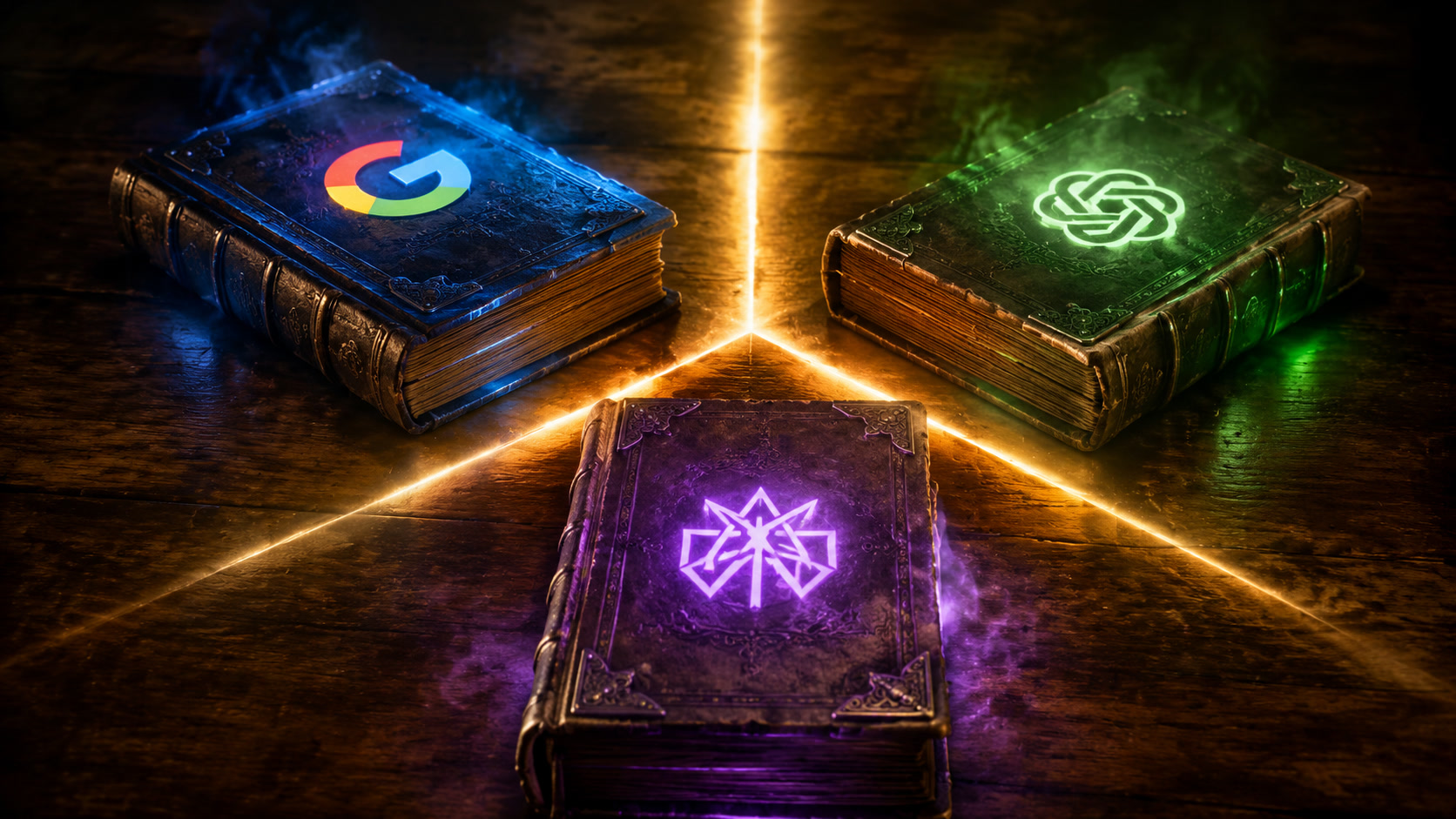
Three rulebooks, not one
The 320-query methodology matters here. These weren't obscure edge-case searches — CiteLens used real buyer queries across multiple industries, the kind of searches that drive actual business value. And across that entire set, the citation patterns clustered into three distinct groups.
Rulebook 1: SEO-driven (Google AI Mode, Perplexity)
These two engines are the good news for anyone with an existing SEO program. Your rank is effectively your ticket. If you optimize a page, earn a top-10 position, and keep it there, you will likely get cited when these engines answer queries in your space.
Perplexity is slightly more willing to go outside the top-10 than Google AI Mode (89% vs 93%), but the difference is small. Both are, for practical purposes, SEO citation engines. This aligns with what earlier 2026 research found — Perplexity pulls heavily from recent content (under 30 days old gets 3.2x more citations) and from Reddit, but the foundation remains traditional search rankings.
Rulebook 2: Hybrid (Claude)
Claude sits in the middle at 53%. It draws from Google's top-10 about half the time, which means the other half comes from somewhere else. Based on how Claude works — it grounds answers in documents in its context window and cites at the sentence level — the "somewhere else" is likely content the model has been trained on or retrieved through its own retrieval systems, not through Google's index.
For optimization, this means Claude is partially responsive to SEO work but also rewards content that exists in authoritative training data, academic papers, technical documentation, and structured knowledge sources.
Rulebook 3: Independent (ChatGPT)
ChatGPT is the outlier. Only 30% overlap with Google's top-10 means that for the majority of queries, search engine rankings are not a useful signal for whether ChatGPT will cite you.
Where does the 70% come from? The study didn't break down the exact sources, but other 2026 research fills in the picture. ChatGPT favors Wikipedia (it accounts for about 48% of ChatGPT citations in some analyses), direct brand mentions across the web, and entity-based recognition. It pulls from content that has established brand authority signals, not from content that ranks well in Google.
The practical takeaway: you can rank #1 in Google for a query and ChatGPT may never cite you. You can also have no Google ranking at all and get cited by ChatGPT if your brand has the right entity signals.
What this means for your GEO strategy
Earlier this year, Google's AI Optimization Guide said GEO is just SEO — same ranking systems, same signals. We wrote about it here, and to be fair, the guide was talking specifically about Google's own AI features (AI Overviews and AI Mode). Within Google's ecosystem, the guide is accurate.
But if your strategy is "rank in Google and you'll get cited by all AI engines," the CiteLens data says that's only half true. You will get cited by Google AI Mode and Perplexity. You have a moderate chance with Claude. And ChatGPT will mostly ignore what Google thinks is relevant.
This creates a split in how you should allocate effort:
For Google AI Mode and Perplexity: keep investing in traditional SEO. Top-10 rankings are the most reliable path. FAQ schema, clear H2/H3 structure, and sub-2-minute reads for direct answers all help — we covered the full GEO checklist here.
For Claude: aim for content that exists in multiple authoritative contexts. Technical documentation, academic citations, well-structured knowledge base content. Claude is more likely to cite something that appears in a recognized corpus or academic index.
For ChatGPT: the rules are fundamentally different. Brand entity building matters more than keyword optimization. Wikipedia presence matters. Brand mentions across authoritative publications matter. Structured data still helps, but it needs to be on your own site, not gamed through third-party signals. A page that ranks #20 in Google but has strong entity signals, clear schema, and brand authority can still get cited by ChatGPT while a #2-ranked page with weaker entity signals gets skipped.
The bigger picture: fragmentation is accelerating
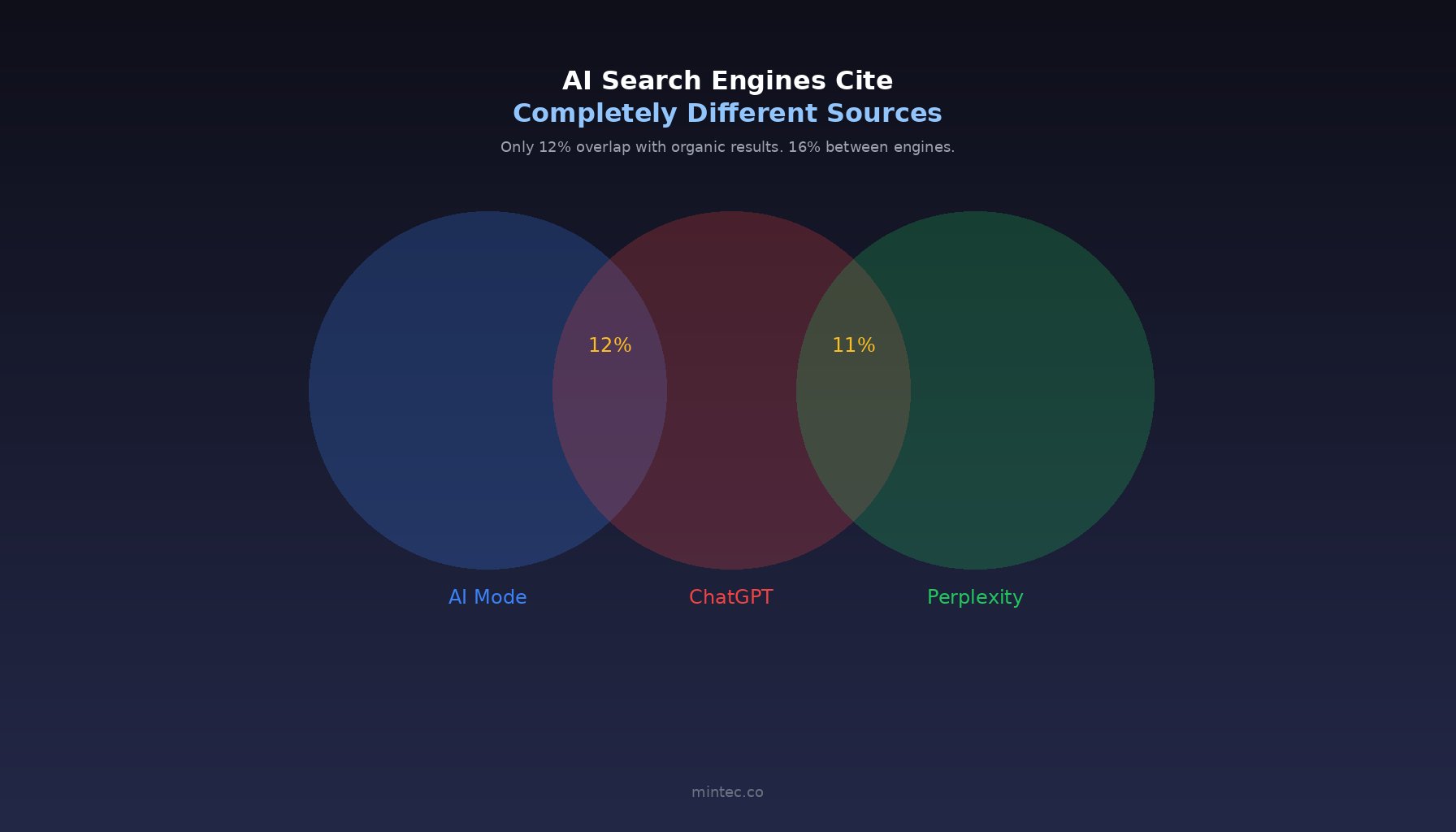
The CiteLens study is consistent with a pattern that's been emerging all year. In June, we broke down how AI Mode, AI Overviews, and ChatGPT cite completely different sources — BrightEdge found as little as 16% overlap between citation sources across any two AI engines. That number hasn't improved.
AI search is not converging on a single citation standard. It is diverging. Each engine is developing its own retrieval logic, its own source preferences, and its own answer formatting. The fragmentation we saw in mid-2026 is likely to widen, not narrow, as these platforms compete on differentiation.
The practical question for most teams is not "should we optimize for AI search?" It's "which AI search engines matter most for our audience, and what rulebook do they follow?"
For B2B companies whose buyers use ChatGPT for research: optimize for entity signals, brand authority, and Wikipedia presence — not just Google rankings. For e-commerce brands whose traffic comes through Google and Perplexity: keep doing SEO, because that's what those engines reward.
One GEO strategy to rule them all? The data says no. Three rulebooks, and the gap between them is growing.
Frequently Asked Questions
What percentage of AI citations come from Google's top-10 organic results?
It depends on the engine. Google AI Mode cites 93% from its own top-10. Perplexity cites 89%. Claude uses 53%. ChatGPT only 30% — 70% of its cited sources rank in neither Google's nor Bing's top-10, according to the CiteLens 320-query study (July 2026).
Does SEO still matter for AI search visibility?
Yes, but only for two of the four major engines. Google AI Mode and Perplexity rely heavily on traditional SEO rankings — if you rank top-10, you have a strong chance of being cited. ChatGPT and Claude use different signals that are largely independent of search engine rankings.
What actually gets ChatGPT to cite your content?
According to the CiteLens study and other 2026 research, ChatGPT favors brand authority signals, Wikipedia inclusion, direct brand mentions across the web, and entity recognition — not search engine ranking position. Your page doesn't need to rank in Google to be cited by ChatGPT.