The Great Decoupling: Why Rankings Don't Drive AI Citations Anymore
Top-10 rankers accounted for 76% of AI Overview citations in mid-2025 — but only 38% by early 2026. Rankings and AI citations have decoupled. Here's what actually drives citations now, and how to optimize for both separately.
The Great Decoupling: Why Rankings Don't Drive AI Citations Anymore
Here's a number that should make every SEO rethink their strategy.
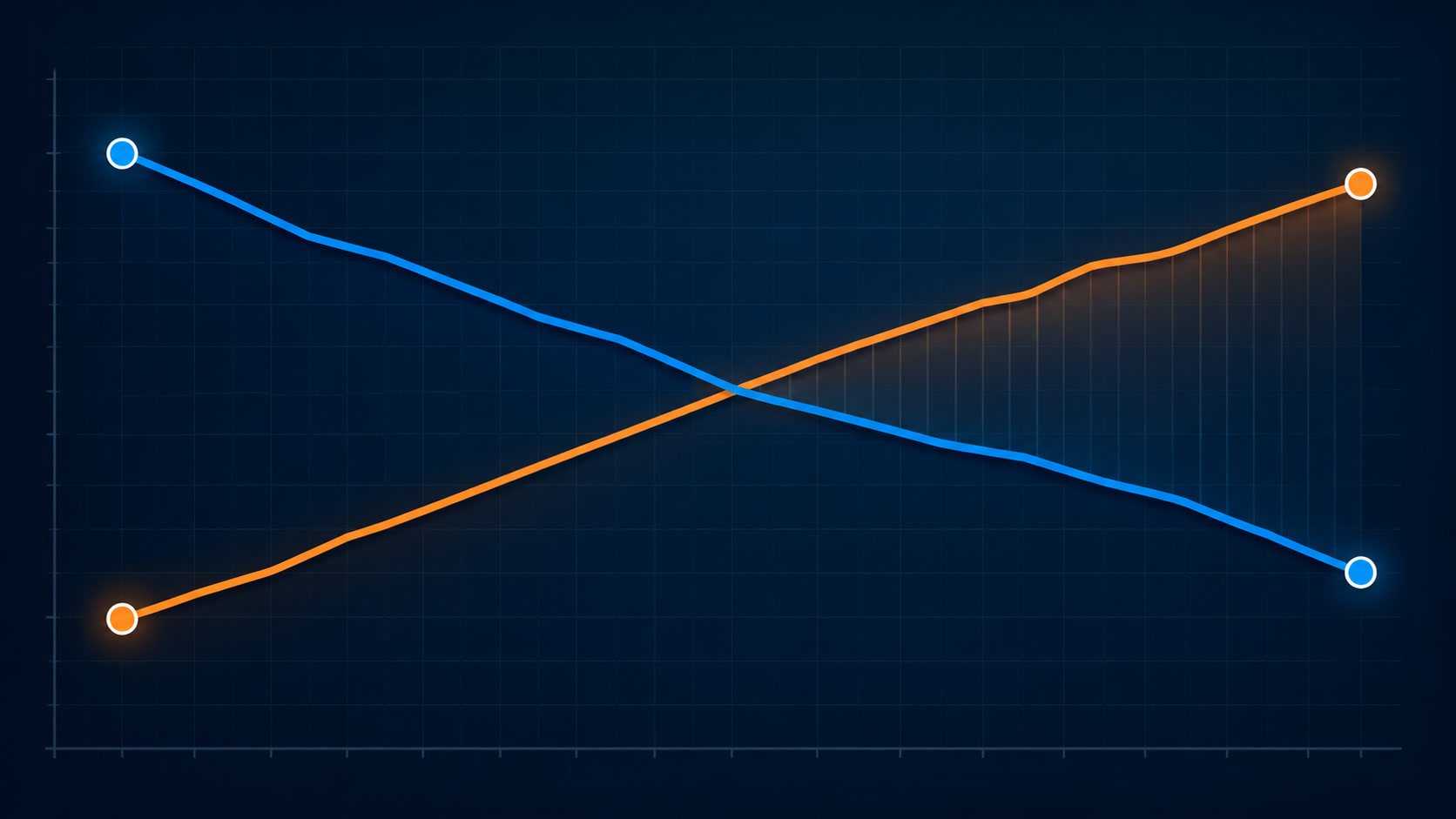
In mid-2025, 76% of AI Overview citations came from pages that ranked in the top 10 for their target query. By early 2026, that number had fallen to 38%.
Rankings and AI citations are no longer the same game.
Google runs two separate retrieval pipelines now. The traditional one — crawling, indexing, ranking — still determines where you land in organic search results. The AI one — vector embeddings, entity recognition, citation scoring — decides whether your content gets cited in AI Mode and AI Overviews.
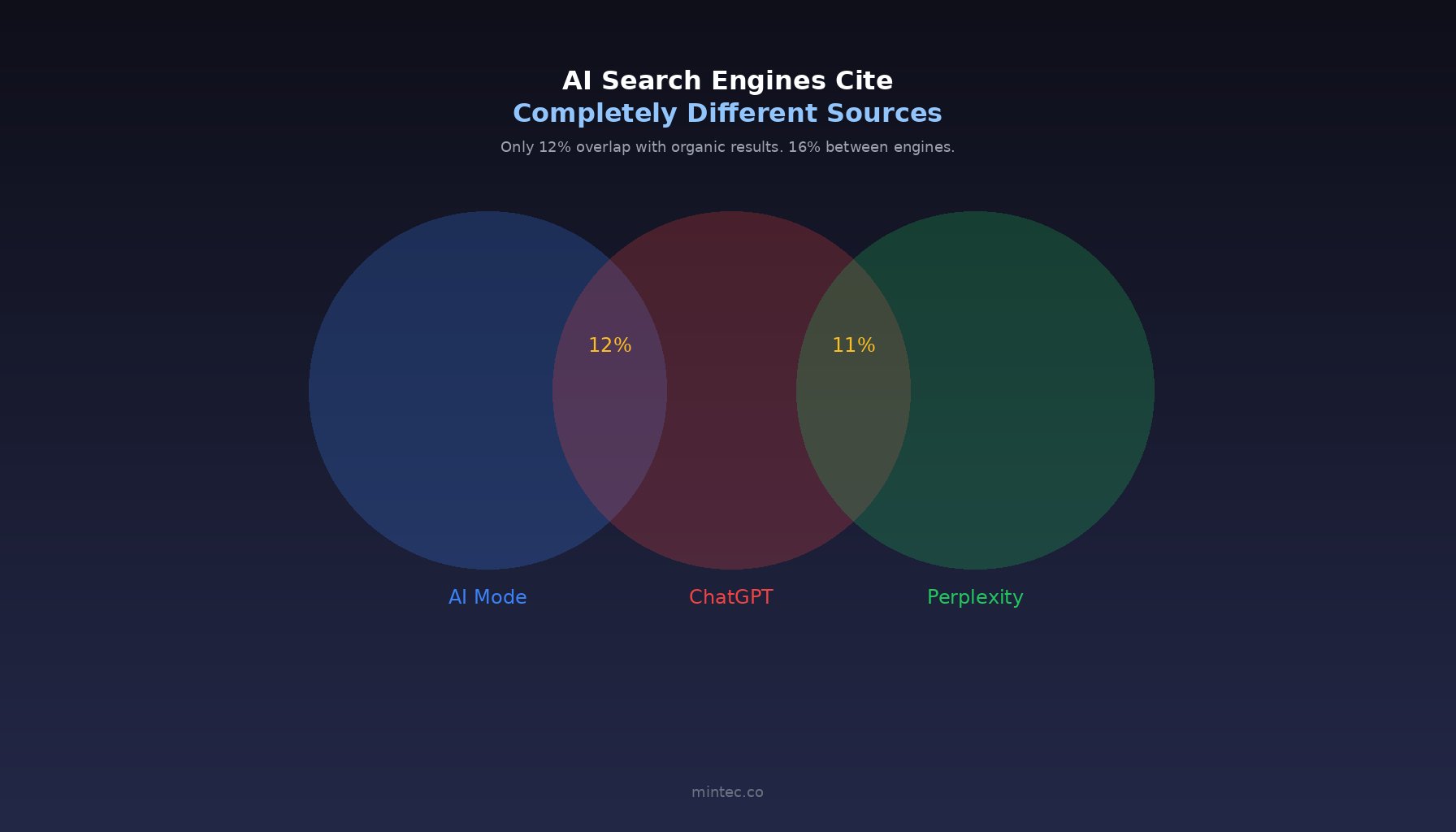
They share some signals. They don't share the same outcome. You can rank #1 and get zero AI citations. You can be cited in every AI Overview for your niche and not crack the top 20.
This shift is the single most important thing to understand about SEO in 2026.
The data is hard to ignore
Multiple studies confirm the trend from different angles.
Originality.ai found that 52% of AI Overview citations come from sources that don't even appear in the top 100 organic results. The AI is pulling content from the long tail — forum threads, niche blogs, documentation pages — none of which were written with keyword rankings in mind.
SearchSignal's January 2026 analysis put it bluntly: "Rankings, AI citations, and clicks are now three separate outcomes. Winning one doesn't guarantee winning the others."
And a study from Wellows showed that vector embedding alignment — a metric most SEOs never track — drives 7.3× higher AI citation rates, with a correlation coefficient of 0.84. That's stronger than any ranking signal in the traditional algorithm.
The trend accelerated in May 2026 when Google I/O made Gemini 3.5 Flash the default model for AI Mode globally. Google's own data showed AI Mode crossed 1 billion monthly users. Every week that passes, the citation pipeline gains influence over the ranking pipeline.
Why it happened
The root cause is simpler than most people want to admit.
Traditional search ranking is a keyword-and-link graph problem. Google decides which page is most relevant for a query based on a known set of signals: backlinks, content relevance, user engagement, page experience.
AI citation selection is a semantic matching problem. The model reads your content, maps it to a vector space, and decides whether it answers the question well enough to cite — regardless of whether that page ranks #1 or #50.
Two different engines. Two different inputs. Two different outputs.
Google hasn't published an official AI Mode schema specification — there is no structured data type that guarantees a citation. What they have confirmed is that E-E-A-T acts as a mandatory filter: 96% of AI Overview citations come from pages carrying strong E-E-A-T signals, per Wellows and UnoSearch analyses.
E-E-A-T is not a scoring system. It's a gate. If your page doesn't demonstrate it, the AI won't cite you — no matter where you rank.
The 3 signals that actually drive AI citations
1. Vector embedding alignment
Content with cosine similarity scores above 0.88 against relevant query embeddings gets cited at 7.3× the rate of content below 0.75. This is not something most SEO tools measure yet.
Practically, this means your content needs to answer the exact question the user is asking — not a tangential one, not a broader one, not a keyword-stuffed version. The AI maps your words to a semantic space and checks for near-exact alignment.
How to improve it: stop writing for keyword density. Write the most direct, specific answer to the question at the top of your page, then expand. The first 200 words matter disproportionately for vector alignment.
2. Entity density + E-E-A-T
Pages with 15 or more recognized entities in their content show 4.8× higher AI citation probability. Entities are the people, places, concepts, dates, and organizations your content references. The more specific and well-sourced they are, the better the AI can verify your claims.
This is where E-E-A-T becomes measurable. A page namedropping "a study from 2023" is weak. A page citing "the 2025 Princeton NLP study on embedding alignment (ArXiv: 2503.12345)" gives the AI concrete entities to anchor against.
96% of AI-cited pages pass strong E-E-A-T filters. The other 4% are mostly breaking news where authority hasn't been established yet.
3. Structured data for context (not for ranking)
FAQ schema, HowTo schema, and Product schema don't directly boost rankings anymore — FAQ rich results were removed in early 2026. But they still matter for AI citations.
Here's why: structured data gives the AI a reliable, parseable summary of what your page covers. When Google's AI Mode fan-out mechanism expands a query into 10 sub-questions, FAQ schema directly answers several of those sub-questions without the AI needing to infer meaning from prose.
Posts with FAQ schema are cited in AI Overviews at substantially higher rates than those without, based on tracking data from WordRocket and Digital Applied.
What this means for your strategy
The agencies that figure this out first will have a 12-month advantage. Here's the shift:
Old thinking: Rank higher → get more traffic → get cited in AI.
New thinking: Optimize for citability (vector alignment, entities, E-E-A-T) → get cited in AI → earn referral traffic from AI Mode → rankings become a secondary channel.
This doesn't mean rankings are dead. It means they're no longer a proxy for AI visibility.
If you're running SEO for a brand right now, here's what I'd do this week:
Audit your top 20 content pieces for vector alignment. If you don't have a tool for this, use a manual proxy: does the first 200 words directly answer the target question without preamble, fluff, or throat-clearing?
Add FAQ schema to every post that answers a specific question. This is the single highest-leverage structured data change for AI citations right now.
Check your entity density. A post about "AI search optimization" that never mentions Google, Gemini, vector embeddings, or specific studies is too vague for the AI to cite with confidence.
Stop chasing rankings as a proxy for AI success. Track citations separately. If you're not cited in AI Mode or AI Overviews for your best-ranked posts, you have a citability problem, not a ranking problem.
The honest take
I don't think most agencies will make this shift fast enough.
The ranking mindset is too deeply embedded. Every client report starts with position tracking. Every bonus is tied to keyword movement. Telling a CMO "we lost 3 ranking spots but doubled our AI citations" is a hard conversation — even when the latter matters more for traffic.
But the data is clear. The trend has momentum. And the gap between the teams that treat citations as a separate discipline and those that don't will widen every quarter.
You don't need to abandon keyword optimization. You do need to accept that it's no longer sufficient.
The two engines are running in parallel. You need a strategy for each.
Frequently Asked Questions
What percentage of AI Overview citations come from top-10 ranked pages?
As of early 2026, only about 38% of AI Overview citations come from pages in the top-10 organic search results. That's down from 76% in mid-2025, according to multiple independent studies. Rankings and AI citations are now largely decoupled.
What drives AI citations if not keyword rankings?
Three factors matter most: vector embedding alignment (how closely your content matches the AI's semantic understanding), entity density combined with strong E-E-A-T signals, and structured data that gives the AI reliable context for your claims.
Should I stop optimizing for keyword rankings?
No — but you should stop treating rankings as synonymous with AI visibility. The two outcomes now need separate strategies. Rankings still drive direct click traffic. AI citations drive referral traffic from AI Mode and Overviews. You need both.