Your CRM's Black Hole: Why Proposals Take 5 Days When They Should Take 45 Minutes
Most B2B proposals take 3 to 7 days to prepare. With intelligent automation, that drops to under an hour. Here's the 6-stage Lead-to-Proposal framework that connects your CRM to your proposal system to close more deals.
Your CRM's Black Hole: Why Proposals Take 5 Days When They Should Take 45 Minutes
A sales proposal that takes a week to produce is a proposal that won't close. This isn't opinion — response time to a qualified lead is one of the strongest predictors of conversion across every industry we've measured. And the biggest bottleneck isn't pricing, product fit, or competition. It's the manual process of moving data from your CRM into a proposal document.
We've seen this pattern at virtually every client engagement at Mintec. A qualified lead enters the CRM. The sales team reviews it. Someone opens Word or Google Docs. They look for the closest previous proposal. Copy, paste, adjust names, change figures, hunt for the right logo files. Write a cover email. Attach the PDF. Send it. This cycle — which should take 45 minutes — burns 3 to 7 business days at most Latin American organizations.
Here's the good news: the technology to fix it exists, it's affordable, and it delivers measurable ROI in weeks, not months.
The Real Cost of Manual Proposals
When we audit proposal workflows for professional services firms and B2B SaaS companies, we consistently find that sales teams spend 20% to 30% of their time on non-selling activities. They're assembling documents, digging through old emails for pricing, verifying figures with operations, tweaking formatting.
The data backs up what we see in the field. According to Responsive, a leader in RFP and proposal automation, platforms combining LLMs with RAG (retrieval-augmented generation) over existing content libraries reduce manual copy-paste work to near zero. Sales teams stop being document editors and go back to selling.
And the impact goes beyond efficiency. Forrester research shows that firms automating at least two pipeline stages see a 15% to 25% improvement in proposal-to-close rates. It's not just faster — automated proposals are higher quality because they start from correct, current data every time.
Why Proposals Die in Your CRM
Before the solution, let's diagnose the problem. Across every automation project we've implemented, three root causes surface consistently:
1. Orphaned data. The CRM holds everything about the lead, but the proposal is built from scratch each time. Nobody systematically transfers opportunity context to the proposal document. Context gets lost at every copy-paste boundary.
2. Stale content libraries. Proposal repositories don't get updated. Teams recycle the same 2024 template with outdated pricing, irrelevant case studies, and messaging that no longer reflects the actual offering.
3. Zero tracking. Once the proposal leaves the CRM, it vanishes. No way to know if the client opened it, how long they spent on each section, or whether they shared the link with other decision-makers. Follow-up is blind.
These three problems feed each other. And they all share the same fix: an automated pipeline connecting your CRM to your proposal generation system.
The Lead-to-Proposal Framework: 6 Automation Stages
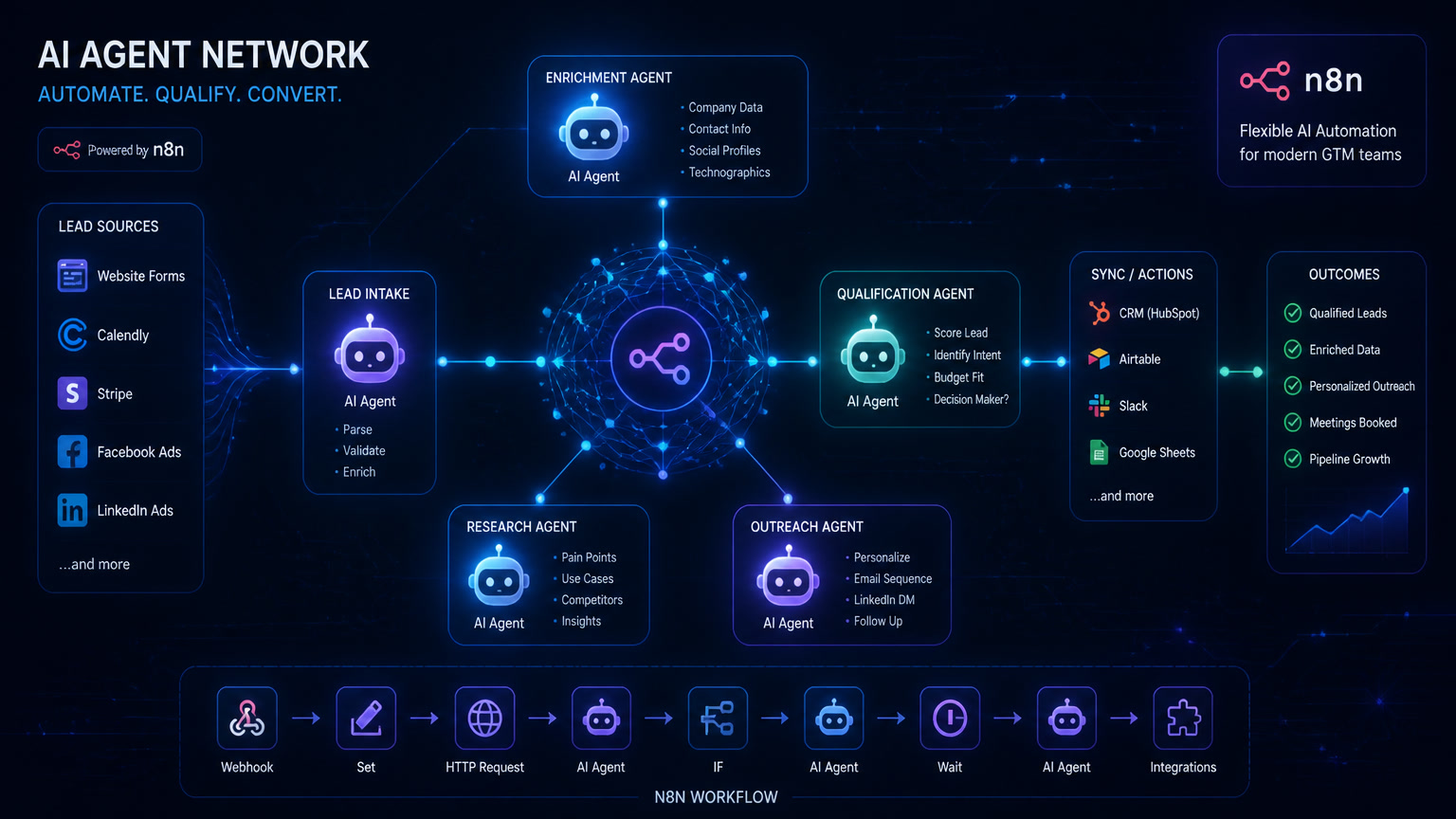
Here's the framework we use at Mintec — six stages that bridge lead qualification through proposal delivery, eliminating manual breakpoints at every transition.
Stage 1: Capture and Score (CRM)
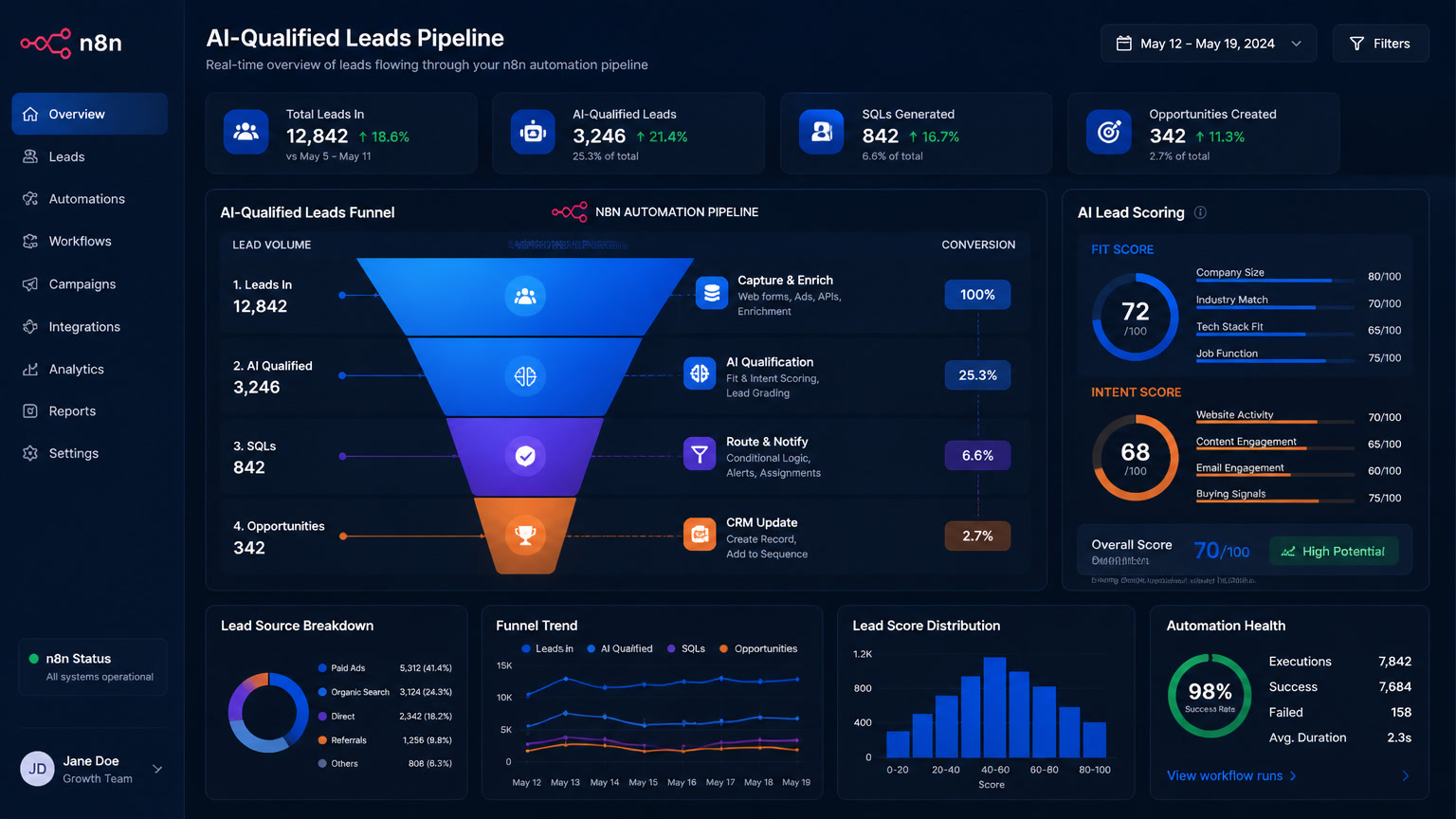
The lead enters the CRM and gets automatically scored using AI-based lead scoring. We covered this process in detail in our article on AI-powered lead scoring — weighting industry fit, company size, website behavior, and email engagement into a single readiness score.
Stage 2: Auto-Enrichment
Before generating the proposal, the system enriches the lead profile with public data: team size, technologies in use, recent funding rounds, industry news. This eliminates the manual research that eats hours of sales time.
Stage 3: Smart Template Selection
The framework selects the right proposal template based on lead profile, service type, and buying cycle stage. A proposal for an evaluation-phase lead looks very different from one for a prospect who's already had a demo and asked for pricing.
Stage 4: AI-Powered Generation
With enriched data and the right template, AI generates the proposal content: personalized executive summary, scope tailored to the lead's needs, dynamic pricing based on profile, and relevant use cases for their industry. The sales team reviews and adjusts, but 80% of the document is already done.
Stage 5: Approval and Automated Delivery
The proposal routes through internal approval (if needed) and goes out with tracking baked in. You get notified when the client opens it, how long they spend on each section, and whether they share it with other stakeholders.
Stage 6: Intelligent Follow-Up
If the client hasn't opened the proposal in 48 hours, the system fires an automated reminder. If they opened it but stalled, the sales team gets an alert with the section they spent the most time on — the part that interested them most, or the part that raised doubts.
Manual vs Automated Proposal Process
| Aspect | Manual Process | With Lead-to-Proposal Pipeline |
|---|---|---|
| Generation time | 4 to 8 hours (up to 7 days with approvals) | 45 to 90 minutes |
| Data source | Sales rep's memory + email search | CRM + auto-enrichment |
| Personalization | Depends on how well the rep knows the lead | Based on structured lead data |
| Consistency | Varies by rep | Uniform by proposal type |
| Tracking | None (wait for the client to reply) | Real-time notifications (open, time per section) |
| Follow-up | Manual, each rep's judgment | Automated with business rules |
| Close rate (Forrester data) | Baseline | +15% to +25% with 2+ stages automated |
What You Need to Implement This
You don't need a seven-figure budget or an engineering team. The typical stack we recommend for mid-market companies includes:
- A CRM with an open API (Clientify, HubSpot, or Salesforce)
- A workflow automation platform like Make or n8n to orchestrate data transfers
- A proposal generation tool (PandaDoc, Proposify, or Clientify's native proposals)
- A language model (via OpenAI or Claude API) for personalized content generation
- An approval flow configured in the CRM or proposal tool
The key isn't the tools — it's the orchestration. That's why we wrote extensively about the hidden cost of disconnected automation tools — because having a CRM, a proposal tool, and an invoicing system that don't talk to each other is exactly the problem we're solving.
From Proposal to Invoice
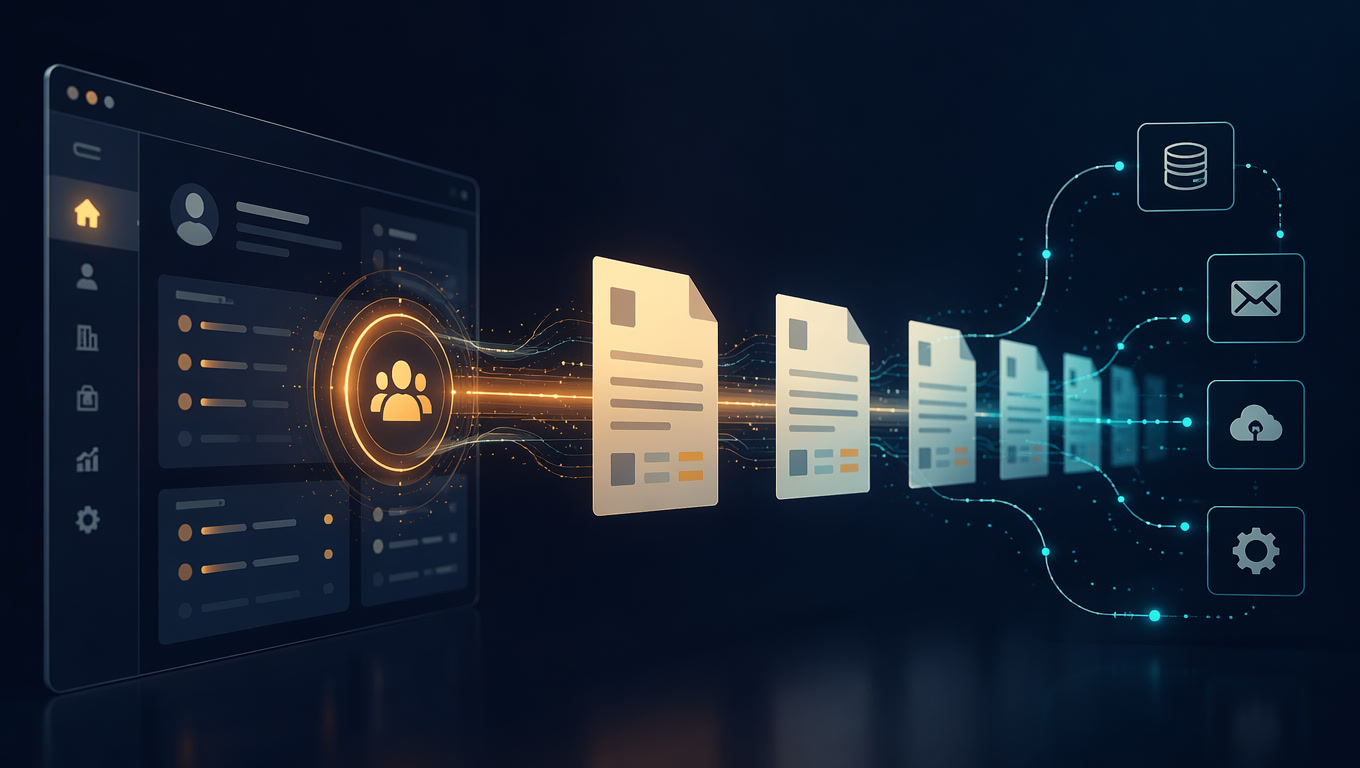
The pipeline doesn't end when the client accepts. The next step is the transition to invoicing and project management. When a proposal converts to an order, data migrates automatically to your billing system and project tracker — zero manual entry.
This is especially relevant for professional services firms, where the full cycle from lead capture to project billing can involve up to 7 manual data handoffs. Every handoff is a friction point, and every friction point is a risk of error, delay, or data loss.
The Proposal Isn't a Document — It's a Process
Most organizations treat the proposal as an artifact: something you write, send, and wait on. The reality is that a proposal is a process that starts when the lead is qualified and ends when the project is billed.
Automating that end-to-end process isn't a luxury for deep-pocketed enterprises. It's a competitive advantage accessible to any organization handling more than 10 proposals per month. Our experience building these pipelines shows ROI in under 90 days — counting only the recovered sales team time, before accounting for the 15-25% close rate improvement.
Proposals shouldn't take five days. With the right automation, 45 minutes is a realistic target. The question isn't whether your business can afford to automate — it's whether you can afford to keep losing a week on every proposal you send.
Frequently Asked Questions
What is proposal automation?
Proposal automation uses AI and automated workflows to generate sales proposals from CRM data, reducing creation time from days to minutes without sacrificing personalization.
How does proposal automation connect with CRM?
Lead data (industry, needs, interaction history) is automatically transferred from the CRM into a proposal template, AI fills in personalized language and pricing, and the workflow schedules delivery and follow-up.
What tools are used for proposal automation?
Platforms like PandaDoc, Proposify, and Clientify integrate with Make or n8n to orchestrate the flow from lead qualification to final proposal delivery.