Webflow Source: the agent-first CMS that changes who controls the AI layer
Webflow launched Source at Conf 2026: a workspace where marketing teams and AI agents share the same codebase with governed access. How it compares to Wagtail 8.0 and Contentful/Salesforce for your agentic CMS stack.
Webflow Source: the agent-first CMS that changes who controls the AI layer
Webflow launched Source at its 2026 Conference (Sep 1–3, Boston): a workspace where marketing teams and their AI agents share the same codebase with built-in governance permissions. Unlike other CMS platforms that bolted on "Generate with AI" buttons, Source redefines who gets access to code and how that access is governed. It's the third major agentic play of the quarter — after Wagtail 8.0 and the Salesforce acquisition of Contentful — but it attacks the problem from a different angle: the marketing team as workspace owner, not secondary user.
The problem Source tries to solve
Traditional CMS platforms were built for humans. When AI agents get access, they operate through APIs or visual interfaces that weren't designed for how they work. The result is fragmented work: the agent generates content, a human copies it to the CMS, another human reviews it, another publishes it. Each step is a friction point where context is lost.
Webflow identified this pattern and built Source as a workspace where the agent and the human share the same working environment. The agent can read the site's code, propose changes, and the team approves or rejects using governance rules they already have defined. There's no copy-pasting between tools. There's no "generate and forget."
CEO Linda Tong said it plainly in the keynote: "Now agents are putting that same kind of power into the hands of every person on the team, and the transformation will be even more profound."
The architecture behind Source
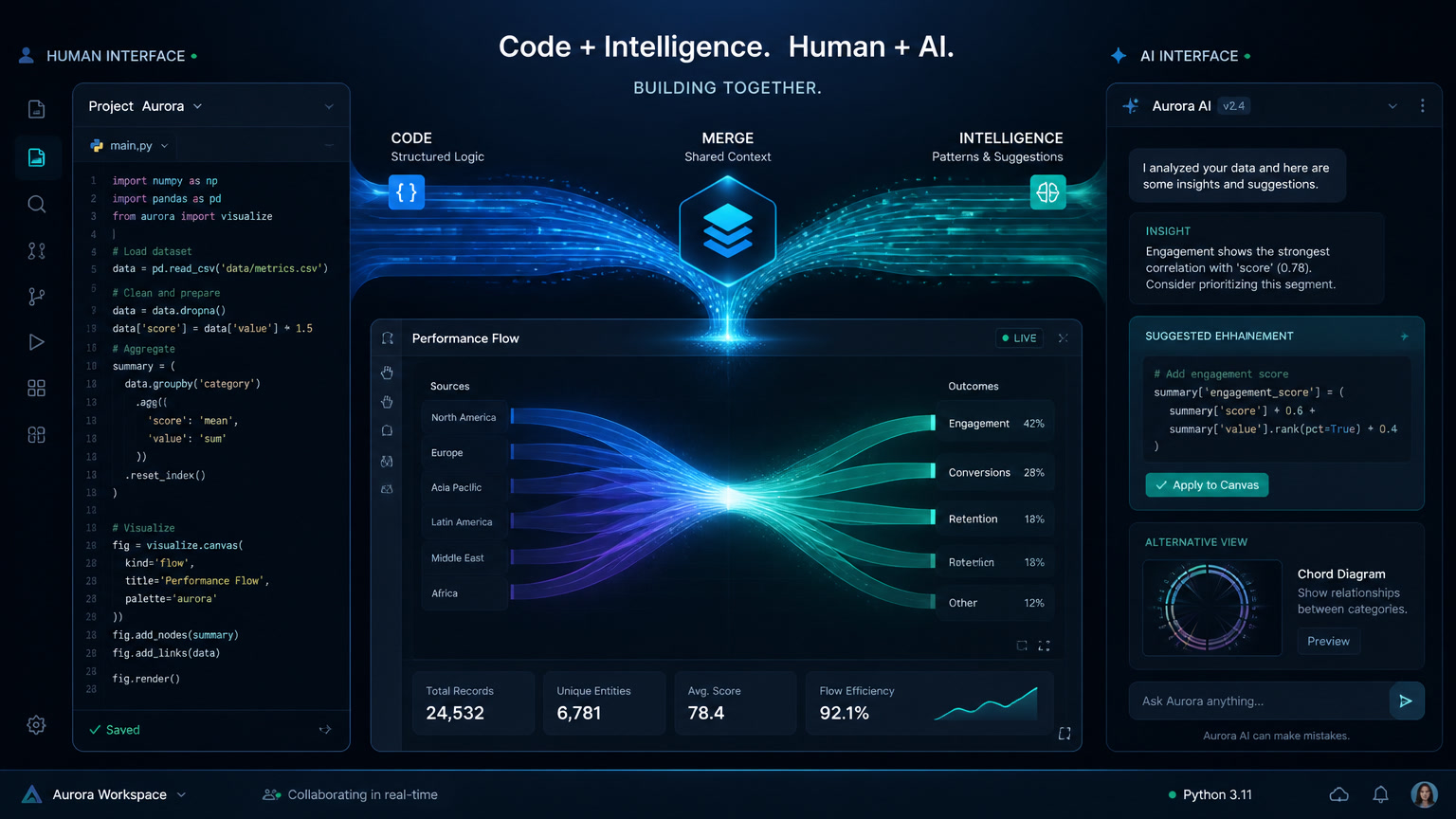
Source is an agentic workspace that connects to your existing codebase and martech stack. The core idea is that code becomes the shared source of truth between people and agents — agents read and modify code directly, not through an intermediate visual layer.
This solves a real problem we've seen in migration projects at Mintec: AI agents generate sites quickly, but they aren't built for the ongoing work of building brand and driving growth beyond launch. Source positions agents as permanent collaborators, not one-shot tools.
Key capabilities include:
- Direct code access — agents read and modify the codebase, not just the visual CMS
- Activity tracking — site logs show what each agent did and when (available this month)
- MCP updates — GSAP interactions, expanded CMS access, cloud deploy tooling
- Composable by default — connects with your existing martech stack without forcing migrations
How it compares to other agentic platforms
| Platform | Agentic approach | Primary audience | Governance model |
|---|---|---|---|
| Webflow Source | Shared human-agent workspace | Marketing + agency | Code as shared truth; default permissions |
| Wagtail 8.0 | Agent API (50+ operations, MCP) | Developers | API-first; developer controls the interface |
| Contentful/Salesforce | Agentforce integration | Enterprise compliance | Salesforce controls the AI layer |
The differences aren't just technical — they're philosophical. Wagtail chose not to put AI buttons in the admin ("A CMS with agents, not an AI CMS"). Contentful integrates with Agentforce so Salesforce manages the AI layer. Source takes the middle path: the workspace is agent-native, but the marketing team holds governance.
What Source ships and what it doesn't
What it delivers:
- An environment where agents and people work on the same code
- Brand standards, permissions, and business rules govern what ships
- MCP integrations to connect with external tools
- Full agent activity tracking for auditability
What it's not:
- It doesn't replace Webflow's visual builder — it builds on top of it
- It's not GA — it's a research preview with limited access
- It doesn't solve agent performance quality — still depends on the underlying model
- It's not open source — you're inside the Webflow ecosystem
The deciding factor: who controls the agent layer
This is where CMS choice becomes a strategic decision, not a technical one.
If your team is marketing-first and you need agents to work alongside people without engineering requirements, Source is the clearest bet. The workspace is designed for a CMO and an agent to share the same context, with approval rules that don't require a GitHub PR.
If your team is developer-first and you have the technical capacity to build on an API, Wagtail 8.0 gives you full control over the agent interface — no forced AI buttons in the admin. The API exposes 50+ admin operations, from creating pages to managing documents and revisions.
If you need enterprise compliance and you're already in the Salesforce ecosystem, Contentful + Agentforce is the official path. Salesforce closed the Contentful acquisition on September 1 for between $1B and $1.5B. The integration promises a native content layer for Agentforce, but it's still maturing.
At Mintec, we've found that composable architecture — a content layer separated from the presentation layer — turns out to be the ideal foundation for agent integrations. When we migrated sites from WordPress to Astro + Cloudflare Pages, we discovered that each layer is exposed via API, and agents can connect to the content layer without touching the frontend. Source appears built on this same philosophy, but takes it further by making the workspace agent-native.
What comes next
Source is in research preview. The question isn't whether it reaches GA, but how it changes marketing teams' expectations of what "working with AI" means. When an agent can read your code, propose changes, and the team approves with their governance rules — the CMS stops being just a content repository and becomes a shared work platform.
The headless CMS market is worth roughly $860M in 2024 and projected at $4.59B by 2033. The acquisitions (Salesforce/Contentful), agent launches (Wagtail 8.0, Webflow Source), and Storyblok's MCP integration with Claude aren't coincidences — they're signals that the CMS is shifting from a publishing interface to agent infrastructure.
If you're evaluating your content stack for 2027, the question is no longer "which CMS do I use?" but "which CMS lets my agents work with me, not on their own?"
Related articles:
Frequently Asked Questions
What is Source by Webflow?
Source is Webflow's new platform (research preview since September 2026) that lets marketing teams and their AI agents work together in a shared workspace with direct access to the site's code and built-in governance.
How does Source compare to Contentful or Wagtail for AI agents?
Source targets marketers without requiring engineering, using code as the shared source of truth. Wagtail offers an agent API for developers. Contentful (now Salesforce) integrates agents through Agentforce for enterprise.
Does Source replace Webflow's visual builder?
No. Source builds on top of Webflow's existing platform. Marketers can still design visually, but agents now also have direct access to the underlying code.