Agentic CMS: When AI Agents Join Your Content Team in 2026
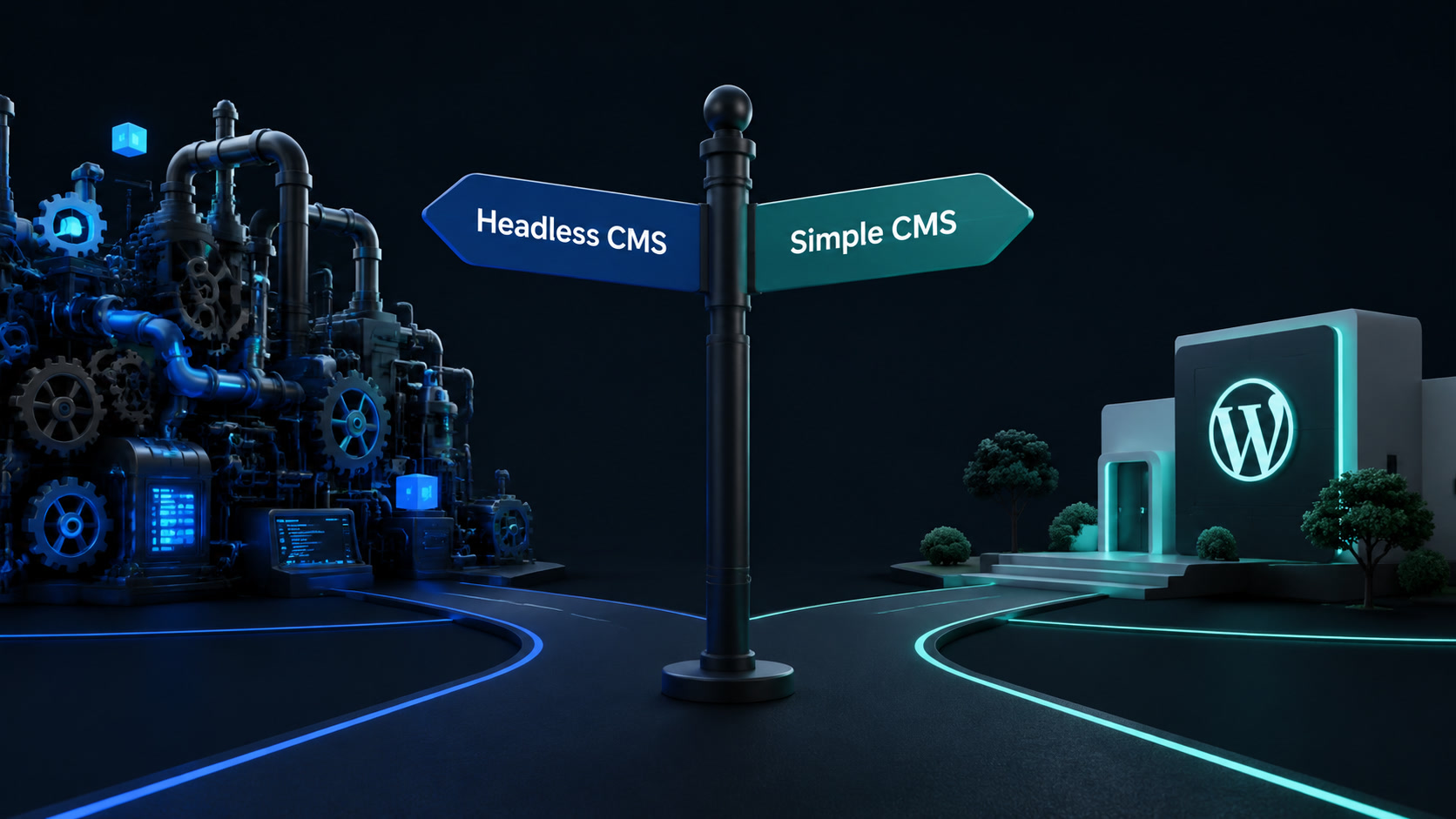
Sanity rebranded as a Content OS for the AI era. Salesforce is acquiring Contentful to wire it into Agentforce. Seven CMS platforms now ship MCP servers. The agentic CMS is 2026's defining web development trend — and it changes how teams build and manage content.
Agentic CMS: When AI Agents Join Your Content Team in 2026
The headless CMS is evolving into something fundamentally different. AI agents are no longer external tools that help you write — they are becoming active members of the content team, with persistent identities, scheduled triggers, and write access to your draft branches. Here is what actually changed in 2026 and how to decide if agentic CMS is right for your stack.
Sanity rebranded from "headless CMS" to "Content Operating System for the AI era." Salesforce signed a definitive agreement in early June 2026 to acquire Contentful and integrate it into Agentforce. Adobe Experience Manager shipped five distinct AI content agents at Summit 2026. Strapi and Payload launched official MCP servers. And at least seven CMS platforms now let AI agents write directly to your content repository.
This is not a gradual evolution. It is the fastest structural change in content management since the headless CMS movement began a decade ago. And it raises a question every web team needs to answer: do you build for a world where AI agents are part of your content operation, or do you wait until the technology matures?
What Agentic CMS Actually Means
The term "agentic CMS" gets thrown around loosely, so let us be precise.
A generative AI writing assistant (ChatGPT writing a blog post that you paste into WordPress) is not agentic. It is a tool you operate. You start it, you stop it, you paste the output.
An agentic CMS gives AI agents persistent identity, scheduled triggers, and write access to draft branches. These agents do not wait for you to ask. They operate on a schedule — auditing content freshness every Monday, generating localization drafts when a new page is published, checking brand compliance before anything goes live.
The difference is operational. A tool helps you work faster. An agent changes your workflow.
By June 2026, the CMS landscape has split into three tiers of agentic maturity:
Tier 1 — Platform-native agents: Adobe Experience Manager ships five agents (Smart Tag, Smart Crop, Content Creation, Content Compliance, Content Fragment) that operate inside the platform. Sanity's "Content OS" includes an agentic layer that handles content audits, schema migrations, and asset optimization. Kontent.ai positions itself entirely around "AI agents handling audits, governance, and localization."
Tier 2 — MCP server connectivity: Strapi, Payload, Directus, and Hygraph expose MCP (Model Context Protocol) servers. This means any MCP-compatible AI client — Claude, Cursor, ChatGPT, custom agents — can read and write content with the same permissions your editors have. The CMS does not ship its own agents, but it opens its data layer to agents you bring.
Tier 3 — API-native with agent hooks: Contentful (pending Salesforce acquisition) and Storyblok offer webhook-driven agent triggers and visual content APIs that external agents can consume. They are agent-friendly without being agent-native.
This tier structure matters because it changes the build versus buy decision for agentic capabilities. More on that below.
The Salesforce-Contentful Deal Changes Everything
On June 8, 2026, Salesforce announced it would acquire Contentful and integrate it into Agentforce. The subtext is unambiguous: Salesforce believes the future of enterprise content is agent-managed, and it wants Contentful's headless architecture as the content layer for its agent ecosystem.
If you manage enterprise content, this puts Contentful in a different category. It is no longer just a headless CMS competing with Sanity and Storyblok. It is becoming the content backbone for the largest enterprise CRM platform. That means deeper agent integration, but also tighter coupling to the Salesforce ecosystem.
For teams evaluating Contentful today, the acquisition adds capability in the medium term and dependency risk in the long term. If you are already in the Salesforce ecosystem, the integration path is compelling. If you chose Contentful specifically to stay platform-agnostic, the calculus has changed.
MCP Servers: The Quiet Revolution
The MCP server trend matters more than any single CMS vendor's agent features. Here is why.
When Strapi ships an MCP server, every MCP-compatible tool in the ecosystem can manage your Strapi content. Your developers can create content types using Cursor. Your editors can query content through Claude. Your CI pipeline can verify content structure before deployment. The agentic capability is not locked inside a vendor's interface.
Sanity, Contentful, Storyblok, Strapi, Payload, Directus, Hygraph, and Kontent.ai all support MCP as of mid-2026. This is the closest the CMS market has come to an interoperability standard since the REST API became universal.
From a web architecture perspective, MCP support is the feature to prioritize. A CMS with MCP server support gives you agentic capabilities without vendor lock-in. A CMS with only native agents locks you into its workflow, its agent model, and its pricing.
When Agentic CMS Actually Delivers
In our experience building content architectures for clients, agentic CMS delivers strongest results in three scenarios:
1. Content operations at scale. If your team publishes 50+ pages per week across multiple languages, agents that automate localization, freshness audits, and brand compliance checks save 15-20 hours weekly. We saw this on a multilingual e-commerce project where an agent-based localization workflow reduced translation turnaround from 4 days to 6 hours.
2. Content that needs constant refreshing. News sites, documentation platforms, and resource libraries where content decays over time benefit from scheduled audit agents. An agent that flags outdated statistics, broken links, or stale case studies runs every Monday and generates a prioritized remediation list. The editor reviews and approves. The agent does not replace the editor — it removes the manual audit overhead.
3. Structured content with defined schemas. Agentic CMS works best when your content model is well-defined — clear content types, consistent fields, validation rules. If your content is mostly free-form rich text (think traditional blog posts without structured fields), agents have less to operate on. Schema-first content modeling becomes a prerequisite for agentic workflows.
The Decision Framework We Use
When a client asks whether to adopt an agentic CMS, here is the framework we apply:
Adopt now if:
- You publish 50+ pages per week or manage content in 3+ languages
- Your content model is already structured (defined content types, consistent fields, validation)
- You have editorial workflows that agents can accelerate (localization, audits, compliance checks)
- Your team is comfortable with AI-assisted workflows and has the operational maturity to supervise agent output
Adopt later if:
- You publish fewer than 10 pages per week
- Your content is primarily free-form (blogs, articles without structured fields)
- Your editorial process relies on human judgment that would be hard to encode as agent rules
- You are still migrating from a legacy CMS and have not stabilized your content model yet
Adopt via MCP first (our recommended path for most teams):
- Keep your current CMS if it supports MCP
- Connect external AI agents (Claude, Cursor, custom agents) via MCP for specific workflows
- Measure the operational impact before committing to a platform migration
- Migrate to a Tier 1 agentic platform only when the MCP experiment proves the ROI
What This Means for Web Architecture
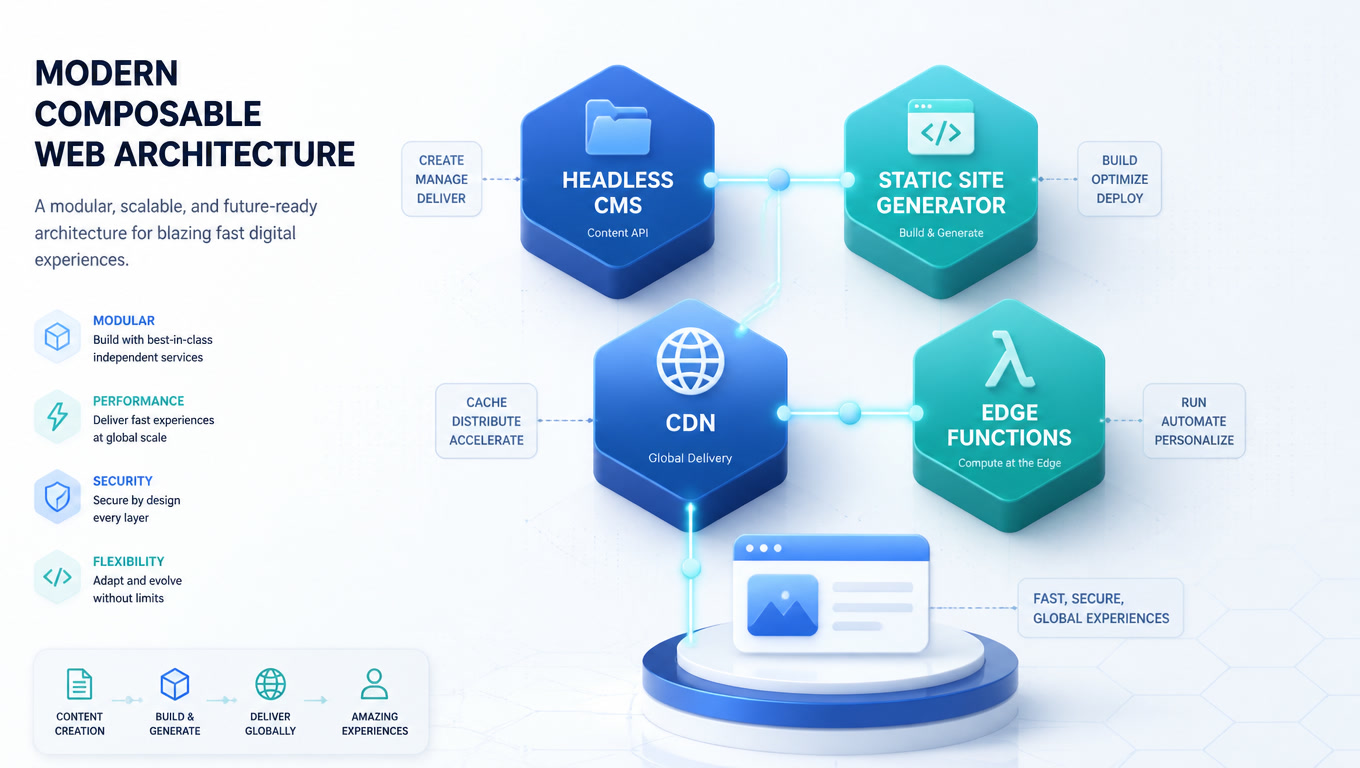
Agentic CMS changes the frontend architecture conversation in three ways.
First, structured content is no longer optional. If agents are going to create, audit, and optimize your content, your content model needs defined schemas with validation rules. Free-form rich text fields become anti-patterns. This pushes teams toward stricter content governance earlier in the project lifecycle.
Second, the API layer becomes an agent interface. Your headless CMS API is no longer consumed only by your frontend. It is consumed by AI agents that create, update, and delete content. This changes API design considerations: rate limiting, permission scoping, audit logging, and versioning all need agent-aware planning.
Third, the build versus buy decision gets more complex. Do you build custom agents that connect to your CMS via MCP, or do you buy a platform that includes agentic features? The MCP-first approach gives you flexibility. Platform-native agents give you tighter integration. The right answer depends on your team's AI engineering capacity and your tolerance for vendor dependency.
The Verdict
Agentic CMS is not hype. It is a genuine architectural shift in how content management systems operate. By the end of 2026, the question will not be "should we use agentic CMS features?" but "which agentic model fits our content operation?"
The Salesforce-Contentful acquisition, the MCP server adoption across seven major platforms, and the agentic product shipments from Adobe, Sanity, and Kontent.ai all point in the same direction: AI agents are becoming infrastructure, not features.
At Mintec, we architect content systems that are ready for this transition. If you are evaluating your CMS strategy for 2026, contact us for a no-obligation assessment. We also write about headless CMS architectures, composable web architecture, and why video needs a content model too — three topics that overlap with agentic CMS more than most teams realize.
Frequently Asked Questions
What is an agentic CMS?
An agentic CMS is a content management system that embeds autonomous AI agents as active members of the content team — capable of creating, auditing, localizing, and optimizing content without human intervention on every step. Unlike generative AI writing assistants, agentic CMS agents operate persistently: they have scheduled triggers, write access to draft branches, and can execute multi-step workflows.
Which CMS platforms have agentic features in 2026?
Sanity, Contentful, Storyblok, Adobe Experience Manager, Kontent.ai, Strapi, Payload, Directus, and Hygraph all shipped some form of agentic capability in 2026. The most significant differentiator is MCP server support — Sanity, Contentful, Storyblok, Strapi, and Payload now expose MCP servers, letting external AI agents (Claude, Cursor, ChatGPT) manage content directly.
Should I migrate to an agentic CMS right now?
Not necessarily. Agentic CMS delivers most value for content-heavy operations (50+ pages published weekly, multilingual requirements, frequent content refreshes). For smaller sites or teams that publish sporadically, the current generation of agentic features may add complexity without proportional returns. Start by adopting MCP server connectivity before migrating to a full agentic platform.