
SvelteKit 3 Remote Functions: Is the REST API Layer Dead (and When It Doesn't Matter)
SvelteKit 3 is in preview with remote functions: end-to-end typed RPC that replaces API routes for full-stack apps. We break down when RPC-first architecture beats Astro + headless CMS and when it doesn't, with a decision framework from real client projects.
SvelteKit 3 Remote Functions: Is the REST API Layer Dead (and When It Doesn't Matter)
SvelteKit 3 is in preview with an architecture shift that removes the REST layer for full-stack apps: remote functions turn any server function into an end-to-end typed RPC call, with no manual endpoints and no HTTP clients to maintain. The official preview (13 @next releases shipped in July 2026, announced on the Svelte blog on August 1) brings refreshAll, shallow routing in goto, $app/manifest and $app/service-worker modules, production sourcemaps, and automatic deployment detection. In this article we separate what this means for app-like projects, why content sites should not migrate from Astro + headless CMS, and how to decide between both architectures with real project data.
What SvelteKit 3 actually ships (and what's still experimental)
The "What's new in Svelte: August 2026" post (Dani Sandoval, August 1, 2026) summarizes the preview: thirteen versions from 3.0.0-next.5 to -next.13 that lay the groundwork for the major. What changes the developer's day-to-day the most:
refreshAllreplacesinvalidateAll(-next.8): invalidating and refreshing data stops being a ceremony of keys — it's now an explicit reset of all loaded data.- Native shallow routing in
goto(-next.13): manualpushState/replaceStateis gone, withpersistStateto keep state across reloads. $app/manifestand$app/service-workermodules (-next.12): you can introspect routes, prerendered output, and assets at runtime, and service workers now import$app/paths.- Automatic deployment detection (
-next.12): SvelteKit detects new versions by reacting to data, remote form responses, and focus/visibility changes, with a defaultversion.pollIntervalof one hour. This fixes the classic "users see a stale app until a broken-cache reload" problem. - Sourcemaps in production builds (
-next.11): debugging production without the "we can't see the real stack trace" excuse. error(status, message)becomes mandatory (-next.13): error messages are part of the contract, not an optional.
Remote functions have been maturing longer: available since 2.27 and refined in May 2026 (2.56/2.57), they are still marked experimental in the official docs, with an explicit opt-in (compilerOptions.experimental.async + kit.experimental.remoteFunctions). The official roadmap prioritizes "async svelte, polishing RPC (remote functions), and SvelteKit 3" — RPC is the heart of the major.
Remote functions: what a backend without REST looks like
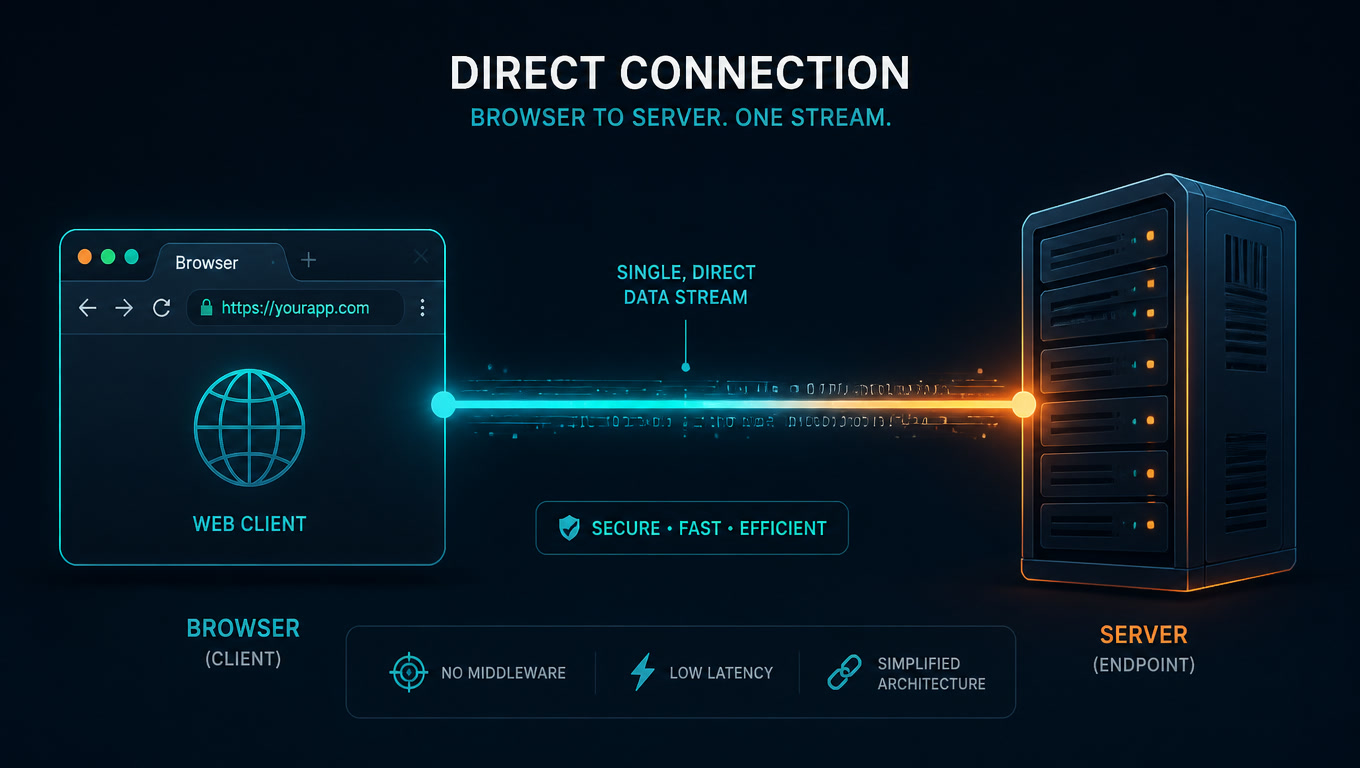
The model is simple and radical: create a .remote.ts file anywhere in src, export functions in one of four shapes, and import them from client components as if they were local. SvelteKit generates the HTTP endpoint and fetch wrappers for you.
| Shape | Purpose | REST equivalent it replaces |
|---|---|---|
query | Read dynamic server data | GET /api/... |
form | Form validation and submission | POST /api/... + manual error handling |
command | Mutations with single-flight (prevents double submit) | POST/PUT/DELETE /api/... |
prerender | Static data generated at build time | Build-time API or SSG with fetch |
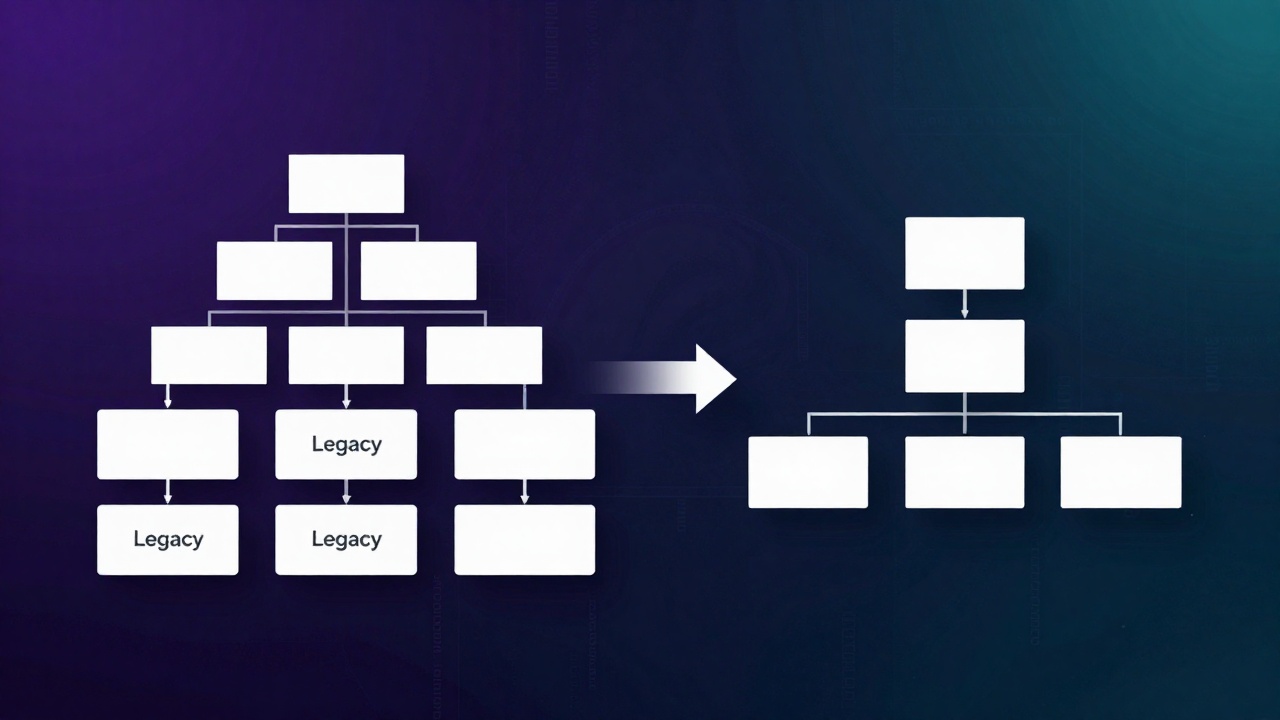
The important part is not the syntax — it's what disappears: hand-maintained type contracts (the type travels from server to client), duplicated error handling, endpoint documentation, OpenAPI client generation, and validation logic written twice in two languages. In a typical dashboard project we audited, the API layer (routes + types + clients + integration tests) accounted for 25-35% of the backend codebase. That's what RPC eliminates.
The decision framework: RPC-first vs content-first
This is where most articles fall short: they assume "new" must replace "old." In our experience (mintec.co runs on Astro + Cloudflare Pages + headless CMS, and we have migrated clients from WordPress and Next.js), the right question is not which framework is better, but which architecture matches the product.
| Criterion | RPC-first (SvelteKit 3 + remote functions) | Content-first (Astro + headless CMS) |
|---|---|---|
| Project type | Apps with business logic: dashboards, SaaS, portals, stateful e-commerce | Marketing sites, blogs, docs, catalogs, editorial |
| Who publishes content | Developers | Editors and marketers via CMS |
| Page performance | SSR/CSR with targeted hydration | Static HTML, minimal JS (9-30 KB vs hundreds of KB) |
| Data layer cost | RPC removes the intermediate REST API | The headless CMS API IS the product |
| Schema changes | Migrations + types in one repo | CMS handles content versioning |
| Multi-channel | Logic lives in the app | Same content feeds web, app, social, and AI |
| Ideal team | Full-stack TS, technical product | Frontend + editors, content as an asset |
Our operating rule: if 80% of the site's value is editable content, the content-first architecture wins every time — and remote functions don't change that equation, because they solve a problem (the app-server communication layer) that a content site doesn't have. If 80% of the value is business logic (accounts, permissions, states, transactions), RPC-first wins: the 25-35% API code savings translate directly into delivery speed.
Where SvelteKit 3 still hurts today
Being honest, there are three reasons not to rush a migration yet.
1. Remote functions are experimental. The docs themselves say they can change or disappear without notice. For a production project, that's a rewrite risk, not a feature win.
2. The content ecosystem is still more mature in Astro. Sätteri, Astro 6.4's Rust Markdown processor, is already accelerating large builds in production, and the multi-source Content Layer lets you pull content from CMSs, headless sources, or files through one unified API. SvelteKit doesn't compete on that ground.
3. SvelteKit 3's static rendering is still maturing. For sites where LCP depends on HTML served without JS, Astro delivers the cleanest profile today. We have measured 2-3x differences in shipped JavaScript comparing content stacks.
Our practical recommendation
For new client work, a three-step decision filter:
- Is content the product or the support? Content as product → Astro + headless CMS. Logic as product → SvelteKit 3 (or the stable SvelteKit 2.70 if the delivery date can't absorb risk).
- Who updates the site after launch? Editors → headless CMS. Developers only → RPC-first.
- Are there multi-channel integrations? If content feeds web + mobile app + newsletter + AI search, the headless CMS is the source of truth, not the app.
And for teams already running SvelteKit 2: the preview is worth testing on a non-critical internal project. The DX features (refreshAll, shallow routing, deployment detection) remove the most daily pain, and the jump to 3.0.0-next.13 is incremental, not a rewrite.
We've seen the full cycle at Mintec: we migrated clients from WordPress to Astro + Cloudflare, and we evaluated SvelteKit 3 for SaaS products where the REST layer was the team's bottleneck. The conclusion is not "RPC > REST" or "SvelteKit > Astro": it's that the intermediate REST layer dies for apps, while for content the headless CMS API was never an intermediary — it's the product itself. No release changes that.
Frequently Asked Questions
What are SvelteKit remote functions?
They are functions declared in .remote.ts files that always run on the server but can be imported and called from any client component. SvelteKit generates the HTTP endpoint and typed fetch wrappers automatically. There are four flavors: query, form, command, and prerender, covering reads, forms, mutations, and static data.
Is SvelteKit 3 stable for production?
No. SvelteKit 3 is a @next preview with 13 pre-releases shipped in July 2026. The official docs mark remote functions as experimental with an explicit opt-in flag. For production today, the stable line (2.69-2.70) already ships `submitted` on remote forms and defineEnvVars, but remote functions still sit behind an experimental flag.
When should I choose SvelteKit with RPC over Astro + headless CMS?
SvelteKit 3 with remote functions wins when real business logic lives on the server: auth, validated mutations, real-time data, admin panels. Astro + headless CMS wins when content is the product: marketing sites, blogs, docs, catalogs, where editors publish without touching code and static render performance matters more than interactivity.