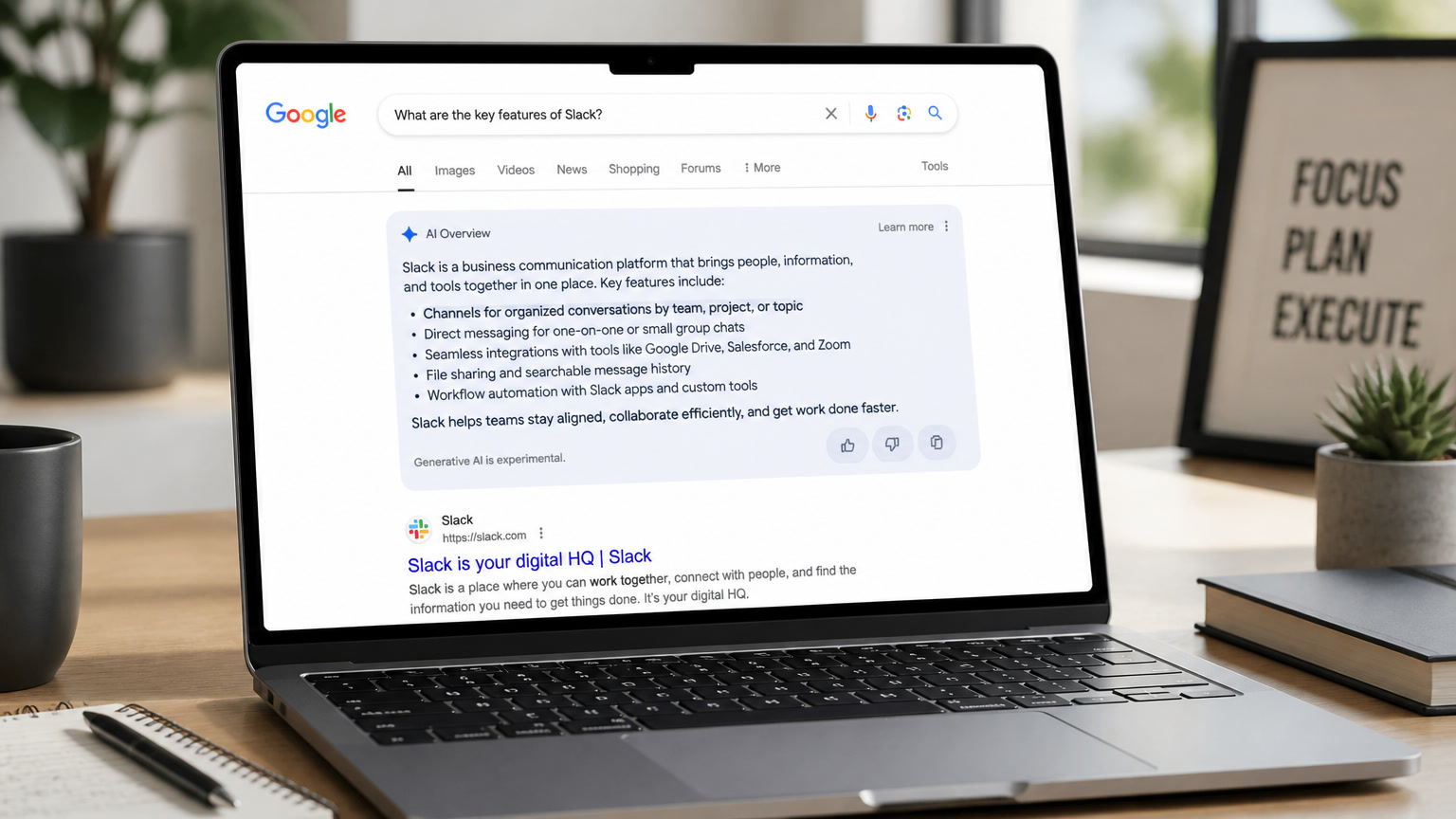


Your promo code is now an AI answer
ChatGPT prints the code with a Copy button and Google lists it in AI Mode. The promo landing page is no longer the destination — here is what to price instead.
A promo code used to be the thing you made someone visit a page to get. As of this week it is something an answer engine prints in the response, with a Copy button next to it. That removes the only reason a lot of promo traffic existed, and it changes which promo clicks are worth buying. The short version: value the offer by what survives without the visit, and stop paying for a click whose whole job was revealing a string.
Barry Schwartz documented it on November 20 at Search Engine Roundtable: ask Google or ChatGPT for a merchant's promo codes and you get them in the answer, no coupon site required. PPC Land summarised the same reporting the same day. What follows is the part that matters if you spend money on promotional campaigns.
What actually changed, and what people are getting wrong
The reflexive take is "Google and ChatGPT just started serving coupons". That is wrong in a way that will get the article you write corrected in the comments.
Google has shown coupon-style content in paid results for roughly a decade — promotion extensions, clippable coupons in ads, loyalty and member codes — and merchants have been supplying codes through structured data that can feed Search, Shopping, AI Overviews and agentic checkout in AI Mode for years. Schwartz makes exactly this point, and it is the difference between a real shift and a headline.
What is genuinely new is narrower and more consequential:
- The code surfaces inside the answer, not beside it. Google AI Mode lists codes as plain text with source cards. ChatGPT returns a structured card.
- The card carries a Copy button. One tap and the code is on the clipboard. Nothing between the answer and the checkout field.
- The card can render the code as a product. Metehan Yesilyurt's example, relayed by PPC Land, was a web-hosting query: a card per brand — Bluehost, Hostinger, Cloudways, HostPapa and one more — each with the discount, the price, an end date of December 7, the code with Copy, and a Get deal button.
- The code is not necessarily yours. One of the codes in that example was
BLACKFRIDAYREDDIT— a community or affiliate code, lifted from the page that published it. The provenance collapsed into a small "Hostinger +5" style source pill.
That last bullet is the whole problem in one string. The engine did not ask the merchant for the discount. It read it from whoever was loudest.
The engines disagree about where the code came from
The same query, four different citation behaviours. Reported by Schwartz and PPC Land, verified in their screenshots:
- Google AI Mode — codes as text, with source cards pointing at HostAdvice, Reddit and the brand's own site.
- ChatGPT — branded cards with Copy and Get deal, discount, price and expiry date.
- Claude — codes as plain text, naming Gizmodo and Cybernews as the sources.
- Free versus paid ChatGPT — Glenn Gabe's observation, quoted in the same coverage: the free tier showed full coupon cards, the paid tier returned the codes without the cards. His read was blunt — "That's concerning… Then users wouldn't have to click through."
Two things follow. The answer's sourcing is a lottery, and the merchant is only one of the tickets. And the discount is now visible to someone who never saw your page, your terms, your minimum order or your exclusion list — the card shows a number and a date, nothing else.
The code that travels is the code a machine can read
Here is the part almost nobody has measured, so I measured it. On November 22 I fetched fourteen brand promo and pricing pages with a plain HTTP request and a normal desktop user agent, then read the HTML and the JSON-LD structured data on each. No API keys, no rendering, nothing a crawler would not also see.
Seven pages responded. Six refused the request outright, and one promo path 404'd. Of the seven that answered:
| Brand | Code in its own structured data | Machine-readable price | Code visible in raw HTML |
|---|---|---|---|
| Cloudways | Yes — inside the page description | Yes (AggregateOffer) | Yes: BFCM802, 80% off for two months |
| Squarespace | No | Yes (Offer + UnitPriceSpecification) | No |
| Hostinger | No | No | No — codes sit behind interaction |
| Shopify | No | No | No |
| Wix | No | No | No |
| Grammarly | No | No | No |
| ExpressVPN | No | No | No |
Read the Cloudways row twice. Their pricing page ships, in its own metadata, the sentence: "Get 80% off for 2 months with promo code BFCM802." Not a widget, not a reveal button, not an image — the page description, which is the easiest field in the document for an answer engine to quote. Cloudways publishes its Black Friday code in a form a machine reads without rendering anything.
Now read the Hostinger row. Their coupons page answered the same fetch and contained no promo code at all; the codes are produced by interaction. And yet ChatGPT showed a Hostinger card with a code in that captured example. The code the engine displayed for Hostinger came from somewhere other than Hostinger's coupon page.
That is not a scandal. It is the mechanism. If the merchant does not publish the code in a readable form, a third party will, and the third party becomes the source of record for your discount. Schwartz raises the ugly version of the same question — whether withholding codes from bots could invite a penalty for treating search engines differently from users. It is a fair worry, and it is the wrong lever. You cannot un-publish a code that affiliates, deals forums and buyers already have.
The test: does the offer survive without the visit?
Promo campaigns have always been three events wearing one name: the click reveals the deal, the visit explains the deal, the code applies the deal. Answer engines just deleted the first one. So decide what each campaign is actually for, using four rules.
1. Buy the click only when the page does something an answer cannot. A configurator, a compatibility check, an account, a volume quote, a bundle decision, a live support answer. If the landing page's unique contribution is a five-character string, the string is already public and the click buys nothing.
2. Do not buy the click when the ad exists to reveal the code. This is the expensive mistake of the season. Paying to show a code to someone who can ask ChatGPT for it is paying twice for one reveal — once to the platform, and again in the margin you handed to a visitor who might have converted at full price.
3. Keep a code gated only if nobody else can print it. Exclusivity is the only thing that makes a reveal valuable. The moment a partner, an affiliate network or a deals account has the code, it is a public string and the gate is decorative. If you cannot defend exclusivity, do not build the campaign around a code.
4. If you cannot defend a code, move the offer to something unprintable. Extra service months, an included onboarding block, a waived setup fee, a longer trial, priority support. None of those compress into something a card can copy.
What this does to CPA, and to your affiliate partners
Two numbers move in opposite directions and both look like bad news.
Your platform CPA gets worse, because part of the demand that used to register as a paid conversion now arrives at checkout with a code from an answer and is attributed to nothing. Your discount spend goes up, because the same code reaches people who would have paid full price. Ads Manager shows you fewer conversions at a higher cost, and your finance sheet shows more margin erosion. Neither report is wrong; they are describing different halves of the same leak.
In client work, this is where promo measurement has always been soft: click, visit and code application are three separate events, and only two live in the platform's report. The answer-engine card inserts a fourth path that bypasses all three. A seasonal report arguing about CPA to two decimal places without knowing how much discount leaked outside the funnel is precision theatre.
Affiliate partnerships are the harder conversation. Most coupon deals pay on a click that drops a cookie, because the click was the whole proof of influence. A code lifted into an answer breaks that proof: the visitor applies a partner's code without ever reaching the partner. Move to unique codes per partner so the code at least identifies the source, stop paying bounties on codes you did not authorise, and accept that a leaked unique code costs you attribution, not the discount. Browser extensions already had this flaw; answer engines made it mainstream.
There is a second-order question worth asking before Friday: if the engine can print any code, is the code still a promotional asset or just a price? Once it is a price, it belongs in your pricing decision, not your campaign plan.
What to do before this week's sale
Fetch your own promo pages the way a crawler does. If the code is not in the HTML or in structured data, assume the version circulating is somebody else's — and if you want yours quoted, publish it on your own promotion page in readable text with the expiry stated. Cloudways' pattern is the one to copy: code and terms in a single sentence, inside the metadata. Then state the terms the card omits — minimum order, exclusions, stacking — wherever the visitor lands after checkout, because the card will not carry them.
The uncomfortable summary: for a decade, the promo landing page was where a discount became real. Now the discount is real in the answer, and the page is where it gets explained. Those are different jobs, and only one of them deserves a media budget.
If your seasonal promo spend needs that split built against your own accounts, our digital ads and PPC team runs it as a structured audit; the contact page is the fastest way to start. Related: how Meta now labels the offers it detects on your own site, what makes a promotional page sell once the reveal is not the hook, and Meta's landing page replacement for the larger version of that argument.
Frequently Asked Questions
Do AI Overviews and ChatGPT actually show coupon codes?
Yes, as of late November 2026. Google AI Mode lists promo codes as plain text with source cards, and ChatGPT returns a per-brand card carrying the discount, the price, an end date, the code itself with a Copy button and a Get deal button. Claude lists codes as text citing the publisher it read. The engines are not running a coupon database — they are quoting whatever they found, including community and affiliate pages.
Should I stop bidding on my own promo-code queries?
Only when the ad exists to reveal the code. If the visitor's whole job is getting the code and the answer engine already prints it, the click is buying a second reveal of information the person already has. Keep the spend when the landing page does something an answer cannot: a configurator, an account, a quote, a bundle decision, a support question answered in real time.
Can I keep my promo code out of AI answers?
Not reliably, and blocking crawlers to try is a bad trade. Every publisher that prints the code, every affiliate that republishes it and every buyer who posts it to a deals forum is a source the engine can read. The lever you actually control is which version of the offer is public: an exclusive code never handed to a publisher, or an offer that cannot be printed as a string at all, like a longer trial or an included service.
Does this change how affiliate commissions work?
It breaks the assumption underneath them. Most coupon partnerships pay on a click that sets a cookie, and the code now travels out of the publisher's page into an answer with the source reduced to a small citation pill. A code can be used by someone who never clicked. Anyone still paying per click on promo codes should move to code-level tracking with unique codes per partner, and accept that a unique code leaking into an answer costs you the attribution, not the discount.