
The AI Overview Citation Paradox: Cited Brands Get +120% More Clicks (and Everyone Else Loses)
AI Overviews reduce clicks to the #1 result by 58% (Ahrefs, 2026). But brands cited inside the overview earn 120% more organic clicks per impression than uncited competitors on the same SERP (Seer Interactive, 2026). We analyze the paradox, the data, and how to land on the winning side using the new Search Console Gen AI reports.
The AI Overview Citation Paradox: Cited Brands Get +120% More Clicks (and Everyone Else Loses)
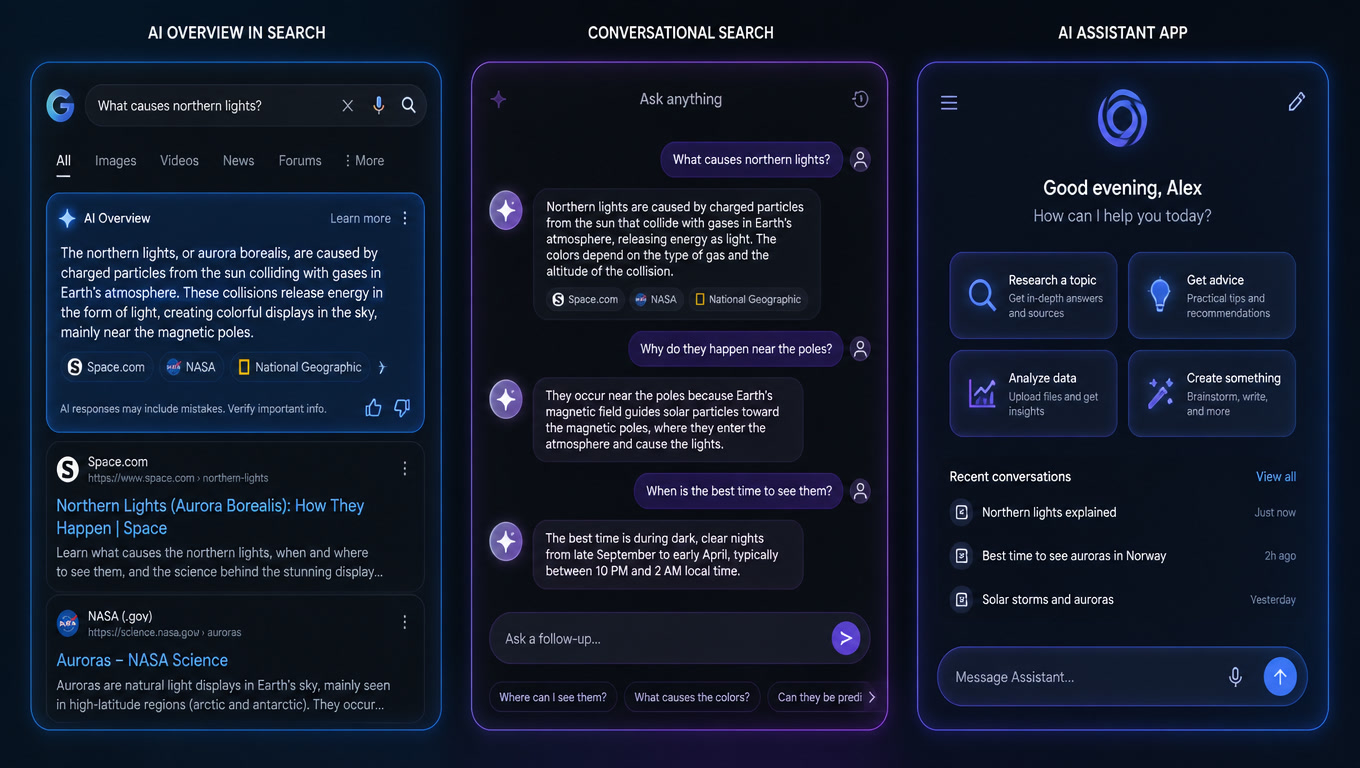
There are two truths about AI Overviews that seem to contradict each other. Ahrefs data shows overviews reduce clicks to the #1 result by up to 58%. Yet Seer Interactive found that brands cited inside the overview earn 120% more organic clicks per impression than competitors on the same page who weren't cited. Both are true. And understanding why is the only thing that matters right now.
We've spent the last year hearing that AI Overviews are the end of organic traffic. The headlines aren't wrong: Ahrefs' February 2026 study confirmed a 58% click drop for position one when an AI Overview appears. Seer Interactive measured a 61% organic CTR decline across their client base. AI Mode — Google's conversational search tier — produces 93% zero-click searches, according to data from Omnibound and Semrush.
But there's another story the headlines are missing.
Seer Interactive also published this in 2026: brands cited within the AI Overview — the ones that appear as sources in Google's generated summary — receive 120% more organic clicks per impression than competing brands on the same SERP that weren't cited. Adthena confirms the pattern from the ad side: cited brands see a 0.70% organic CTR vs. 0.52% for non-cited brands, a 35% advantage.
Traffic isn't being destroyed. It's being concentrated.
The three tiers of the AI Overview era
After implementing content strategies for clients through the first half of 2026, we're seeing results fall into three categories:
| Tier | What happens | The data |
|---|---|---|
| Cited brand + strong brand signals | You gain traffic. AI cites you and users trust you enough to click. | +120% clicks per impression vs non-cited |
| Cited brand + weak brand signals | You appear in the AI Overview but nobody clicks. Impressions without traffic. | 93% of AI Mode and ~43% of AI Overviews are zero-click |
| Not cited | Invisible. Your competitors appear in the AI summary, you don't. | -58% to -61% clicks vs pre-AI Overview baseline |
The worst place isn't tier three — it's tier two. Getting impressions without clicks gives you the illusion of visibility while your traffic evaporates. This is what Ahrefs calls "The Great Decoupling" (June 2025): impressions hold steady or rise while clicks plummet. Many site owners see a flat impression graph and assume everything is fine, not realizing real traffic is leaking through the AI pipe.
Why some brands win and others lose
What separates the winners from the impression-without-click crowd? Based on data we're seeing across Mintec clients, three factors drive the split:
1. Real-world brand authority. Google isn't just measuring whether your content answers the question. It's measuring whether users trust your brand enough to click when they see it cited. Brands with name recognition, branded search volume, and established media mentions receive more clicks from AI Overviews because users recognize the name and trust the destination. It's a virtuous cycle: more clicks reinforce brand signals, making Google more likely to keep citing you.
2. Citable content structure. Not all content is equally citable. Google's AI Overviews extract information from pages with clear structure: descriptive headings, paragraphs that answer a specific question, concrete data with sources. Vague or purely promotional content rarely gets cited. Google confirmed this in its June 29, 2026 AI optimization guide: "Optimizing for generative AI search is still SEO" — quality content remains the foundation.
3. E-E-A-T signals in the new context. Google updated its quality rater guidelines in 2026 to explicitly address how generative AI evaluates experience and authority. Pages with verifiable authorship, primary-source citations, and evidence of practical expertise (not just theoretical knowledge) are significantly more likely to be cited.
How to measure which tier you're in
On June 3, 2026, Google launched Gen AI Performance reports in Search Console. For the first time, you can see:
- Impressions of your content in AI Overviews and AI Mode
- Clicks from AI-generated search features
- Specific pages Google is citing
- Countries and devices where citations appear
If you open Search Console today and this report is empty, your content isn't being cited by Google's AI. That's a problem.
But even if you see impressions, the key metric is your click-through rate from AI citations. High impressions + low CTR means you're in tier 2: visible but not compelling enough to earn the click. The fix isn't more visibility — it's stronger brand signals.
What to do if you're not being cited
Based on what's working for our clients right now:
Map the queries where AI Overviews appear without your content. Use tools like Semrush or TurboAudit's tracking to identify which questions trigger overviews in your industry and which brands are getting cited instead of you.
Restructure content for answerability. Every section of your article should answer one specific question. Use explicit question-form headings (H2/H3) and answer directly in the first paragraph. Google's AI extracts the first paragraph after a descriptive heading for its Overview citations — make that paragraph stand alone as a complete answer.
Build brand signals outside SEO. The brands winning in the AI Overview era aren't just the ones with good content — they're the ones with media presence, social mentions, reviews on trusted platforms, and real branded search volume. Google uses these signals to decide whether citing your content is a trustworthy recommendation.
Check Search Console Gen AI weekly. The new report tells you whether your changes are working. If you see impressions rising but clicks flat, your content is being cited but your brand isn't earning trust — you need to work on brand signals, not content.
The uncomfortable decision: block or don't block
Google also lets you block your content from AI Overviews via Search Console (available since June 17, 2026). The decision isn't straightforward:
- If you block, you protect current traffic but lose all visibility in the generative AI channel — which will likely be the dominant channel in 12-24 months.
- If you don't block, you accept that some traffic converts to zero-click impressions, but you bet on building the citation frequency and brand authority that puts you in tier 1.
For most of our clients, the answer is don't block — and work on becoming the cited brand people actually want to visit. But if your business model is 100% click-dependent (transactional ecommerce, directories, lead gen), blocking can make sense as a temporary strategy while you build the brand signals needed to win in tier 1.
What comes next
The data is clear: AI Overviews are rewriting who wins organic traffic. The paradox is that while total traffic decreases, the value of being the cited brand has never been higher. The competitive advantage is no longer just having the best answer — it's having the answer the AI decides to cite and the brand trust that converts that citation into a click.
Brands that understand this paradox first will come out of this transition winning. The ones still measuring success by traditional Google rankings will watch their Search Console charts show the dreaded "great decoupling" without understanding why.
We've been through enough Google shifts at Mintec over the last 15 years to know the pattern. Every time the rules change, some win and some lose. This time, the difference isn't in the algorithm — it's in whether the AI considers your brand the right answer.
Frequently Asked Questions
Do AI Overviews destroy web traffic or concentrate it?
Both. AI Overviews reduce organic CTR by 58-61% on queries where they appear. But brands cited inside the overview earn 120% more organic clicks per impression than uncited competitors on the same SERP, according to Seer Interactive (2026). Traffic isn't disappearing — it's being reallocated toward brands the AI decides to cite.
What does it mean for a brand to be 'cited' in an AI Overview?
Google generates an AI summary that synthesizes information from multiple sources. Each source includes a link. If your page appears as a source in that summary, you are 'cited.' Google Search Console's new Gen AI Performance report (launched June 3, 2026) now shows your citation data including impressions, clicks, and pages cited.
How can I check if my site is being cited in AI Overviews?
Since June 2026, Google Search Console has a dedicated 'Generative AI Performance' report showing impressions, clicks, and pages where your content appears in AI Overviews and AI Mode. Third-party tools like Semrush and TurboAudit also offer citation tracking. If your Gen AI report shows data, you're being cited — if it's empty, your content isn't being picked up by Google's AI.