Meta Is Spending on One Ad: When to Let Delivery Run—and When to Intervene
When Meta puts most of a campaign's spend behind one ad, don't duplicate the campaign on instinct. First separate an early delivery choice from conceptually repetitive creative, weak conversion signals, or an offer that fails after the click. This 72-hour protocol shows what to inspect, what to leave alone, and when to rebuild the test.
Meta Is Spending on One Ad: When to Let Delivery Run—and When to Intervene
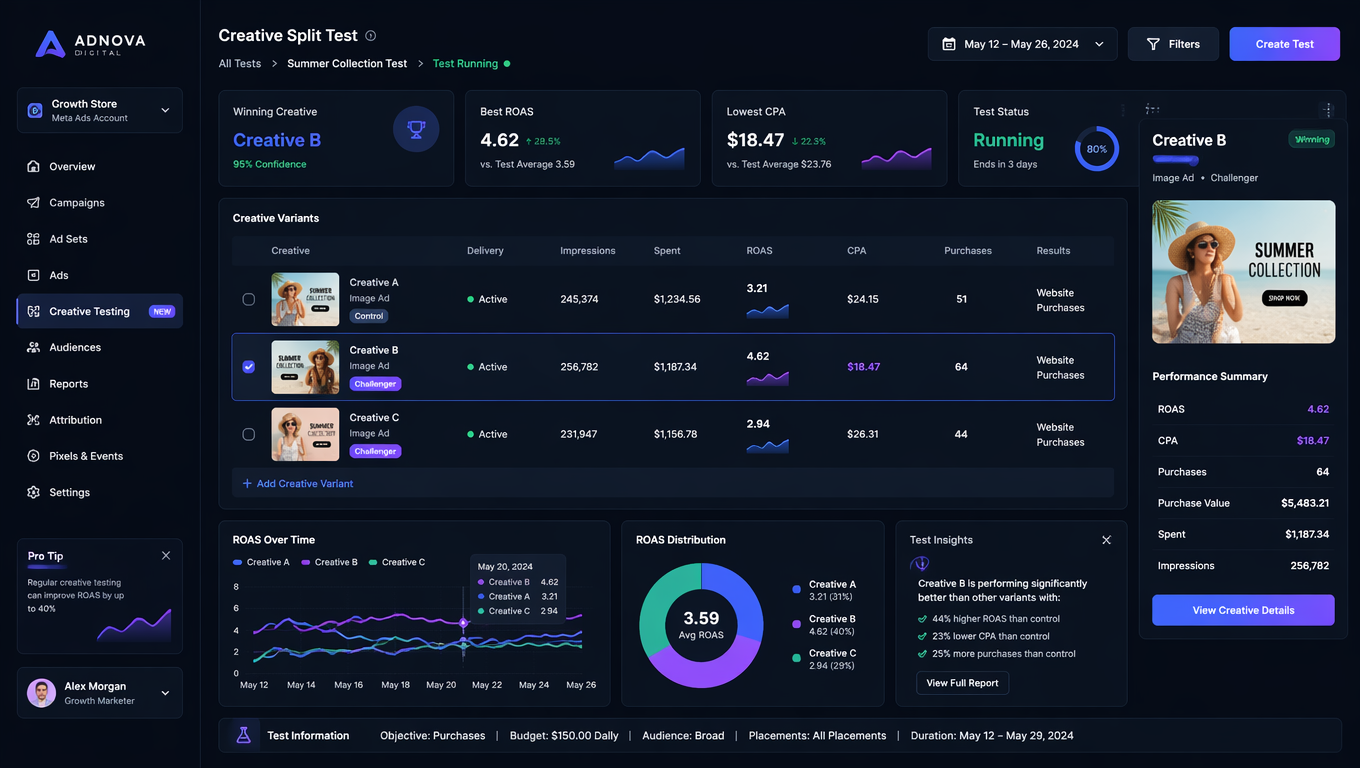
When Meta assigns nearly all spend to one ad, the answer is not to duplicate campaigns or force equal delivery. First separate an early delivery decision from conceptually repetitive creative, weak conversion signal, or an offer that fails after the click. At Mintec, we use a 72-hour delivery-concentration protocol: keep the test stable, read four signals in sequence, and intervene only when an intervention answers a specific hypothesis.
The usual reaction is to duplicate ad sets, create parallel campaigns, or pause the delivering ad to force spend into the rest. That fragments budget and learning. The goal is not democratic allocation; it is to establish whether concentration reveals a genuine winner or a badly designed test.
Concentrated delivery is not a diagnosis
Meta delivery is not a lab experiment with identical budget per asset. The system tries to find the combination of ad, person, and moment most likely to produce the event you asked for. If one asset picks up a stronger early response signal, delivery can concentrate there before the rest have a comparable opportunity.
In the Andromeda environment, creative is also an increasingly important part of the targeting signal. Two ads do not become distinct just because a human can see different colors or a new headline. They need to give the system reasons to search for different people. Our breakdown of creative testing under Meta Andromeda explains why a portfolio of genuinely different concepts teaches more than a batch of versions of the same idea.
That produces an uncomfortable but useful principle: an ad receiving more spend is not automatically the best ad, and an ad receiving little spend is not automatically a good one. Before moving budget, identify which of four situations you actually have.
| Pattern you see | Most likely explanation | First move |
|---|---|---|
| One ad takes 70–90% of early spend, but there is little spend per asset | Early delivery choice, not enough evidence | Do not edit; use a pre-set read threshold |
| Many ads share image, offer, script, or promise | Cosmetic variants competing as one idea | Rebuild concepts; do not open more ad sets |
| All ads have weak delivery and few optimization events | Weak signal, fragmented budget, or setup issue | Audit pixel/CAPI, event, budget, and structure |
| A winner gets spend, CTR, and visits but no sales or qualified leads | The bottleneck is after the click | Audit offer, page, form, and follow-up |
The Mintec rule: validate the test before judging the ad
Before debating whether an ad deserves more delivery, we answer four questions. If one fails, it is not time to optimize creative; it is time to repair the experiment.
1. Can the budget evaluate the number of ads you uploaded? A test with twelve assets and budget for only a handful of events is not a twelve-ad test. It is a campaign forcing the system to choose fast. Rather than demand artificial equality, reduce the number of active concepts or fund the learning period properly. We define in advance how much spend an asset must collect relative to target CPA before it can be called a loser. Without that threshold, every decision is a reaction to the interface.
2. Is the optimization event sufficient and reliable? If you optimize for purchases while Pixel, Conversions API, or event matching is incomplete, Meta has little to learn from. If you optimize for clicks merely to “give creative a chance,” you invite a different signal from the one that pays the bill. Do not change the objective to make distribution look better. First audit duplicate events, values, currencies, deduplication, and the speed at which the event reaches the platform.
3. Are the ads different ideas or merely variants? A color change, moved headline, or replacement stock image rarely creates a new delivery path. In our Creative Similarity Score analysis, we explain why surface-level variations can get grouped and cannibalize each other. A pain-point concept, product demonstration, specific testimonial, comparison, and direct offer do give the system distinct signals.
4. Does the promise survive the click? An ad can win the auction and lose the business. High CTR with weak product-view, form, or purchase rates points to a promise the page cannot sustain, mobile friction, surprise pricing, or slow follow-up. Forcing spend onto a different ad will not fix that leak.
The 72-hour protocol: what we do and what we leave alone
This is the operating process we use when an account reports Meta is “ignoring” creative. It is not a promise that every account will mature at the same pace. It is a way to keep anxiety from destroying the signal you are trying to read.
Before launch: define the test contract
Write down the objective, optimization event, target CPA or CPL, learning budget, number of concepts, and per-ad spend threshold that enables a decision. Ensure every asset has the same offer, destination, and attribution window. Otherwise you are not comparing creative; you are comparing different experiments.
We also define the job of each asset. If two ads exist to test the same argument, one is a constrained variation, not a supposedly new concept. That matrix discipline matters more than generating twenty files. In a system that rewards diversity, a smaller portfolio of truly separated ideas usually teaches more than a huge batch of near-duplicates.
Hours 0–72: stability plus technical inspection
For the first 72 hours, do not alter budget, targeting, bid strategy, and creative at the same time. We correct only an unambiguous technical problem: broken URL, missing event, rejection, out-of-stock product, or price mismatch.
We do inspect four indicators, but do not use them to crown winners yet: per-ad spend, impressions, link CTR, and arrival of the optimization event. If the leader absorbs spend while the others have not reached the written threshold, the honest conclusion is “we do not know yet.” If all assets have weak delivery, inspect signal and audience scale before requesting more ads.
That controlled pause matters even more when CPMs are rising. Splitting campaigns can make auction pressure look like creative failure. Our analysis of Meta CPMs and seasonal auction pressure explains why the campaign should be compared with its own baseline, not a single screenshot.
The first decision: concentrate, iterate, or diagnose
When 72 hours and the agreed spend threshold are reached, each asset enters one of three routes:
- Concentrate with control. If the dominant ad meets target CPA or produces better traffic quality than the account baseline, do not punish it for winning. Keep it live and watch frequency, CTR, and post-click quality. Winning delivery is not permission to scale blindly.
- Iterate the concept. If an asset produces a reasonable signal but misses the standard, do not replace everything. Keep the hypothesis and change one meaningful dimension: angle, proof, format, or objection handled. Changing hook, offer, image, and CTA together creates no reusable learning.
- Diagnose outside creative. If the ads earn clicks and visits but not business events, freeze the urge to make more ads. Inspect the landing page, form, inventory, pricing, and sales process. A creative asset cannot repair a broken journey.
When it is valid to isolate an ad in a new campaign
Isolation only helps when it answers a question the campaign cannot—for example, whether a strong ad is receiving a different placement or audience mix. Then run a diagnostic with comparable conditions and one changed variable. Do not create “one campaign per ad”: it sacrifices signal and multiplies maintenance. We isolate only with a written hypothesis, extra learning budget, and a decision date. For a low-spend asset, ask whether it represents a distinct concept and whether the account has enough budget and signal; if not, improve the test design rather than forcing delivery.
Replace “why isn’t it spending?” with “what did we learn?”
Pressure for even distribution usually comes from a dashboard that rewards activity rather than decisions. The weekly report should show the delivered concept, its signal, the confirmed or rejected hypothesis, next week's single change, and what remains stable.
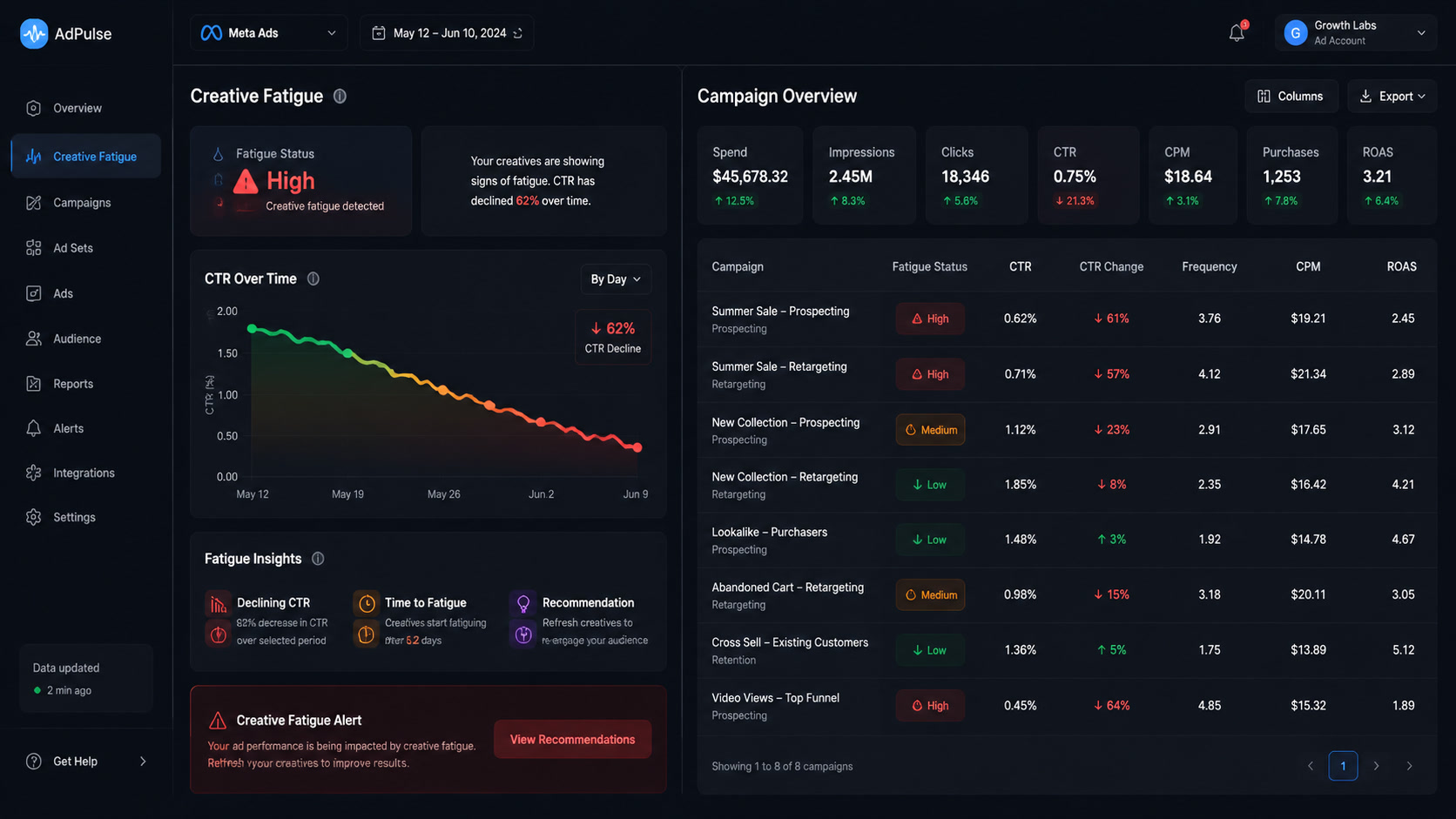
That prevents every under-spending ad from becoming an emergency and protects the leader from clumsy optimization. Under Andromeda, detect fatigue through ad-level CTR and frequency before CPA deteriorates; use our creative-fatigue detection framework.
The takeaway is simple. Let Meta locate an initial signal, but do not mistake speed of delivery for truth. Validate budget, conversion signal, concept diversity, and the post-click journey. Hold the test steady for 72 hours. Then take a decision that preserves learning: continue a winner, iterate one hypothesis, or repair the real bottleneck. That produces stronger campaigns than forcing every ad to spend equally.
Sources: Segwise, Meta Andromeda update and creative strategy; Jetfuel Agency, what Andromeda changed and how to adapt; Mintec’s operating observations from paid-media testing. Platform and agency metrics are directional; validate every decision against account data, margin, and conversion quality.
Frequently Asked Questions
Why is Meta spending almost all of my budget on one ad?
Usually because that ad produced the first response signal the system can use, because the other ads are too similar to open distinct delivery paths, or because the budget and conversion signal cannot support a fair read across several ads. Concentrated spend alone does not prove that something is broken.
Should I create a separate Meta campaign for every ad?
Not as an automatic response. Separating every ad fragments budget, audiences, and conversion signal. Use a separate campaign only for a diagnostic experiment with a written hypothesis; for normal creative learning, keep comparable conditions and test genuinely different concepts together.
How long should I wait before pausing a Meta ad that is not spending?
Do not decide from a few hours or isolated impressions. First confirm that the test has enough budget relative to your target CPA and that the optimization event is arriving reliably. If ads still have no delivery after 72 hours and a pre-set spend threshold, inspect creative similarity, signal quality, and structure before launching more campaigns.