Meta Killed Attribution Windows: How to Rebuild Your Measurement in 2026
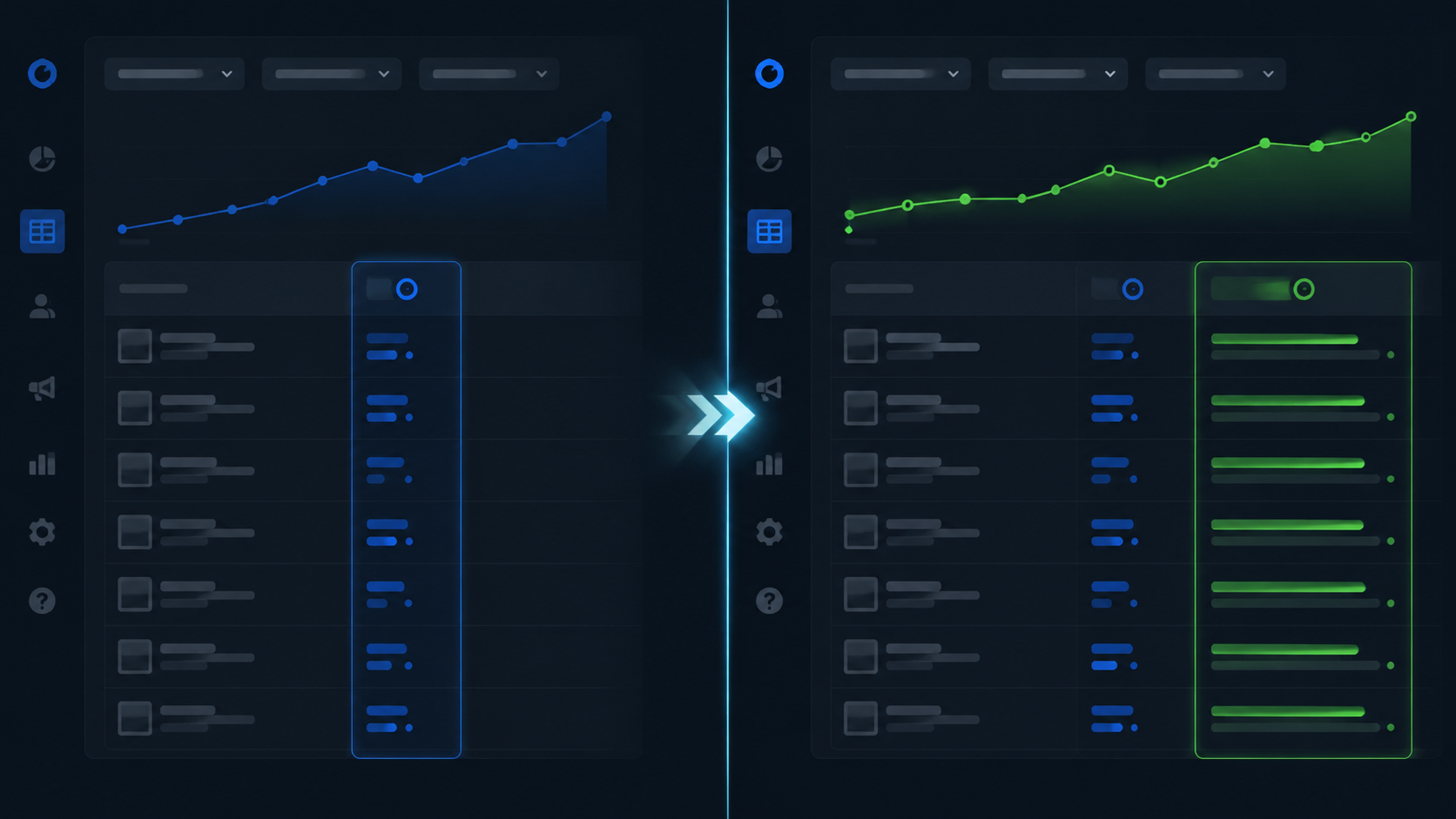
On January 12, 2026, Meta permanently removed 7-day and 28-day view-through attribution windows. Reported conversions dropped 15-40% for most advertisers overnight. This isn't another 'what changed' article — it's a 3-step framework for rebuilding your measurement system when Meta's reporting is no longer the truth.
Meta Killed Attribution Windows: How to Rebuild Your Measurement in 2026
On Monday, January 12, 2026, thousands of advertisers opened Meta Ads Manager and saw something they didn't expect. Reported conversions had dropped between 15% and 40% overnight. No warning. No campaign changes. No real traffic decline.
It wasn't a bug. It was Meta silently removing 7-day and 28-day view-through attribution windows.
What followed was predictable: panic in advertising forums, conspiracy theories about "Meta wanting you to spend more," and a flood of articles explaining what had changed. This isn't one of those articles. This is what we learned managing client campaigns through the transition, and the three-step framework we use to rebuild measurement when Meta's reporting stopped being our source of truth.
What Happened (and What Didn't)
Meta permanently removed 7-day and 28-day view-through attribution windows from its reporting API. Since January 2026, the only available windows are:
- 1-day view: attributes a conversion if the user saw the ad within the last day (without clicking).
- 7-day click: attributes if the user clicked within the last 7 days.
This didn't affect how Meta optimizes ad delivery. As Jon Loomer (March 2026) and Williams Randall Advertising confirmed, campaigns had already been optimizing to the 7-day click / 1-day view window for years. The algorithm didn't change. What changed was the retroactive reporting of conversions attributed to long view-through windows.
The practical result: if a user saw an ad on day 1, didn't click, and purchased on day 20 —that conversion stopped appearing in Meta Ads Manager. The actual sale still happened. It just stopped being attributed.
The impact was massive for businesses with long decision cycles (60-90 days in online education, insurance, B2B SaaS, or automotive). For short-cycle ecommerce, the hit was smaller but still significant.
The Real Problem Isn't Reporting — It's Decision-Making
The most common mistake we saw in the weeks following the change was this: marketing teams watching reported conversions drop and, panicked, doubling budgets to "recover volume" or, worse, killing campaigns that were actually working.
The drop in reported conversions wasn't a drop in real conversions. The business was still generating revenue. But because the metric everyone trusted —the number in Ads Manager— had shrunk dramatically, confidence in the platform broke.
This is the real problem nobody is talking about: for years, we built decision-making processes around a metric that Meta controlled unilaterally. When Meta changed it, those processes broke.
A 3-Step Framework for Rebuilding Your Measurement
This is what we implemented with our clients after January 12. It's not theory —it's what works when you're managing real accounts with real budgets.
Step 1: CAPI as Your Backbone (No Longer Optional)
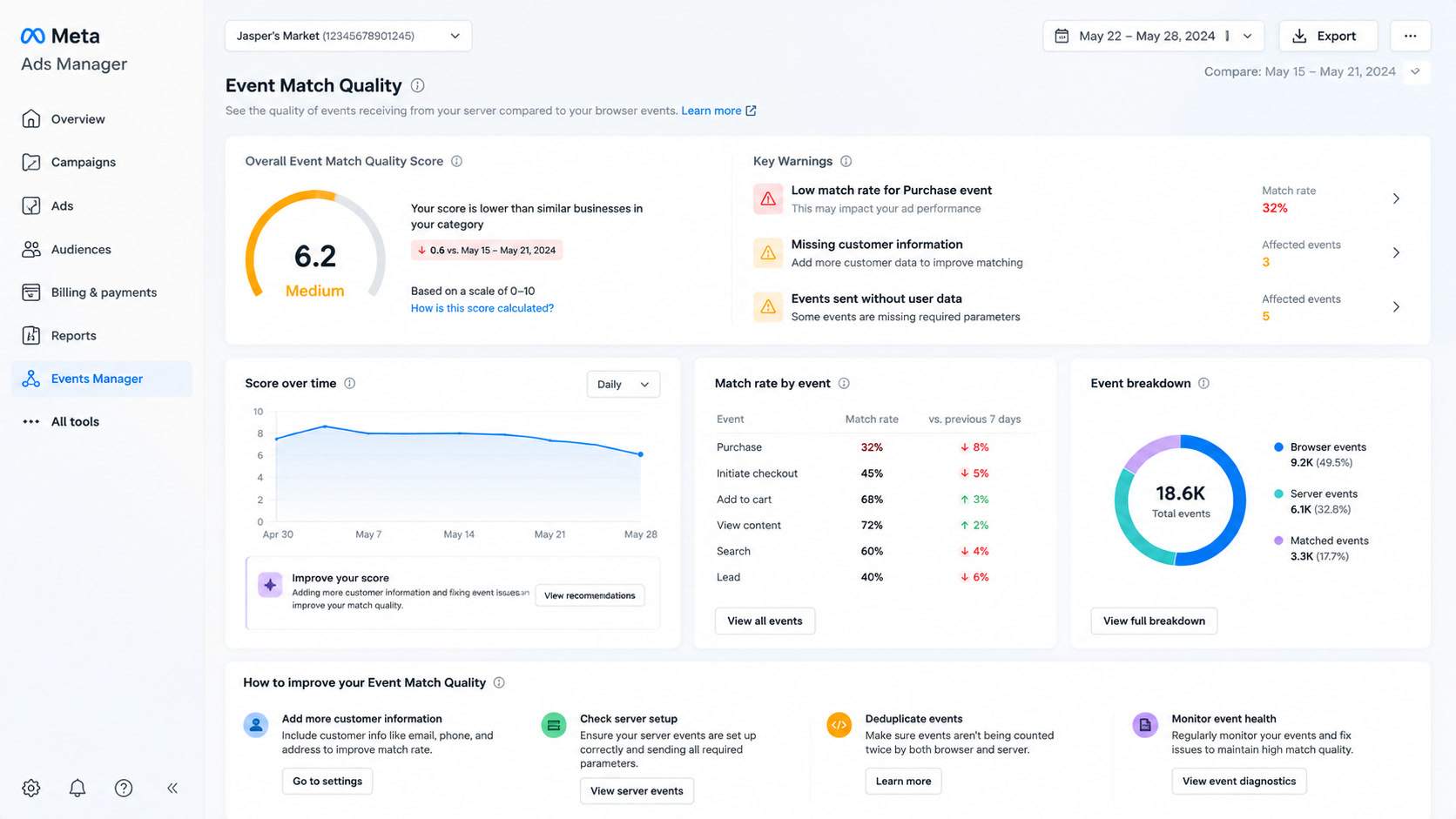
Conversions API (CAPI) went from "recommended best practice" to an absolute requirement for any advertiser spending more than $1,000/month on Meta.
If you're only using the Meta pixel, you're missing between 30% and 60% of conversion events, especially on iOS. Server-side implementation captures events that browser-based pixels never see: in-app purchases, conversions on cookie-less devices, leads that close offline.
What works:
- Dual implementation: pixel + CAPI with event deduplication. According to Triple Whale and AdMove (2026), this combination recovers 60-80% of the attribution accuracy lost to iOS and the window changes.
- Prioritize high-quality identifiers: hashed email, phone number, fbclid, fbp cookie. More identifiers mean higher Meta matching rates.
- Configure the
event_source_urlparameter so Meta can distinguish between web and offline events.
Without CAPI, the rest of this framework doesn't work. It's the foundation.
Step 2: Establish an External Source of Truth
The most important metric after January 12, 2026 is no longer "conversions in Meta Ads Manager." It's the relationship between what Meta reports and what your internal system records.
At Mintec, we use this weekly comparison:
- Meta reported conversions ÷ CRM/sales conversions = health ratio
- Healthy post-January 2026 range: 0.9x — 1.4x (per Bons & Frazer, May 2026)
- Below 0.9x: likely CAPI implementation issue or missed events
- Above 1.4x: possible conversion duplication or overly long click window
Your external source of truth could be:
| Source | When to use it |
|---|---|
| CRM (HubSpot, Salesforce) | B2B leads and sales — most reliable because it captures the full cycle |
| GA4 | Ecommerce and lead gen — useful for viewing the full funnel |
| Triple Whale / Northbeam | DTC and ecommerce — purpose-built for cross-platform attribution |
| Google Sheets with sales data | When there's no budget for tools — better than nothing |
The process we follow: every Monday, export Meta conversions from the previous week, compare them against same-period conversions from CRM or GA4, and calculate the ratio. If it's within range, we trust Meta trends for tactical decisions. If it's outside range, we investigate before touching budgets.
Step 3: New Benchmarks — Trend-Based, Not Absolute Value
Before the change, many teams had fixed KPIs: "CPA under $20" or "ROAS above 4x." Those numbers stopped making sense when the underlying metric was redefined.
The approach that works:
Trend indicators (not absolute values):
- "This week's Meta CPA is within the expected range compared to the last 4 weeks" — far more useful than "CPA < $20"
- "The Meta/CRM ratio has been stable (±10%) for 3 consecutive weeks" — signal that your measurement system is reliable
- "CRM conversion volume is growing even though Meta reports fewer" — signal that the business is healthy even if platform reporting says otherwise
Internal rule we apply: for budget scaling decisions (>20% increase), we require confirmation from at least two sources —Meta trend AND CRM/GA4 trend. For tactical decisions (bid adjustments, creative rotation), Meta trend alone is sufficient if the Meta/CRM ratio has been stable.
What We Learned Managing the Transition with Clients
Three frontline lessons:
First: the accounts that survived the change best were the ones that already had CAPI implemented. Not a coincidence. Accounts relying solely on the pixel spent 3-4 weeks diagnosing the problem before realizing it wasn't a problem —it was the new normal.
Second: panic led to bad decisions. Several clients doubled budgets in the weeks following the change, thinking "something stopped working." When we analyzed real sales —what their CRM actually recorded— the business hadn't changed. Only the metric had.
Third: this change isn't the last one. Meta, Google, TikTok —all platforms are moving in the same direction: less attribution transparency, more modeling, more dependency on first-party data. Building a measurement system that doesn't depend on any single platform's attribution windows isn't a temporary fix —it's the only way to be ready for the next change.
Conclusion
The removal of 7-day and 28-day view-through windows wasn't a Meta mistake. It was a deliberate push toward a more conservative —and arguably more realistic— attribution model. Long view-through windows were over-attributing conversions that had little to do with the ad. Now the pendulum has swung to the other extreme.
The trick isn't to fight the change or wait for Meta to "fix it." It's to build a measurement system that works regardless of how Meta decides to count conversions.
Three things to do this week:
- Implement CAPI if you haven't already. It's the single highest-impact step.
- Set up a weekly Meta vs CRM/GA4 comparison with alerts when the ratio falls outside the 0.9x-1.4x range.
- Review your KPIs. If you're still using absolute CPA/ROAS targets based on pre-January 2026 Meta metrics, switch to trend-based indicators.
Want us to audit your measurement setup and identify the gaps before your next budget scale? Talk to our paid media team. No fluff —just diagnostics, fixes, and real measurement.
Frequently Asked Questions
What exactly happened to Meta's attribution windows in January 2026?
On January 12, 2026, Meta permanently removed 7-day and 28-day view-through attribution windows from the Ads Insights API. Only 1-day view (conversion within 1 day of viewing an ad without clicking) and 7-day click (conversion within 7 days of clicking) remain available. This didn't change how Meta optimizes ad delivery —they'd already been optimizing to 7-day click/1-day view for years— but it changed how conversions are reported, causing 15-40% drops in reported conversions for most advertisers.
Why did reported conversions drop if the ads were still working?
Because conversions that were previously attributed to long view-through windows (someone saw an ad, didn't click, and purchased up to 28 days later) stopped being counted in Meta's reporting. The actual conversions didn't disappear —they just stopped being attributed by the old model. This is why having an external source of truth (CRM, GA4, Triple Whale) that doesn't depend on Meta's attribution windows is critical.
How often should I compare Meta conversions with my CRM?
We recommend a weekly comparison. The healthy post-January 2026 ratio between Meta-reported conversions and CRM conversions should be between 0.9x and 1.4x. Below 0.9x likely indicates a CAPI implementation issue. Above 1.4x may indicate duplicate conversion counting or an overly long click window.