Headless CMS: Why Modern Web Development Is Going Architecture-First
Headless CMS adoption is accelerating. We break down the market data, compare the top platforms, and explain when going headless makes sense for your business — and when it doesn't.
Headless CMS: Why Modern Web Development Is Going Architecture-First
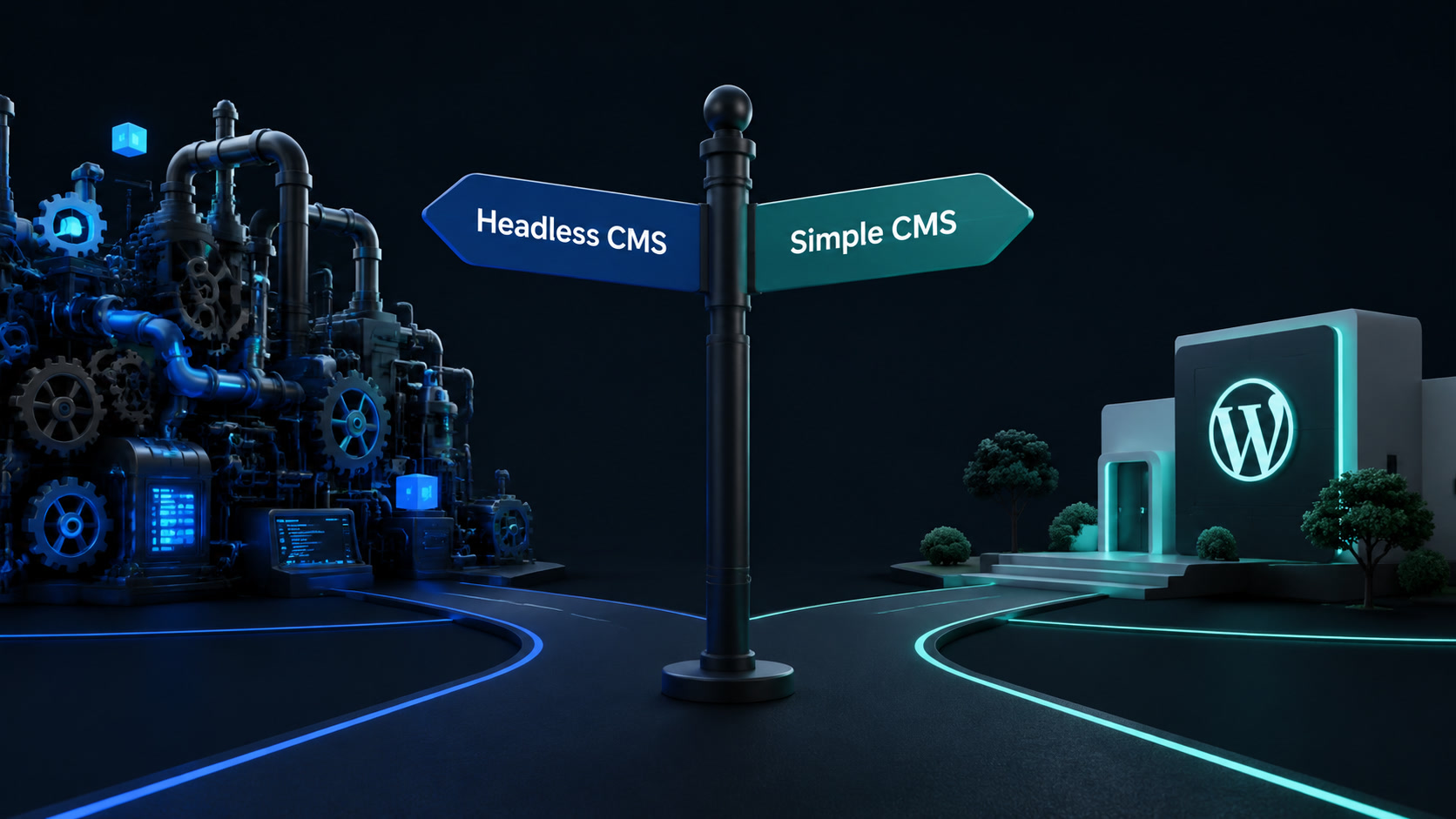
I keep having the same conversation with development teams. Someone asks: should we go headless? The dev team says yes because it's flexible and modern. The marketing team hesitates because they've heard "headless" means losing the visual editor they depend on. Both sides have a point — and neither is wrong.
The short version: headless CMS adoption has crossed the chasm. According to the Future Market Insights 2026 report, 58% of new enterprise web projects now start with a headless architecture. That's up from roughly 30% in 2023. The question isn't whether headless is the future anymore. It's whether your specific project actually needs it.
What a Headless CMS Actually Does
Traditional CMS platforms like WordPress and Drupal bundle the content editor and the website display into one system. They work. Millions of sites run on them. But the coupling means your front-end framework choices are limited, content reuse across channels is painful, and performance often depends on caching hacks rather than architecture.
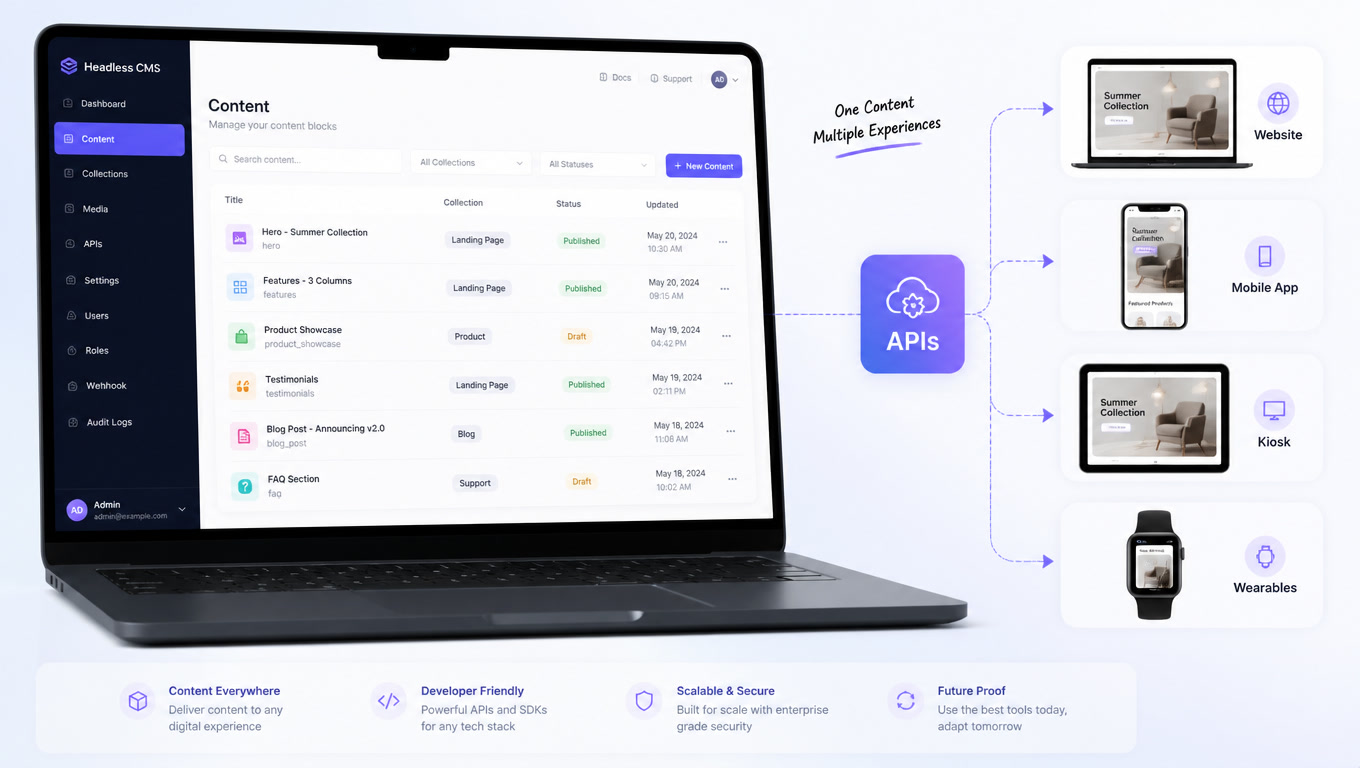
A headless CMS separates the two. The content lives in a back-end repository and gets delivered via API. The front-end can be anything — React, Vue, Astro, a mobile app, a digital kiosk, even a voice assistant. Same content, different outputs, no duplication.
The CMS market overall is projected to hit $123 billion by 2026, according to GlobeNewswire data cited by TrueList. Within that, the headless segment is growing at roughly 22% CAGR. Not explosive startup territory, but solid enterprise adoption.
Who Actually Benefits From Going Headless
The honest answer: not everyone.
Headless makes sense when:
You need multi-channel content. If your content feeds a website, a mobile app, an email system, and maybe a smart display or two, headless saves you from managing four separate content repositories. Write once, API everywhere.
Your front-end team wants modern tooling. Headless pairs naturally with Jamstack architectures — Astro, Next.js, Nuxt, Eleventy. Build times drop. Developer experience improves. Security surface shrinks because there's no database exposed to the public internet.
Content editors can handle the trade-off. This is the part people skip. Modern headless CMS platforms — Sanity, Contentful, Strapi, Hygraph — have gotten much better at editor experience. Visual previews, structured content blocks, and live editing are standard now. But it's not WordPress. If your editorial team needs to drag-and-drop a new layout element every week, headless introduces friction.
Our experience at Mintec: the teams that succeed with headless are the ones that invest in the content model before they start building. You can't just migrate a WordPress blog to a headless CMS and call it a day. You have to think about content types, relationships, and reuse patterns upfront. That up-front investment pays back fast if you have multiple channels, but it stings if you don't.
The Platform Landscape in 2026
The tools have matured considerably. Here's how the major players stack up.
Sanity
Sanity leads on flexibility. Its Portable Text format lets you compose content as structured data rather than blobs of HTML. Real-time collaboration works well — multiple editors can work on the same document simultaneously. The GROQ query language has a learning curve but becomes powerful once you're past it. Sanity's biggest weakness: cost scales with API usage, and heavy content operations can get expensive.
Contentful
Contentful is the enterprise default. The app framework lets you extend the editor with custom widgets, and the content infrastructure is battle-tested at scale. The downside: pricing tiers are rigid, and the migration between plans can be painful. Contentful works best when you have budget and a dedicated content operations team.
Strapi
Strapi remains the strongest open-source option. The self-hosted model means no API usage costs and full data control. Version 5, released in late 2025, improved the admin panel significantly and added native TypeScript support. The ecosystem of plugins is growing, though quality varies. Strapi suits teams that want control and have DevOps capacity to manage their own infrastructure.
Hygraph (formerly GraphCMS)
Hygraph leans into the federated content model — pulling in data from other sources alongside your CMS content. If your content lives in multiple systems and you need a unified GraphQL API, Hygraph makes that relatively clean. The schema modeling is intuitive. Less suited for simple blogs or brochure sites where the overhead isn't justified.
Astro + Markdoc (What This Blog Uses)
This site runs on Astro with content stored as Markdoc files in a Git repository. It's not a traditional headless CMS — there's no admin panel or API — but it follows the same principle: content is separated from presentation and served at build time. For a marketing site where most content changes happen through pull requests, this workflow is fast, cheap, and gives developers full control. The trade-off is that non-technical editors need a Git-based workflow or a visual CMS layer on top.
The Hard Parts Nobody Talks About
I've worked on enough headless migrations to know where they go wrong. The patterns repeat.
The preview problem. In a traditional CMS, what you see in the editor is what visitors see. In a headless setup, your editors need a preview environment that renders the front-end with draft content. Setting this up properly takes work. Contentful and Sanity both offer preview hosting, but it needs front-end configuration and adds deployment complexity.
Content model rigidity. Headless CMS platforms love structured content. The problem is that reality is messy. If your content model requires three levels of nested references to publish a simple page, your editors will hate you. The best headless implementations keep the content model as flat as possible and add structure only where multiple channels genuinely need it.
Media management can be a bottleneck. Images, videos, and documents need to be optimized, transformed, and delivered fast. Some headless CMS platforms include CDN-based image transformations. Others require a separate DAM solution. Either way, it's something to plan for, not an afterthought.
When to Stay With a Traditional CMS
Sometimes the right answer is WordPress, and that's fine. You should stick with a traditional CMS when:
- Your content team outnumbers your dev team. If five editors and one developer maintain the site, the drag-and-drop interface of a traditional CMS wins every time.
- You have one channel. A single website with no mobile app, no kiosk, no multi-brand strategy. The architectural benefits of headless don't justify the overhead.
- Speed of content publication matters more than performance. WordPress with good hosting and a caching plugin loads plenty fast. The incremental speed gain from headless won't matter to your users if your content is stale.
Related articles
- Composable Web Architecture: Headless CMS, SSGs, and the End of Monolithic Sites
- Web Accessibility: Why Your Website Is Costing You Customers (And How to Fix It)
- AI-Powered Web Development: From Vibe Coding to Production
Getting Started With Headless
If you're considering the switch, here's a practical starting point:
- Audit your content. List every channel, every content type, and every reuse pattern. This determines whether headless adds value.
- Prototype the editor experience. Let your content team spend a day in Sanity or Strapi before you commit. Their feedback will shape your choice more than any feature comparison.
- Plan the preview workflow. Don't launch without a working preview for drafts. Your editors will revolt.
Real-World Migration Example
We worked with a mid-market e-commerce brand last year that was running on a heavily customized WordPress setup. Their editorial team loved the familiar dashboard. Their developers hated the spaghetti of custom post types and ACF fields that had accumulated over five years. The migration took twelve weeks: four to model the content, four to build the front-end in Astro, two to migrate the data, and two for QA and editor training.
The result: build time dropped from forty seconds to under two. Their Lighthouse performance score went from the low 60s to the high 90s. And the editorial team? After the first week of using Sanity's visual editor, they stopped asking for the WordPress dashboard back. The key was investing in the onboarding — a dedicated two-day workshop where we walked through every content type, every workflow, and every edge case. Half the migration budget went to training and documentation, and it paid for itself within a month.
At Mintec, we build headless architectures for clients who need content that works across channels — websites, apps, email, and beyond. We typically start with the content model and work outward, which avoids the most common migration headaches.
Explore our web development services →
For more on modern web architecture, check out our guide to why high-growth brands are abandoning standard themes for headless commerce, our take on vibe coding as a developer force multiplier, and the characteristics of a truly professional website.
Sources
- Future Market Insights, "Headless CMS Market and Adoption Data 2026"
- GlobeNewswire via TrueList, "CMS Usage Statistics 2025"
- Colorlib, "CMS Market Share 2026: 80+ Statistics, Trends & Data" (https://colorlib.com/wp/cms-market-share/)
- caisy, "Headless CMS Market Size Analysis" (https://caisy.io/blog/headless-cms-market-size)