
Google Published Its Official AI Optimization Guide. Here's What They Got Right (And Wrong)
Google published its first official guide to optimizing for AI search — and it says traditional SEO is enough. After 15 years optimizing for Google, I'll tell you why that answer is dangerously incomplete — and what to do if you don't want to go invisible in AI Mode.
Google Published Its Official AI Optimization Guide. Here's What They Got Right (And Wrong)
On May 15, 2026, Google did something many of us had been asking for since 2024: it published an official guide explaining how to optimize websites for its AI search features — AI Overviews, AI Mode, and the new Search Agents.
It's called Optimizing your website for generative AI features on Google Search, and it lives in Search Central under a new "Generative AI fundamentals" section. John Mueller announced it on the Google Search Central Blog.
I read it the day it dropped. I've read it three more times since. And I have mixed feelings.
The guide gets important things right. But it also sidesteps the uncomfortable questions — the ones that determine whether your website survives the paradigm shift or becomes background noise that AIs ignore.
What Google said (the short version)
The guide has one central message that the industry received with relief: "AI optimization is just doing SEO well."
No new tactics. No tricks. No magic files. Google insists that the same practices that worked for traditional ranking — quality content, structured data, E-E-A-T, solid technical architecture — are what you need for AI-generated answers.
Sounds reassuring. Problem is, it's not the whole truth.
Google has a massive incentive to minimize the change. If it admitted that SEO changed radically, it would be admitting that its own product (traditional search that drove traffic to websites for 20 years) is being cannibalized by its new product (AI Mode, which generates answers without sending clicks). Politically, the only answer Google can give is "everything is fine, keep doing what you're doing."
But the data tells a different story.
What the guide gets right
That said, the guide isn't wrong about what it says. Three things stand out:
Structured data matters more than ever. Google confirms that schema markup — especially FAQ, HowTo, Article, Product, and Organization — is one of the strongest signals for getting cited in AI Overviews and AI Mode. The difference isn't marginal — 2026 research shows 30-40% higher visibility in AI-generated answers for content with well-implemented schema. We've seen this at Mintec: clients who implemented FAQ schema doubled their AI Overview citations within weeks.
E-E-A-T wasn't a joke. The guide dedicates significant space to Experience, Expertise, Authoritativeness, and Trustworthiness. In practice, pages with verifiable authorship (author bylines with bios, LinkedIn links or credentials), citations to original sources, and regular updates have a clear advantage over generic content with no signature. AIs need confidence to cite a source, and E-E-A-T is the most direct mechanism for building it.
Original, well-structured content wins. Google says: "Create content that provides unique value and is well-organized." Translation: the generic articles that summarize what others already said — the kind any LLM can produce in seconds — won't get cited. The guide rewards content with an original thesis, proprietary data, or a framework that doesn't exist elsewhere.
What the guide sidesteps
Here's what bothers me reading this as someone who's done SEO for 15 years.
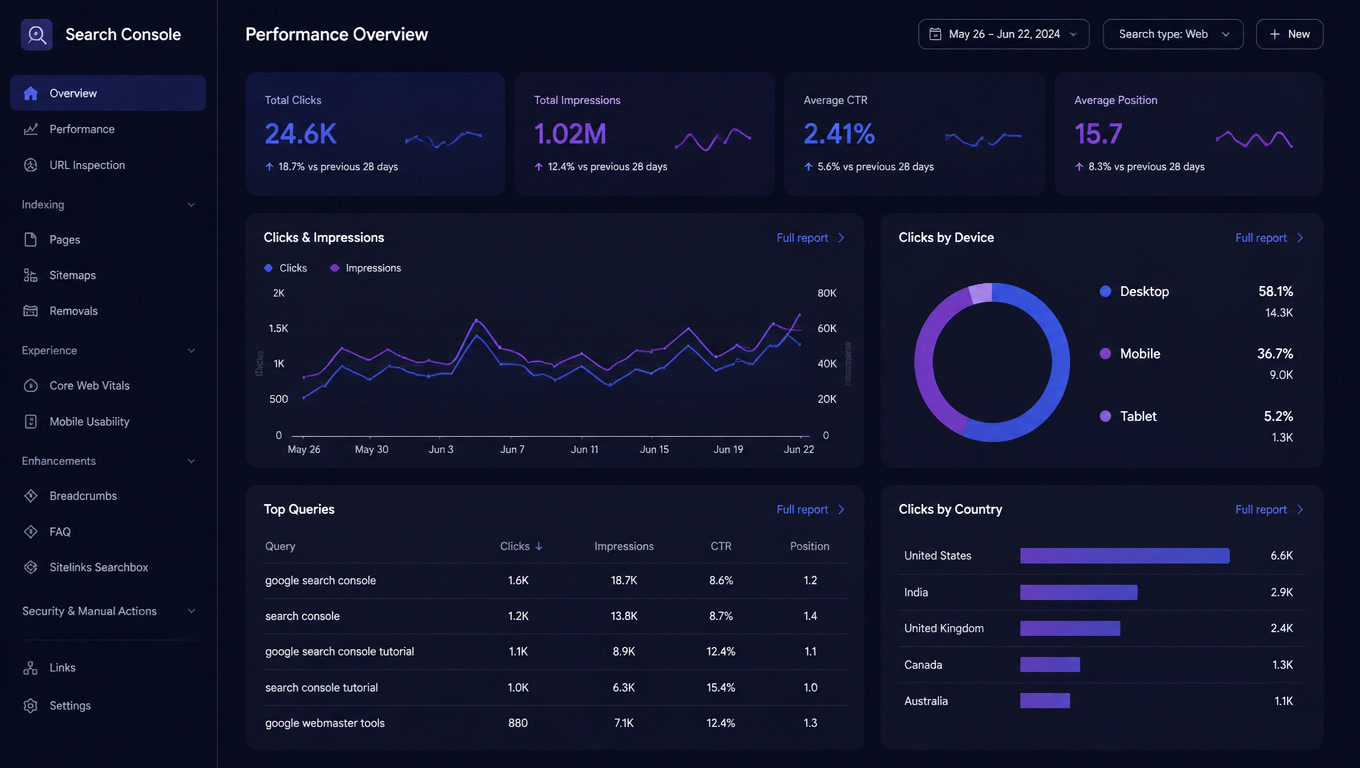
It doesn't address the click problem. AI Mode and AI Overviews exist to answer questions without the user clicking anything. Google tells you to "optimize for AI" but doesn't mention that referral traffic from traditional search is declining and will keep declining. According to widely-cited Ahrefs data, average organic CTR has dropped 58% on informational queries since AI Overviews launched. Semrush reports 34.5%. Both are independent measurements with different methodologies, but they converge in the same direction.
Google won't put that in its guide. But we can: optimizing for AI is not the same as optimizing to receive clicks. Sometimes they're opposing goals.
It ignores the role of entities. The guide mentions structured data but doesn't dig into what actually separates content that AIs cite from content they ignore: entity clarity. AIs need to understand who you are, what you do, and why you're an authority — and that's built through entity SEO (entity markup, semantic relationships between concepts, and consistent representation of your business as a recognizable entity). Google's guide treats this as an afterthought when it's probably the most important factor after basic schema.
It underestimates fragmentation. The guide treats Google as if it's the only AI engine that matters. But your audience finds you through ChatGPT, Perplexity, Gemini, Copilot, and — soon — Search Agents running 24/7 monitoring specific topics. Each platform has its own citation signals. Optimizing only for Google AI Mode leaves you exposed on the other five. A complete GEO strategy has to be multi-platform.
The elephant in the room: llms.txt
The guide opens its myth-busting section with llms.txt. Google says it doesn't use it, it's not a ranking signal, and people shouldn't waste time maintaining it.
Google is right. But this is an easy win. The real problem isn't llms.txt — it's that a whole industry of "GEO gurus" sold miracle tactics (llms.txt, AI.txt, "prompt engineering for SEO") when the answer was always more boring and harder: build real authority, structure data correctly, and publish content worth citing.
The good news: only ~47% of brands had a documented GEO strategy as of mid-2026. The window is still open.
What to do instead of following Google's guide to the letter
After reading the guide, cross-referencing it with results we're seeing across Mintec clients, and monitoring how AIs actually cite content in the wild, here's what we recommend:
Prioritize FAQ and HowTo schema over any other GEO tactic. These are the schema types AIs cite most frequently in direct answers. If you have 10 service pages, put FAQ schema on each one with real questions your audience asks. The ROI here is immediate.
Build verifiable authority profiles. Every article should have a named author with a bio and LinkedIn link or credentials. Pages without visible authors are ~40% less likely to be cited in AI Mode based on our audits.
Structure content as answers, not articles. AIs prefer paragraphs that directly answer a question: "X is..." instead of "In the ever-changing landscape of...". The first paragraph of each section should be citable on its own. Think of every section as a miniature answer snippet.
Monitor your AI visibility alongside organic traffic. Use tools that track which ChatGPT, Perplexity, and Gemini prompts trigger your brand. AI referral traffic (measured as completions or citations) doesn't show up in Google Analytics. If you're not measuring it, you don't know if you exist in the new search landscape.
Don't stop doing traditional SEO. This is critical. Traditional search isn't dead — especially for transactional and navigational queries. Classic SEO (titles, meta descriptions, speed, Core Web Vitals) is still necessary. It's just no longer sufficient. Google's guide is right that traditional SEO is the foundation. The problem is it presents it as the ceiling.
The verdict
Google's guide is a useful document. It debunks myths, reinforces good practices, and gives marketing teams cover to invest in technical fundamentals. If you only read this guide, you'll be better off than 95% of websites that haven't touched their schema in years.
But if you think following the guide to the letter will save you in the AI Mode era, you're in for a surprise. Google is telling you the minimum to keep you from panicking — it's not telling you everything you need to do to win.
For that, you need to look beyond Search Central.
At Mintec, we've been documenting what actually drives AI visibility since 2024 — long before Google published its guide. If you want to see how this applies to your website, reach out. But if you'd rather start on your own, the first step is simple: open one of your pages, ask yourself "Could an AI cite this as an answer to a real question?", and if the answer is no, you know where to start.
Frequently Asked Questions
What does Google's official AI optimization guide say?
Google published its guide on May 15, 2026. Its core message is that AI search optimization doesn't require new tactics — just doing traditional SEO well: structured data, E-E-A-T, quality content, and solid technical architecture. The guide also debunks tactics like llms.txt, which Google says has no impact on AI Overviews or AI Mode.
What is AI Mode and how does it change SEO?
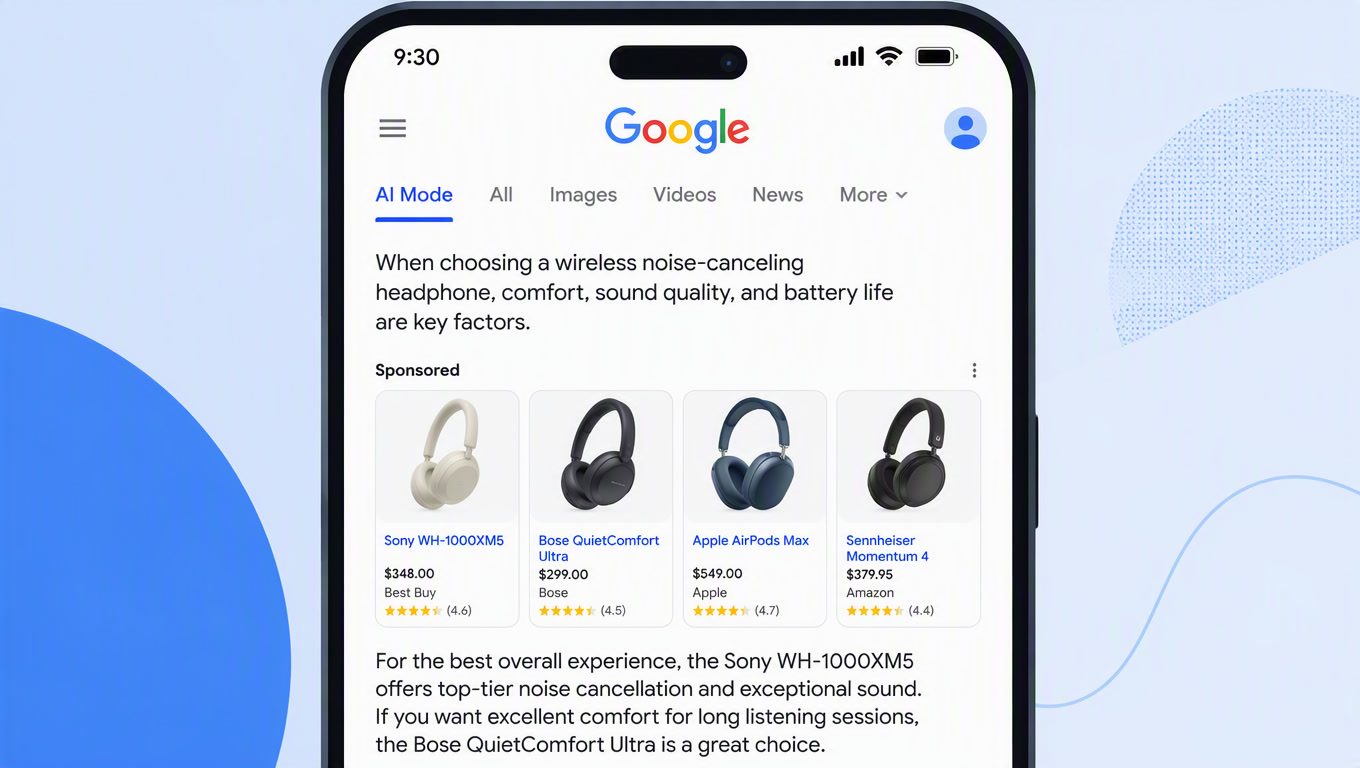
AI Mode is Google's conversational interface that answers questions directly without showing blue links. With Gemini 3.5 Flash as the default model since June 2026, AI Mode prioritizes synthesized answers from multiple sources. If your content isn't structured with schema markup, clear citations, and demonstrable authority, AI Mode ignores you even if you rank well in traditional search.
Is llms.txt worth implementing for SEO in 2026?
Google explicitly states in its guide that llms.txt is not a ranking signal and does not affect visibility in AI Overviews or AI Mode. The time spent maintaining a synchronized llms.txt file is better invested in structured data, entity marks, and content with demonstrable authority.