AI Search Trust Is Cratering. Here's Why That's Your GEO Opportunity.
Fractl found AI search 'helpfulness' dropped from 82% to 54% in one year. YouGov says only 28% of Americans trust AI search. But here's the paradox — usage is surging, and the trust gap is creating a massive opening for brands that invest in credibility signals. Here's the framework.
AI Search Trust Is Cratering. Here's Why That's Your GEO Opportunity.
82% to 54% in one year. That's how much the share of US consumers who call AI search "more helpful" than traditional search dropped, per Fractl's Q2 2026 survey of 1,008 people. In the same period, usage went up 70%.
YouGov's July 2026 data is even starker: only 28% of Americans trust AI search. The US ranks dead last out of 19 international markets. Traditional search engines lead by more than 40 points.
The numbers have been cited everywhere this week. Most of the takes I've seen treat this as bad news for GEO — "nobody trusts AI search, so optimizing for it is a waste." I think that's wrong. I think the trust gap is the best thing that has happened to serious GEO practitioners this year.
Here is why.
The paradox that matters
People use AI search more and trust it less. That is not contradictory. It is a sign that the honeymoon phase is over.
Early adopters were impressed by how fast and fluent the answers were. Now that AI search has hit mainstream scale — Google AI Mode passed 1 billion monthly users at I/O 2026 — the novelty has worn off. Users have seen enough incorrect answers, hallucinated citations, and weirdly confident nonsense to adjust their expectations.
Fractl's data captures this perfectly: usage surged, "helpfulness" collapsed. And the brand trust penalty for companies perceived as heavy AI users nearly doubled, from 20% to 39%.
This is not a crisis for GEO. It is a market correction. And market corrections reward the people who were doing the work all along.
Why AI search engines need you more than you need them
Here is the part most GEO advice misses. AI search engines have a trust problem. It is not your problem — it is their problem. You do not need to convince users to trust AI search. The AI search engines need to convince users to trust themselves.
And the primary way they do that is by citing credible sources.
This flips the traditional SEO power dynamic. In traditional search, Google ranked sites based on its own authority calculation, and publishers competed for position. In AI search, the engine's answer is only as credible as the sources it cites. The engine's brand depends on the quality of its citations.
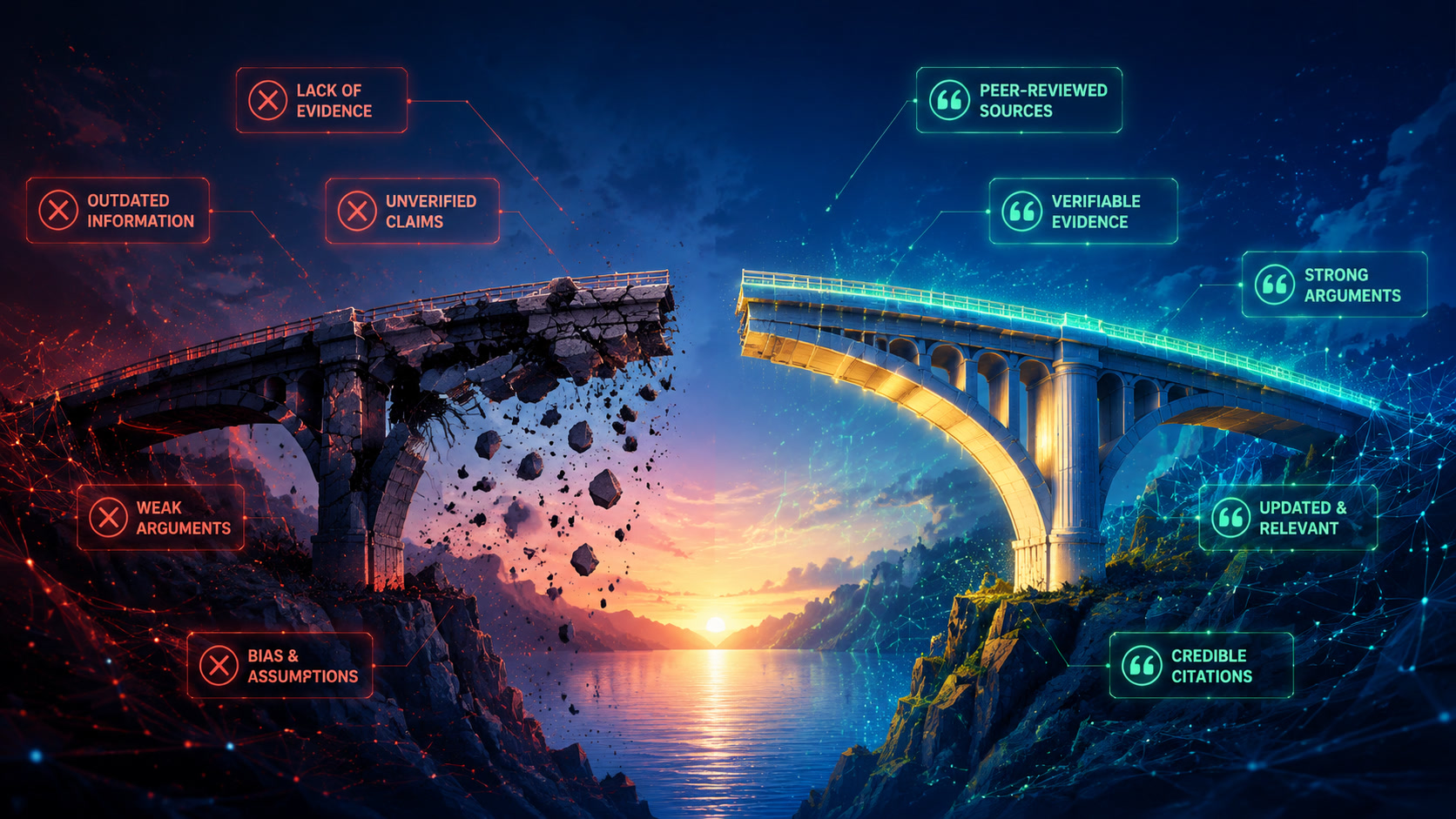
If you build genuine authority signals — original data, transparent authorship, verifiable claims, structured citations — you become more valuable to the AI search engine than the next generic content farm. Because citing you makes the AI look good. Citing the content farm makes it look unreliable.
The framework: What actually builds AI-search trust
Most GEO checklists focus on technical formatting: FAQ schema, heading structure, answer-first paragraphs. Those matter. But they are table stakes. The trust gap requires a different layer of investment.
1. Citation-worthy claims
AI search engines cite specific statements, not whole pages. Every substantive claim in your content should be independently verifiable. Link to your sources for data. Link to your methodology for research. Link to your team bios for expertise.
The rule: if an AI reads your page and pulls a statistic, a user should be able to click through and verify it on your site. If they cannot, the AI will eventually learn to stop citing you.
2. Entity depth over keyword density
AI citations correlate with how well an AI can classify you as an entity. A page about "GEO" that also builds topical authority around "AI search trust," "E-E-A-T signals," "citation strategy," and "brand safety in AI" ranks higher in the AI's entity graph than a page that uses "GEO" thirty times.
This is not keyword stuffing. It is entity coverage. Cover the cluster, not just the term.
3. Transparent authorship
Fractl's data shows users penalize brands they perceive as relying heavily on AI. The fix is straightforward: be transparent about who wrote your content. Named authors with bios. Real people with LinkedIn profiles. Original research with methodology notes.
This was an E-E-A-T signal before GEO mattered. Now it is an AI-trust signal too. AI search engines prefer sources with clear human accountability because citing a named human is safer than citing an anonymous entity.
4. Structured data that supports citation accuracy
FAQ schema, HowTo schema, and Article schema are the lowest-effort trust builders. They do not just help with rich results — they help AI search engines extract your content accurately. An AI that reads your FAQ schema and cites your exact question-answer pair produces a more precise answer than one that paraphrases a paragraph and hopes it gets the nuance right.
If you have not added FAQ schema to your top 20 pages, that is a higher-leverage investment than writing three new blog posts.
5. Original data
The most cited content in AI search is original research. BrightEdge, Moz, Fractl, YouGov — every AI-cited study in this article was produced by an organization that ran its own research. That is not a coincidence. AI search engines treat primary sources preferentially because citing them is less risky than citing a secondary interpretation.
You do not need a national survey. A 200-respondent poll, a dataset analysis, or even a well-documented case study counts as primary content.
What this means for your GEO strategy
The trust gap changes the ROI calculation for GEO.
In 2025, the question was: "How do I get cited by AI search?" In 2026, the question is: "How do I become the kind of source that makes AI search answers more credible?"
Those are different games. The first is a technical optimization problem. The second is a brand-building problem with technical execution.
The brands that win in GEO over the next 12 months will not be the ones with the most FAQ schema. They will be the ones that treat being cited by AI search as a trust signal worth earning — not a traffic channel worth gaming.
Because when users learn to trust AI search again, they will remember which brands kept showing up in the answers that were actually right.
Frequently Asked Questions
Why is trust in AI search declining?
Multiple studies show a widening trust gap. Fractl's Q2 2026 survey of 1,008 US consumers found that the share calling AI search 'more helpful' than traditional search dropped from 82% to 54% in one year, even as usage surged 70%. YouGov's July 2026 report across 19 markets ranked the US last for AI search trust at 28% — with traditional search engines leading by 40+ points.
How does the AI search trust gap create a GEO opportunity?
AI search engines need to cite authoritative, verifiable sources to rebuild user trust. Brands with strong E-E-A-T signals, original research, transparent authorship, and structured data are more likely to be cited by Gemini, ChatGPT, and Perplexity — not just because their content ranks, but because citing them makes the AI answer more credible.
What is the 'trust penalty' for brands in AI search?
Fractl's data shows the brand trust penalty for companies perceived as heavy AI users nearly doubled from 20% to 39% in one year. This means brands that appear in AI-generated answers without clear authority signals risk being associated with lower trust — unless they proactively invest in transparency, citations, and verifiable claims.