
Your Best Meta Ads Are Already on TikTok: The Creator Content You're Not Using
TikTok Shop creators produce thousands of videos for your brand every month, and most never run beyond TikTok. Performance-proven creator content — properly licensed and adapted — is the highest-leverage Meta creative asset most advertisers ignore. Here's the selection, licensing, and adaptation framework we use at Mintec.
TikTok Shop creators generate thousands of videos for your brand every month, and the best ones — proven by real spend, sales, and ROI data — can outperform studio-produced Meta ads once you license them and adapt them properly. The problem was never creative production. It's that most of that creator content never runs beyond TikTok, and the brands sitting on those libraries don't have a process to find the winners, secure the rights, and make them work on Meta.
That's changing. Euka AI, the TikTok Shop affiliate platform, launched a Meta integration in July 2026 that pushes licensed creator content directly into Meta Ads Manager — with usage rights, payouts, and performance tracking attached. The logistics barrier just got a lot lower. But logistics was never the hard part. Selection and adaptation are. Here's the framework we use when we move creator content between platforms for clients.
The asset you're not auditing
Every brand with a TikTok Shop affiliate program is accumulating content they don't count as inventory. Creators make videos for your products every week — unboxings, demos, before-and-afters, styling shots — and by the end of the month you have dozens, sometimes hundreds, of clips you never paid production costs for.
The scale is structural, not incidental. Creator and affiliate-driven sales account for roughly 44% of TikTok Shop GMV, and the platform's own benchmarks suggest brands need 20 to 50 content pieces per month to stay competitive in Shop feeds. Most of that volume comes from creators. Now ask yourself: how many of those clips have ever seen a Meta placement?
For most advertisers, the answer is zero. The content is licensed to run on TikTok, nobody asked for broader rights, and nobody has a workflow to evaluate which clips would translate. That's a creative supply problem you already paid for.
Why creator content wins on Meta right now
Two things changed in 2026 that make this asset more valuable than it was a year ago.
First, Meta's Andromeda algorithm now reads creative first. It predicts your audience from what's inside the ad — which means creative quality and creative diversity are the primary levers you control. We've written before about how creative similarity scoring punishes accounts that feed the algorithm variations of the same idea, and about the volume effect: advertisers running 20+ distinct ads per month see meaningfully better ROAS than accounts running a handful. Creator content is the cheapest source of genuinely distinct assets you have. Thirty creator clips from thirty different people are thirty different visual languages — not thirty cropped versions of the same studio shoot.
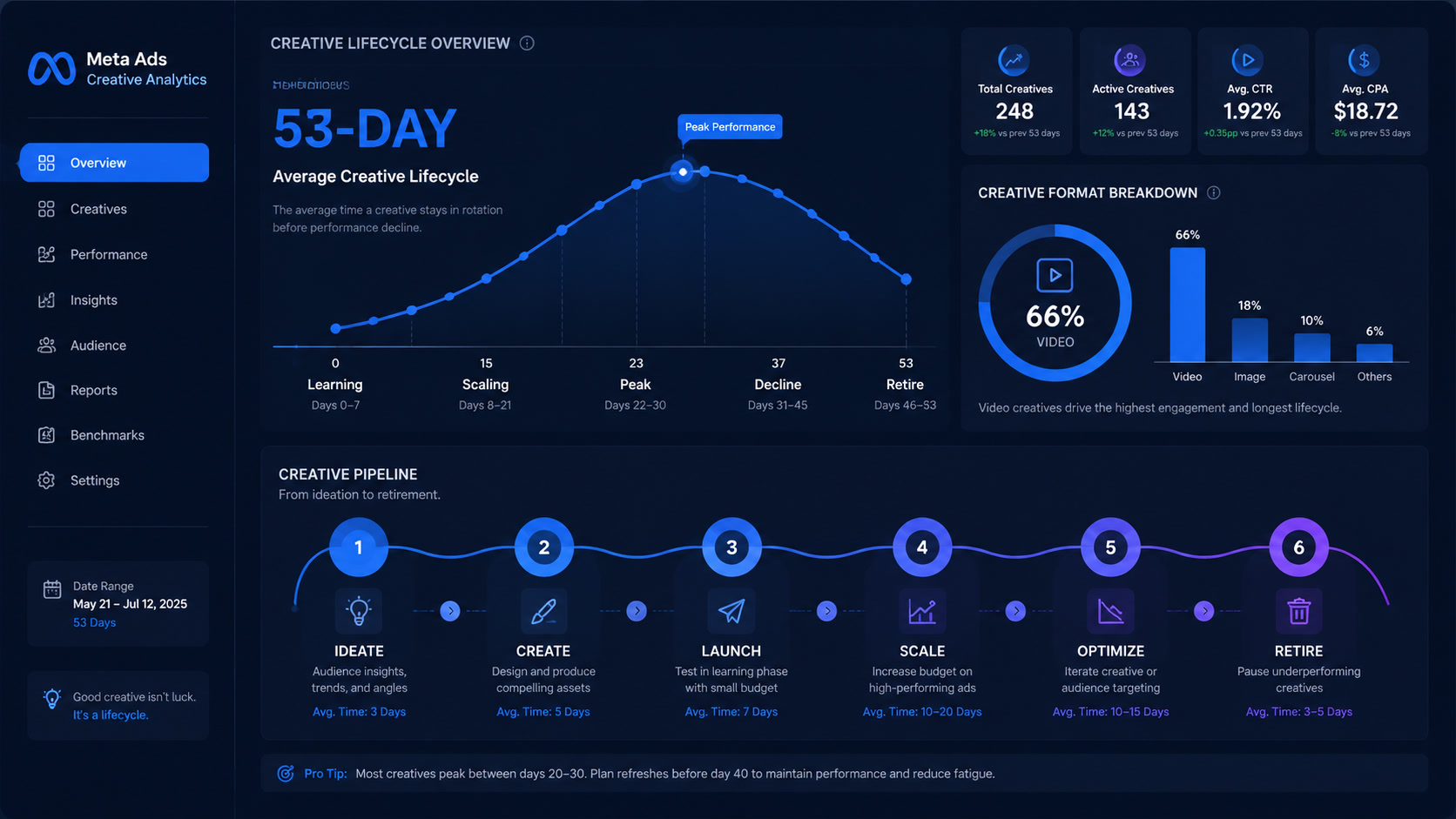
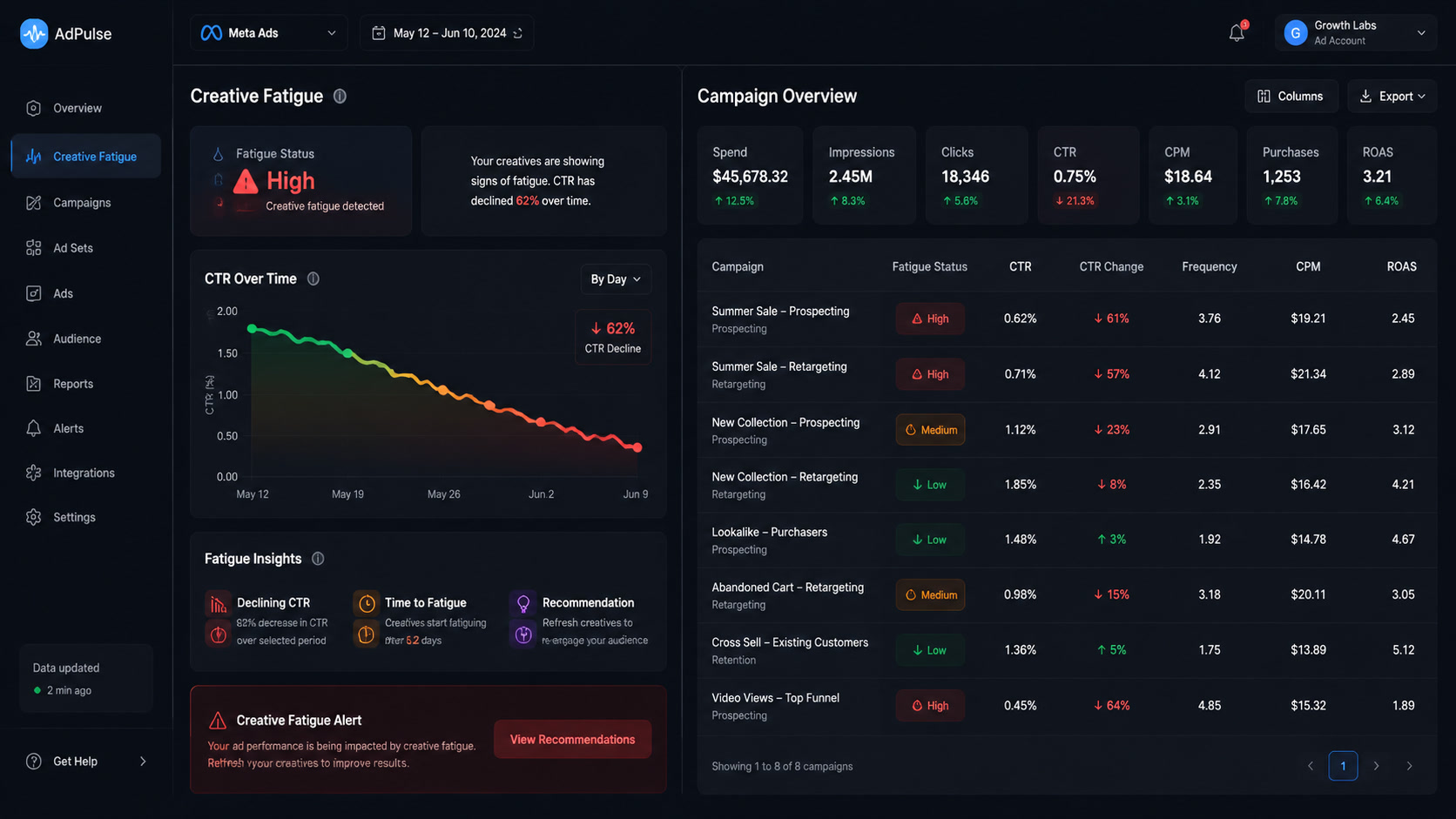
Second, the fatigue cycle compressed. Under Andromeda-era delivery, ads burn out in two to three weeks instead of six or more. The brands that win are the ones with a constant refresh pipeline. A creator program that produces 40 videos a month gives you a refresh pipeline for free — if you actually use it.
The catch is that creator content is not automatically good Meta creative. Which brings us to the tension everyone should be asking about.
"But you told us not to reuse creative across platforms"
We did, and we stand by it. In our breakdown of why Meta and TikTok demand different creative angles, the point was that the same ad concept — same pitch, same structure, same execution — underperforms when you copy it across platforms because Meta converts while TikTok discovers, as we covered in the Meta + TikTok funnel strategy.
Creator content is a different category. It's not an ad concept; it's social proof. A person showing your product working, in their own words, on their own terms. That proof value travels across platforms better than any polished pitch does — but only when the asset itself is adapted, not copied. A raw TikTok clip dropped into Meta Feed with the creator's handle, TikTok UI, and a 9:16 frame isn't an ad. It's a screenshot of another platform, and it performs like one.
The Creator-to-Meta Bridge: our 4-stage framework
When a client asks us to scale creator content into Meta, we run it through four stages. Skipping any of them is where the waste happens.
Stage 1 — Select with performance data, not views
The biggest mistake is picking clips by views or likes. TikTok virality does not predict Meta conversion. We select on signals that translate:
| Signal on TikTok | What it predicts on Meta |
|---|---|
| Hook speed (first 1.5–2 seconds) | Feed scroll-stopping power — Meta's cold audience won't wait |
| Product clarity in first 3 seconds | Conversion relevance — the viewer knows what's being sold |
| Watch-through on a 20–40s video | Retention potential — not just view count |
| Sales or add-to-cart data from Shop | Direct conversion evidence — the strongest signal of all |
| Comment sentiment (questions, "where do I buy") | Purchase intent and objection content for retargeting |
Raw views rank near the bottom of this list. A clip with 50K views and zero sales is entertainment; a clip with 4K views and a 12% add-to-cart rate is a Meta asset.
Stage 2 — License properly
You cannot take a creator's video and run it on Meta without rights. This is where most brands stall. The standard models:
- Percentage of attributed sales — aligns incentives, scales with performance
- Percentage of ad spend — simple, predictable for the creator
- Flat fee per asset — cleanest for one-off hero clips
- Free usage — viable in exchange for product, early access, or long-term partnership
Tools like Euka automate the request, the compensation model, and the transfer of licensed assets into Ads Manager. The legal layer still matters: get duration and platform scope in writing, and keep the license record attached to the asset so it survives account changes.
Stage 3 — Adapt, don't copy
This is where the performance gap is won or lost. Our adaptation checklist for every clip:
- Format: 9:16 → 4:5 or 1:1 for Feed (keep 9:16 only for Reels/Stories placements)
- Hook: TikTok's first frame can be slow — Meta's colder context needs the product or payoff visible in the first second
- Cleanup: remove TikTok UI, creator handle overlays, watermarks, and platform-native stickers
- Sound strategy: TikTok rewards sound-on; Meta Feed autoplays muted — add captions that carry the hook, and test sound-on via Reels placement
- First-frame text: a single line of on-screen copy that states the offer or the problem, since Meta viewers scroll without context
In our TikTok creative research, sound-on converts 28% better on TikTok and the strongest hooks land inside the first two seconds. On Meta, the same principles apply with one addition: the caption must do the work the audio can't.
Stage 4 — Measure per creator, kill without mercy
Run licensed creator content through the same creative-level reporting you use for studio ads: CPM, CTR, ROAS, and frequency. Two rules we enforce:
- Attribute back to the creator. If a clip wins, you should know exactly which creator produced it — it tells you who to commission more from. Per-creator attribution is the difference between a content library and a talent pipeline.
- Kill on a 2-week cadence. Creative fatigue hits Meta assets fast. Review every licensed clip's trend line at two weeks; winners get budget, losers get replaced. The volume your creator program produces makes this brutal triage affordable.
What the tools don't solve
Here's the opinion part. Euka and the tools like it solve distribution: they find the winner candidates, handle rights, and get assets into Ads Manager in one workflow. What they don't solve is judgment — whether a clip fits your brand voice, whether the creator's audience skew matches your target, whether the product claim is defensible, whether the asset will survive your category's brand-safety bar.
We've seen accounts where automation turned 200 licensed clips into 200 mediocre placements. We've also seen accounts where a disciplined selection process turned 15 clips into the account's best CPMs of the quarter. The tool is the pipe; the strategy is the filter. In the accounts we manage, the fastest CPM improvements in 2026 have come from licensed creator content beating studio production costs — not because the clips were better made, but because they were better proof: a real person, a real product, no agency polish, and exactly the social-proof signal Meta's creative-first delivery is hungry for.
When not to do this
The bridge isn't for everyone. Skip it when: your vertical is highly regulated (finance, health, legal) and creator claims create compliance risk; your brand is B2B with a considered, multi-stakeholder sale where UGC reads as unserious; or your creator program is too small to generate real selection volume — licensing your only three clips isn't a pipeline, it's a bet.
If you're already running a TikTok Shop creator program, the audit is cheap: pull your top 20 performing creator clips by sales and add-to-cart rate, check your rights, and put three through the adaptation checklist. If you don't have a creator program yet, this is the argument for starting one — because the content you're not producing is now the content your competitors will be buying. For more on how creator content reshapes commerce, see our analysis of creator-powered social commerce and how to measure influencer ROI beyond vanity metrics.
Delivered by Mintec — Autonomous Operations
Frequently Asked Questions
Can you use TikTok creator content in Meta ads?
Yes, as long as you license the usage rights from the creator. Performance-proven TikTok Shop creator videos can run as Meta ads through manual rights agreements or tools like Euka AI that automate rights requests, compensation, and asset transfer to Ads Manager.
Is it bad to run the same creative on TikTok and Meta?
Running the same ad concept untouched on both platforms is a mistake — the platforms serve different intent stages and reward different creative structures. Adapted creator content is different: reformatted, re-hooked, and stripped of TikTok-native UI, it becomes a distinct Meta asset that carries social proof instead of a copied pitch.
How much does it cost to license TikTok creator content for Meta ads?
Licensing models vary: a percentage of attributed sales, a percentage of ad spend, a flat fee per asset, or free usage in exchange for product and samples. Most brands start with a percentage of attributed sales because it aligns the creator's incentive with campaign performance.