Your #1 Organic Ranking Does Not Get You Cited in AI Overviews
Only 38% of pages cited in Google AI Overviews rank in the top 10 organic results. A Forbes study of 4 million URLs shows why traditional SEO rankings and AI citations follow different rules, and what actually drives AIO visibility.
Your #1 Organic Ranking Does Not Get You Cited in AI Overviews
38%. That is the share of pages cited in Google AI Overviews that also appear in the top 10 organic results.
A Forbes analysis of 4 million AI Overview URLs found that only 38% of cited pages also appeared in the top 10 organic results for the same query. Roughly one-third of citations came from pages that did not even crack the top 100. Some had no meaningful organic presence at all.
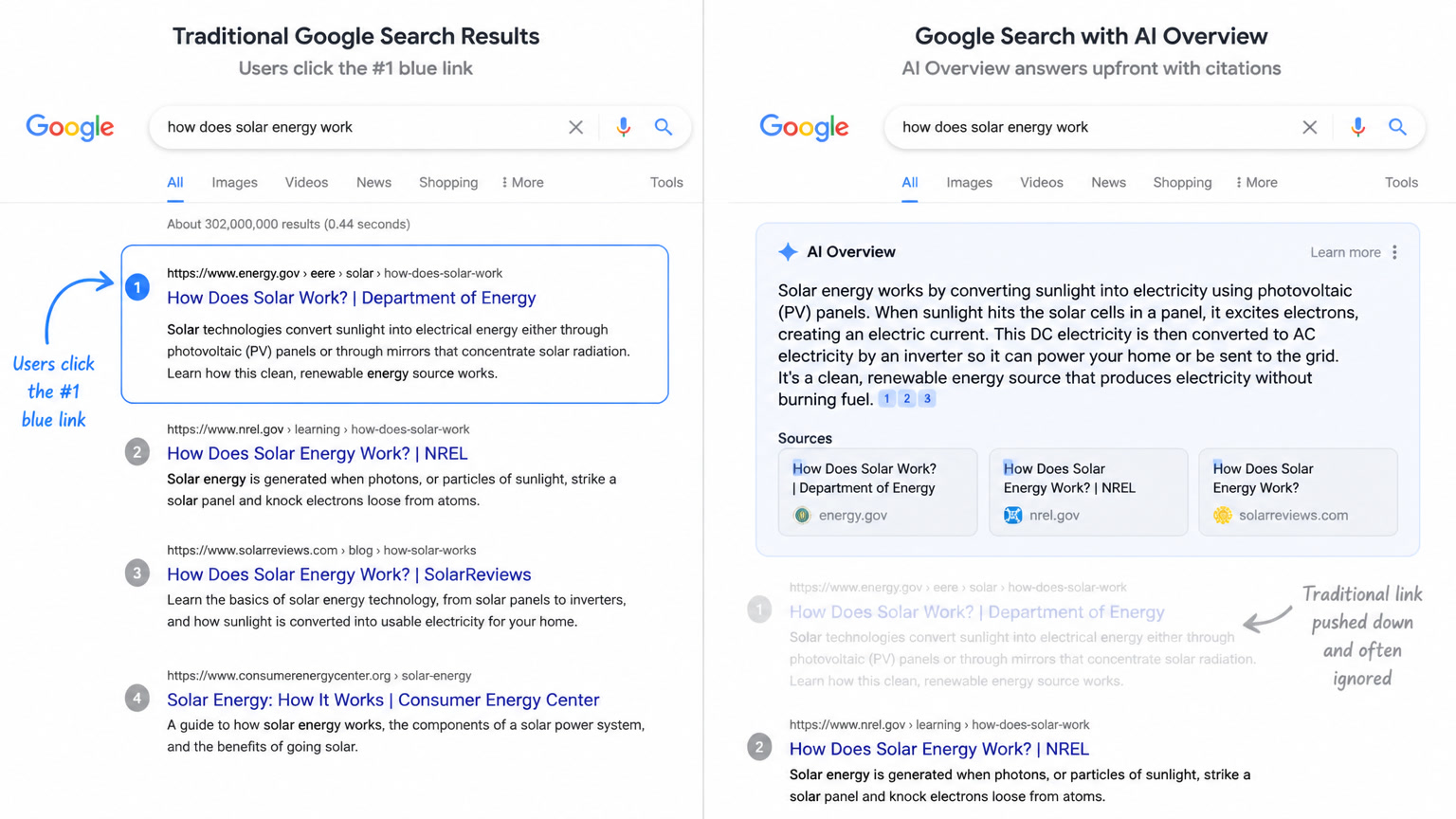
This means the thing most of us spent a decade optimizing for (blue-link rankings) and the thing that now sits above every blue link (AI Overviews) are pulling from different pools of content. They overlap, but not nearly as much as the SEO industry assumed.
The numbers behind the disconnect
Google's AI Overviews now trigger on roughly 47% of all searches, and 70% of informational queries, according to a Surfer SEO study of 405,576 searches. That is not a fringe feature. It is the default experience for most searches people type.
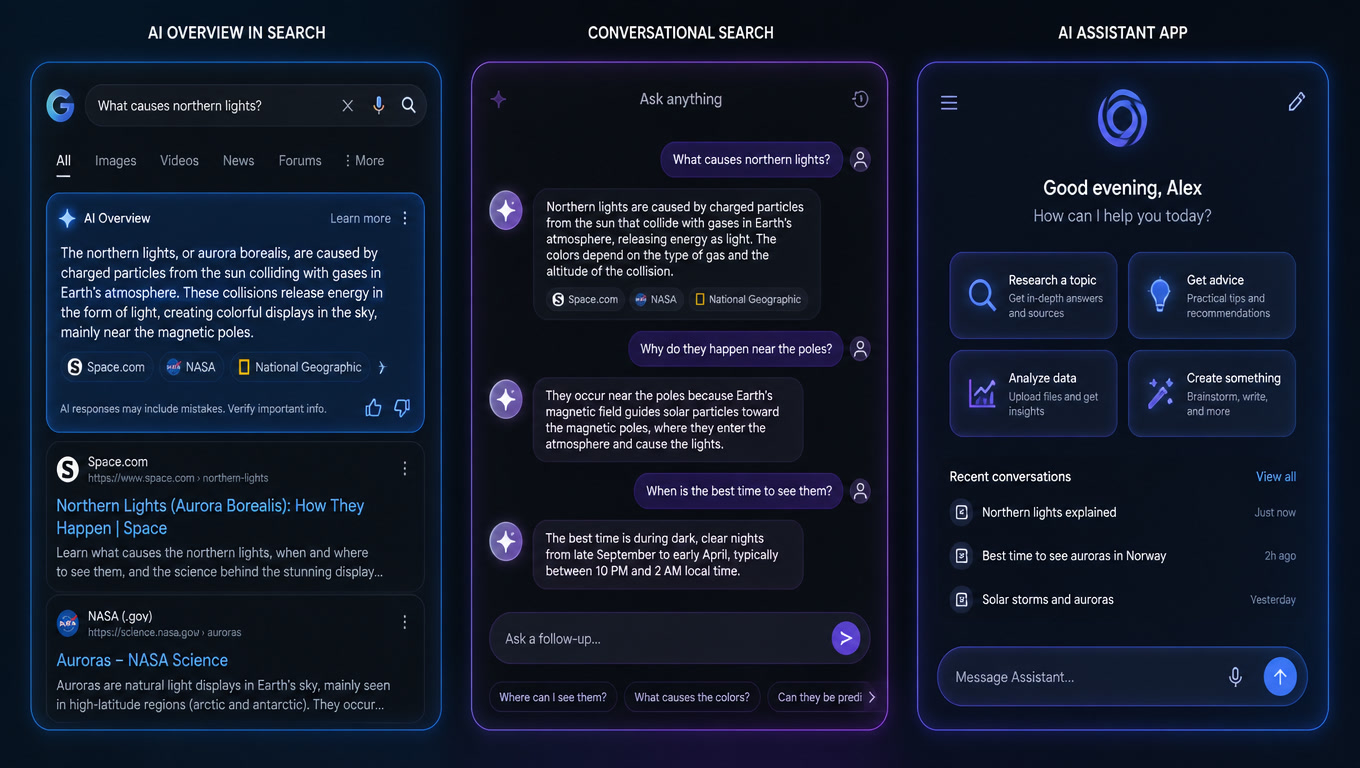
Yet the selection mechanism is different. AI Overviews use retrieval-augmented generation (RAG). The system retrieves candidate pages, ranks them semantically, and then a language model organizes the response and cites its sources. It is not just picking the highest-authority page. It is picking pages that answer specific sub-questions the model generates internally.
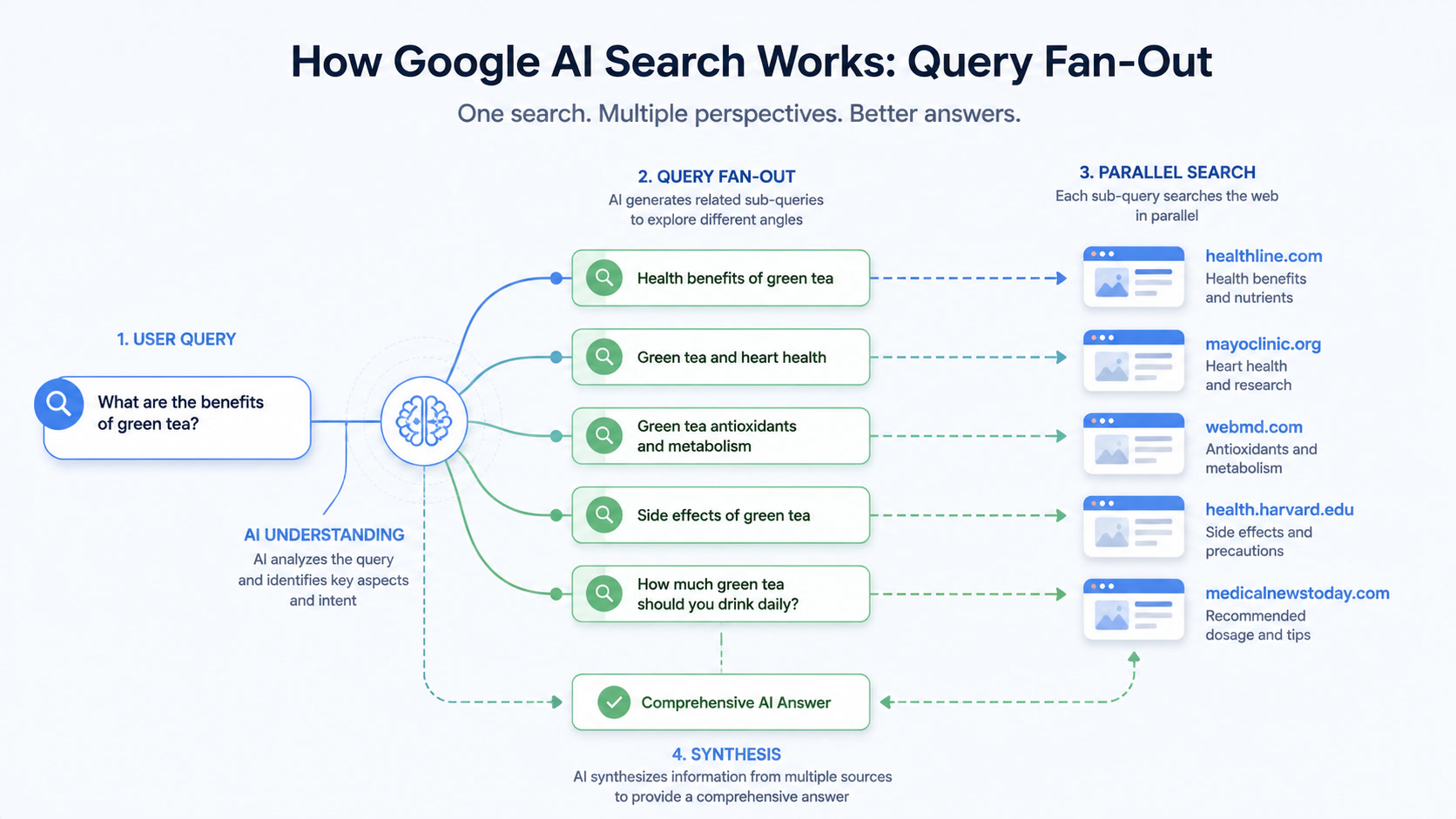
This is where query fan-out enters. When someone asks "how to fix a weedy lawn," Google's AI does not just search for that phrase. It fans out into parallel sub-queries: best herbicides for lawns, removing weeds without chemicals, how to prevent weeds in lawns. A page that covers those sub-topics has a 161% higher chance of being cited than a page that only targets the main query.
What actually predicts AIO citations
Setproduct, a DR 42 domain, tracked 29 verified AI Overview citations across their content. Comparing cited pages against uncited pages on the same domain, six signals separated the two groups.
1. Domain-level topical authority. Nearly all 29 citations came from articles inside their two deepest topical clusters. Articles outside those clusters, even well-optimized ones, barely got cited. This is a months-long investment, not a page-level fix.
2. Direct, self-contained answers. Search Engine Land found that 72.4% of pages cited by ChatGPT have what they call "answer capsules" — concise, self-contained paragraphs that answer a question without requiring the reader to click through. AI Overviews extract these directly.
3. Factual density. Cited pages contained 38% more key facts on average than non-cited pages. Pages with 10+ key facts were cited at more than double the rate of pages with fewer than 5. The reason is architectural: AI Overviews are optimized to reduce hallucination, so sources with verifiable data get preferential retrieval.
4. FAQ schema with concise answers. Structured FAQ markup helps Google's AI identify question-answer pairs on your page. Every one of Setproduct's 29 cited articles had FAQ schema.
5. First-party data. Unique statistics, named case studies, and original research get cited more often than generic advice posts. The model can verify these against other sources, which reduces hallucination risk.
6. Named author entities. Articles published under "Team" or "Admin" bylines are invisible to this signal. Every cited article carried a named author with a linked bio page and Person schema.
The content network effect
This is the part most SEO strategies miss. AI Overviews do not pick one page and cite it. They synthesize from multiple sources. The Setproduct study found that AIOs cited 8-10 sources per answer rather than dozens. Your page does not need to be the single best answer. It needs to be one of the 8-10 sources the model encounters while assembling its response.
This is why topic clusters matter more than individual page optimization. When Google's AI fans out a query into sub-questions, a site with 15 articles covering different angles of a topic gets discovered across multiple sub-queries. A site with one comprehensive guide gets discovered once, if at all.
The Surfer SEO data backs this up: pages that rank for at least one fan-out sub-query have a 161% higher citation rate. You do not win by having the best page. You win by having the most relevant pages across the query's expanded search surface.
What this means for your content strategy
If you are still optimizing individual pages for individual keywords, you are playing the old game. The new game is coverage density across topic clusters.
Practical moves:
- Map your target queries to their fan-out sub-queries. Use AI tools to generate the sub-questions Google's model would produce. Write content targeting each one.
- Put direct answers early. Start each section with a 40-70 word answer capsule. The AI extracts from the top of the section, not the middle.
- Add verifiable facts to everything. Numbers, percentages, named sources. If you cannot verify it, the model will not cite it.
- Audit your existing content for AIO eligibility. Export your top organic pages from Search Console, run the primary keywords in incognito, and check whether AI Overviews appear and cite your domain. You probably have pages ranking #3 that are earning AI citations, and pages ranking #1 that are not.
- Build author entities. Named bylines, linked bio pages, Person schema. Anonymous content is invisible to this signal.
The uncomfortable truth
Organic ranking still matters. Google's own documentation says there are "no additional requirements to appear in AI Overviews" beyond standard Search Essentials, and 52% of AIO sources do appear in the top 10. But that means 48% do not. And the citations that matter most (the ones users actually see above the fold) are increasingly pulled from a different signal set than the one most SEO teams optimize for.
Most SEO teams are still optimizing for the blue links below the fold. The ones that start treating AI citations as a separate channel, with separate metrics, will pull ahead.
Data sources: Forbes Tech Council (Sep 2026), Surfer SEO AI Overview study (Sep 2026), Setproduct AIO case study (Sep 2026), Search Engine Land ChatGPT citation research.
Frequently Asked Questions
Do I need to rank #1 in organic to get cited in AI Overviews?
No. A Forbes study of 4 million AI Overview URLs found that only 38% of cited pages appeared in the top 10 organic results for the same query. About one-third of citations came from pages outside the top 100. Organic ranking helps, but it is not the primary driver of AI citations.
What actually predicts whether a page gets cited in AI Overviews?
Six factors matter most: domain-level topical authority (deep coverage in a cluster), direct self-contained answers under question-based headings, factual density (cited pages have 38% more key facts), FAQ schema markup, first-party data and specific numbers, and named author entities with linked bio pages.
What is query fan-out and why does it matter for AI citations?
Query fan-out is when Google's AI expands a single user query into 5-15 parallel sub-queries to gather comprehensive information. A page's chance of being cited increases by 161% if it ranks for at least one of those fan-out sub-queries in addition to the main query.