Meta Muse Image: how AI-generated ad creative changes your workflow
Meta launched Muse Image on July 7, 2026 — its first image generation model purpose-built for advertising. It creates original ad images from text prompts and integrates directly with Advantage+ creative. At Mintec, where we manage campaigns for clients across LATAM and the US, we've been testing what this actually means for creative production workflows, brand consistency, and team structure.
Meta Muse Image: how AI-generated ad creative changes your workflow
On July 7, 2026, Meta Superintelligence Labs — Meta's dedicated AI division built alongside FAIR — launched Muse Image, its first image generation model for advertising. This isn't a minor feature update. It's a structural shift in how ad creative gets produced inside Meta's ecosystem.
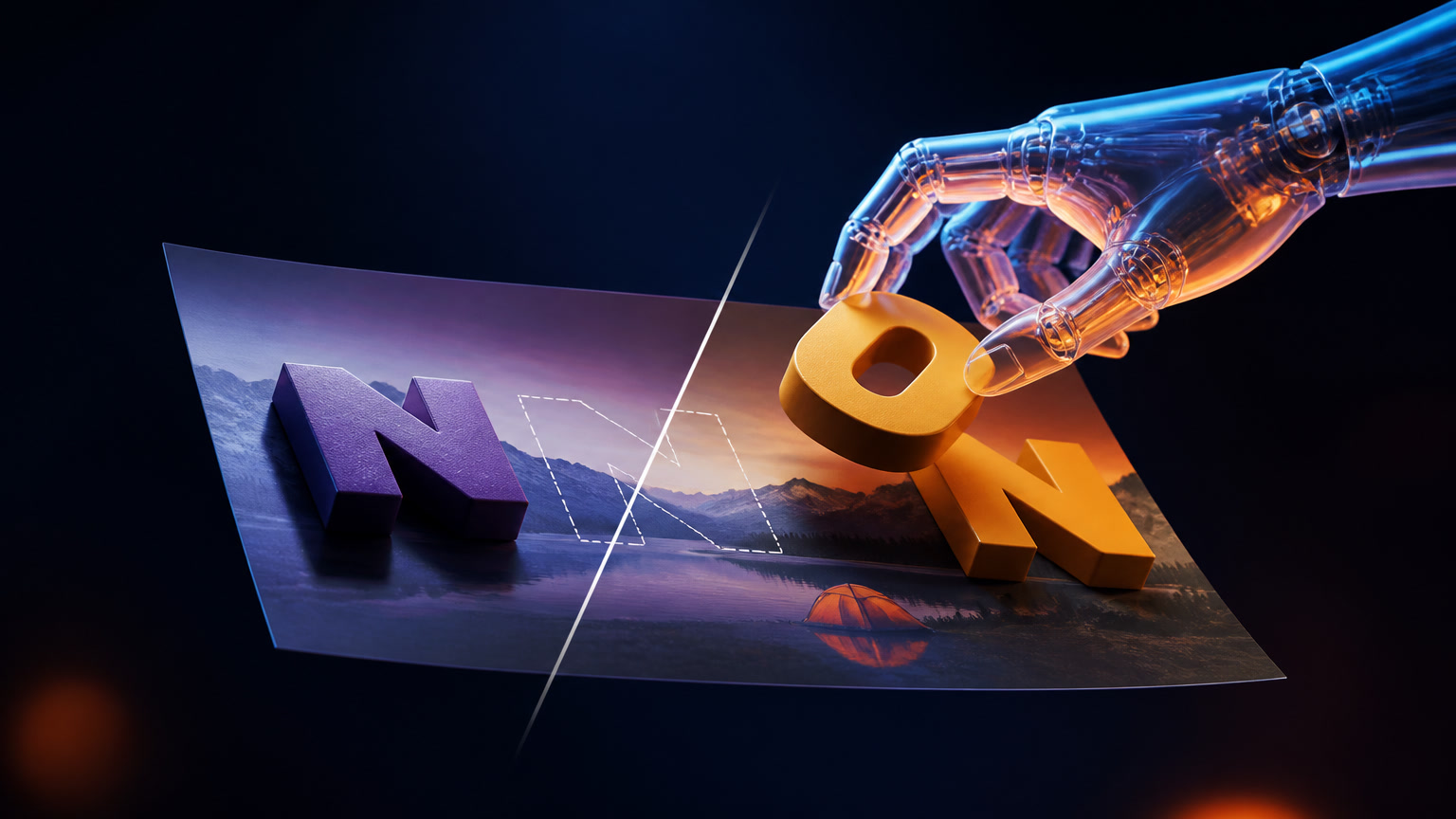
Muse Image generates images from text prompts. You write a description, it creates an original image. Not a variation of an existing template, not a filter applied to a stock photo: something that didn't exist before. And critically, it integrates directly with Advantage+ creative, meaning the images it generates can enter Meta's automated optimization loop without manual handoff.
But as with every AI tool in advertising, the real question isn't "does it work?" — it's "how do I use this without losing brand control?"
What Muse Image is and why it matters
Muse Image is the first multimodal model from Meta Superintelligence Labs trained specifically for the ad ecosystem. According to official announcements, the model was trained on Meta's ad data — not generic internet images — meaning it understands what works visually in a conversion context.
The Advantage+ integration is strategic. Before Muse, Advantage+ creative could:
- Adjust copy and CTAs
- Reorder carousel images
- Crop and reposition visual elements
- Generate color and brightness variations
With Muse Image, Advantage+ can now generate the full image from scratch. This changes the workflow from "designer creates image → Advantage+ optimizes it" to "prompt → Muse generates → Advantage+ optimizes → Meta serves it."
For agencies and advertisers, this means the bottleneck is no longer image production. It's creative direction.
The real shift: from executor to director
At Mintec, we manage campaigns for clients across LATAM and the US, with budgets from $5K to $100K+/month. We've seen what happens when an AI tool promises to accelerate creative production — everyone uses it wrong at first.
The biggest risk with Muse Image isn't technical — it's brand consistency. When generating an ad image takes seconds instead of hours, the temptation is to mass-produce without quality control. The result: 50 images that look fine individually but don't tell the same brand story.
The approach we're adopting is what we call the Human-AI Creative Loop, a three-stage workflow:
Stage 1: Human creative direction (AI-proof)
Before touching Muse Image, we define:
- The concept: what story are we telling? Not "show the product" but "what problem does it solve and what does solved look like?"
- The visual palette: colors, textures, photographic style. This goes into every prompt as an explicit constraint.
- Conceptual variants: 3-5 distinct angles (testimonial, aspirational, educational, offer-driven, social proof)
Each concept is documented as a brief with visual references, tone, and a description of the expected output.
Stage 2: Muse Image generation (iterative and constrained)
With the brief defined, we generate images per concept:
- 3-5 variations per concept (not 50)
- Immediate evaluation: does it match the palette? Does it communicate the concept? Is it visually distinct from the others?
- Passes go to production. Failures get iterated with more specific prompts
The key insight: the prompt isn't free-form. It's a translation of the brief into visual language. Without a brief, prompts produce generic images that Meta treats like any other average creative.
Stage 3: Validation and optimization
- Brand consistency check (does this look like our other ads in the same campaign?)
- Conceptual diversity review (are these 10 ads representing 3 distinct concepts or 10 variations of one?)
- Launch into Advantage+ with initial performance monitoring
This workflow doesn't eliminate the designer — it turns them into an AI director. The value is no longer in how many images you produce, but in how strong the concepts are that you feed the machine.
Muse Image and the creative similarity problem
There's an important connection here to what we covered recently about Meta's Creative Similarity Score. Meta's earlier AI variation tools were producing ads that Andromeda considered identical — the system collapsed everything into a single Entity ID and suppressed delivery.
Muse Image has the potential to solve this, but not automatically. The images it generates are original, and Andromeda will treat them as distinct creatives if they visually are. The risk is when similar prompts produce images with matching styles, colors, and compositions — the similarity problem persists even though each image is technically different.
Our rule at Mintec: for every image Muse generates, we ask "would Andromeda classify this as a separate Entity ID?" If there's doubt, we adjust the prompt until the visual output is clearly different.
| Concept | Sample prompt | Expected result |
|---|---|---|
| Testimonial | "Real client in their office, documentary style, natural light, warm tones" | Authentic, unposed image |
| Aspirational | "Family enjoying service outcome, lifestyle style, vibrant colors" | Polished, desirable scene |
| Educational | "Clean infographic with icons, light background, corporate style" | Informative, organized visual |
| Offer-led | "Product on gradient background, large typography, brand colors" | Direct commercial image |
What needs to change in your team
Muse Image isn't a tool you hand to an intern. It changes team structure:
- The graphic designer shifts from producing images to writing prompts and curating outputs
- The strategist defines visual concepts with more specificity than before
- The media buyer needs to understand basic visual discrimination — knowing when a generated image will perform in the auction versus when it'll blend into the noise
The teams that adapt best won't be the ones producing more images. They'll be the ones with better creative briefs.
If your team isn't writing structured visual briefs for every ad concept yet, Muse Image will catch you unprepared. Because the fastest tool in the world is useless if you don't know what to ask for.
In the accounts we manage, the difference between a campaign that scales and one that stalls isn't creative volume — it's concept clarity before touching any tool.
Frequently Asked Questions
What is Meta Muse Image?
It's Meta's first image generation model from Meta Superintelligence Labs, announced July 7, 2026. It creates original ad images from text prompts — not variations of existing creative — and integrates directly with Advantage+ for automated optimization. Unlike earlier AI variation tools that tweaked existing designs, Muse Image produces images that didn't exist before.
Does Muse Image replace graphic designers?
It changes the role rather than replacing it. Image production becomes dramatically faster, but creative direction — concept, strategy, brand review — stays human. The designer shifts from executing to directing: defining the prompt, reviewing outputs, and ensuring brand consistency. Brands that fully delegate visual creation to AI end up with generic ads that don't connect with their audience.
Does Muse Image solve Andromeda's creative similarity problem?
It can, if used correctly. Images generated by Muse are visually distinct from each other, helping Andromeda classify them as separate Entity IDs. But similar prompts produce similar visual styles — so the similarity problem persists if your creative input isn't diverse. The key is prompt variety: if you always ask for the same style, Andromeda will still collapse your ads.