Google finished its spam update: the triage we run before changing content
Google's spam update ended on August 21. Before rewriting URLs or launching a recovery project, log the event, split branded from non-branded search, and review the pages that actually moved.
Google finished its spam update: the triage we run before changing content
Google's spam update finished on August 21. If your traffic chart is down, do not start by rewriting pages, pruning content, or publishing twenty reactive articles. First, work out what moved, where it moved, and what you cannot attribute yet.
That can sound slow. It is much faster than spending a week changing healthy URLs because someone saw a red line in a dashboard.
Google's Search Status Dashboard records a spam update that began on August 18 and completed on August 21, affecting rankings globally and in all languages. That confirms an event. It does not establish why a particular site's traffic moved. There is a lot of diagnostic work between those two statements.
At Mintec, we use a ten-minute triage to decide whether a URL needs investigation, whether we need more data, or whether to open a technical review. It does not promise a recovery. In the first few days, it prevents a bad reaction, which is more valuable.
What we know, and what we do not
Google completed the rollout. That is the public fact. The update applies Google's existing spam systems; it was not paired with a new checklist that turns every traffic drop into an automatic diagnosis. Google's spam policies remain the source for practices such as scaled content abuse, cloaking, doorway pages, and site reputation abuse.
Do not attribute a dip from the first few days to the update. Search Console has reporting delays, demand changes, and the site may have had its own deployment. Google's traffic-drop troubleshooting guide starts by defining the timing and scope of the drop.
These two claims are not the same:
- "The drop began during a confirmed update."
- "The update caused the drop."
The first can be documented. The second needs more evidence than you will have 48 hours after a rollout ends.
The ten-minute triage
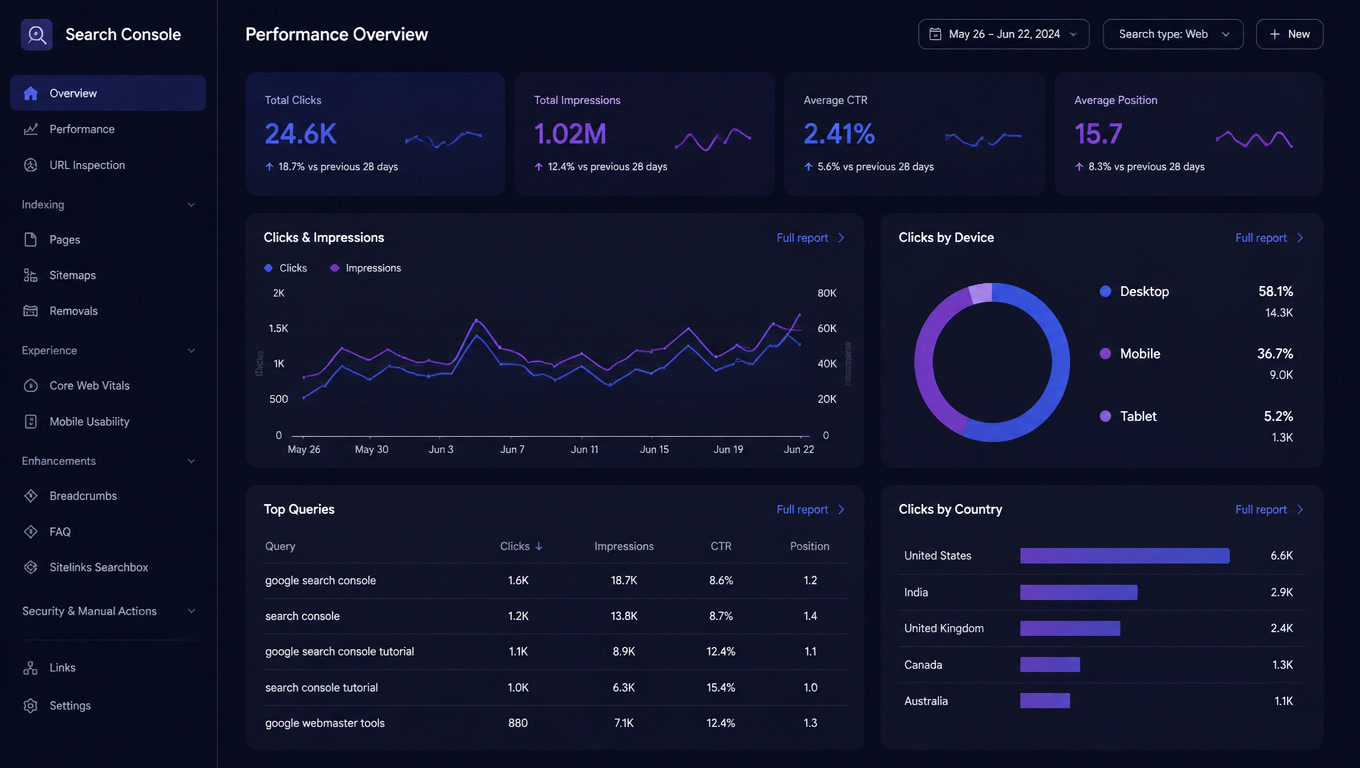
Open the Search Console property for the canonical domain and work from clicks and impressions. Compare seven days with the preceding seven to spot the shape of a change; use 28 against 28 where volume supports it. Neither proves causation.
Minutes 1 and 2: log the event and freeze large changes
Put August 18 to 21 into your SEO change log. In the same note, list everything your team changed since August 1: a redesign, a technical release, migration, canonical or robots changes, sitemap changes, redirects, analytics tags, or a large batch of published or removed URLs.
Then pause broad editorial changes for a few days. That does not mean you ignore the site. Fix a 404, an accidentally blocked page, or a false statement. What you should not do is mix a ranking event with a 200-page cleanup and make the data impossible to read.
A useful log has four fields:
| Field | What to record |
|---|---|
| External event | Google spam update, August 18 to 21 |
| Your changes | Releases, migrations, redirects, content batches, and measurement changes |
| Observed signal | Start date, countries, query type, and affected URLs |
| Decision | Wait, review quality, investigate technically, or fix a known issue |
Minutes 3 to 5: split branded from non-branded search
In Search Console, check the total first. Then split queries containing the company name, products, and known domains from queries that do not. You do not need a perfect regular expression on the first pass. A list of the common brand variants is enough.
The split matters because the two groups tell different stories.
- If branded and non-branded traffic fall together, do not jump to a content-quality diagnosis. Check indexing, robots, canonicals, measurement, a domain change, demand, or a brand issue affecting search behavior.
- If branded stays flat while non-branded search falls, you have a more consistent discovery signal. You still do not know the cause, but you can move to the page view.
- If clicks fall while impressions do not, check CTR and the result types now appearing. An AI answer, carousel, news result, or changed snippet can move clicks without the URL losing visibility.
- If impressions fall without a proportionate click decline, do not treat one metric as an emergency. Check the actual volume before assigning work.
For a small site, a single query can move the chart. Report the absolute number with the percentage.
The filter for URLs worth reviewing
Next, open the Pages tab and export or note the URLs that moved. We do not work from every red arrow. We use an operating threshold, not an assumed Google benchmark: a page enters review if it lost at least 20 clicks and 20% against the comparison period, or if it moved a non-branded query tied to an important commercial decision.
The cut depends on site size. Combine relative movement, absolute impact, and intent value. Percentage alone is useless.
For every selected URL, write down five things:
| Review | Specific question |
|---|---|
| Query | Which non-branded searches lost clicks or impressions? |
| Intent | Does the page answer the decision that search suggests? |
| Your change | Did anyone touch its title, copy, canonical, links, or template? |
| SERP context | Did a new format, AI answer, news result, or competing page appear? |
| Verifiable quality | Does the page have a direct answer, attributed evidence, and dates where claims can expire? |
That final row connects SEO and GEO: a page with a process, limits, and sources is more useful than one full of adjectives. A broken redirect, bad canonical, or deindexed URL is technical, not editorial.
Four outcomes, four different decisions
When the triage is done, classify the finding. This keeps the report from stopping at "traffic is down."
1. The drop is broad, but branded search is steady
Tag the URLs, keep the baseline, and measure again in a week. Review the highest-impact pages for unproven claims, duplicate intent, or a useful answer buried under an empty introduction. Pick one URL per intent and document a verifiable improvement; swapping synonyms does not count.
2. Branded and non-branded search both fell
This is a diagnostic alarm, not a publishing order. Check coverage, indexing, robots, canonicals, measurement, recent releases, and that you are looking at the same property, country, and search type.
3. Only two or three URLs fell
Review intent and SERP format: another page may answer better, Google may now favor a different format, or the page may be old. Make one small, defensible edit, such as a direct answer, comparison, dated source, or internal links. Do not invent results or add FAQ schema without real questions.
4. There is no clear pattern
If there are no URLs with absolute impact, the movement is limited to one day, or the graph looks normal, record no conclusive pattern and review it the following week. That is a valid conclusion.
A client-ready update that does not overstate the evidence
A straight update should name the affected group, start date, three pending checks, and that you are not yet attributing the change to the update. It gives the team an auditable plan without promising recovery.
The reaction that usually makes this worse
After an update, the temptation is to publish faster. It looks like activity and explains nothing. Google's policies are clear that scaled content abuse is about purpose and user value, not who wrote every line. Do not use volume to hide missing evidence or duplicate pages.
We covered how a spam update can punish a volume-first reaction. The same discipline runs through our practice for learning GEO on a live page and our citation-volatility measurement method: record an observation, change one thing you can explain, then measure again.
Serious work after an update is not glamorous. It is a dated note, a handful of well-chosen URLs, and a decision that does not pretend to know more than the data says. That is enough to avoid the next mistake.
Frequently Asked Questions
When did Google's August spam update finish?
Google's Search Status Dashboard says the August 2026 spam update began on August 18 and finished on August 21. It affected ranking systems globally and across all languages.
Should I change my pages if traffic fell during a spam update?
Not immediately. A drop that overlaps with an update does not prove the update caused it. Log the dates, compare branded and non-branded queries, identify the URLs with material movement, and rule out technical, indexing, or measurement problems before editing content.
How do I check a traffic drop in Search Console after an update?
Compare equivalent periods, split branded and non-branded queries, filter for pages with a material change in clicks and impressions, and record technical or editorial changes made in the same period. Review quality on those URLs only, rather than rewriting the whole site.