
Google verifies crawlers in three categories. Your allowlist checks one.
Google added 12 crawlers to its docs and split its ranges across five IP files. Why a single Googlebot check mislabels the rest.
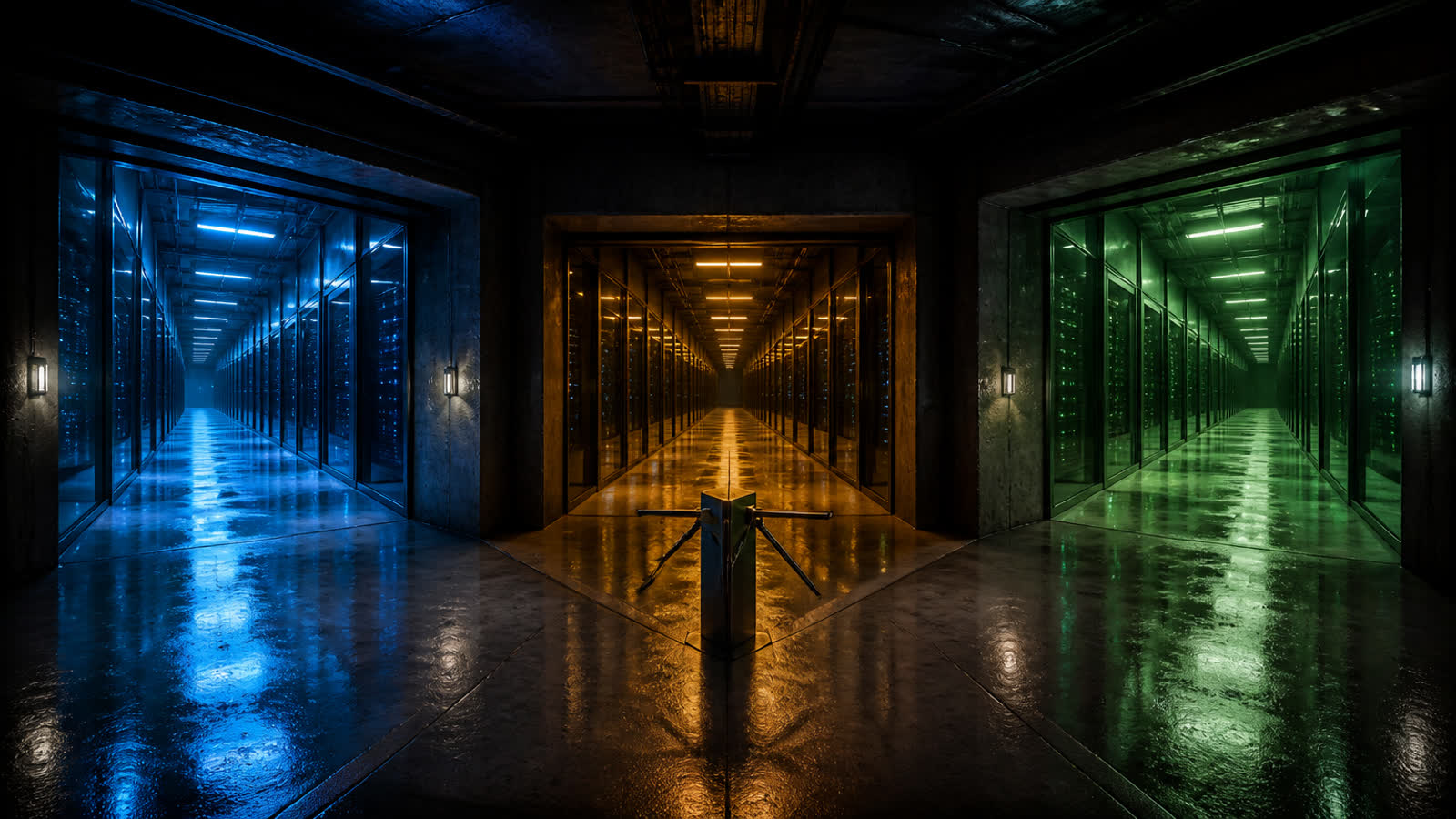
On November 23, 2026, Google rewrote its crawler documentation around three categories that behave differently — and regenerated the five IP-range files behind them the same afternoon. That matters because the check almost every team runs, "does this resolve to a Googlebot hostname," answers a question nobody asked. It proves a request is a Google client. It does not tell you which one arrived, and the category is precisely what decides whether robots.txt applied at all.
What follows is what changed, measured, and the verification order that survives the next documentation release.
What Google actually published
Google's crawling changelog dates the change to November 23. Six user agents were added to the special-case crawler list: Google-analytics-postbacks, Google-Calendar-Importer, GoogleDocs, Google-Edu, pageburst and PlayStore-Google. Six more joined the user-triggered fetchers: AppEngine-Google, Google-Apps-Script, Google-Cloud-Tasks, GoogleImageProxy, Google Web Preview and Chrome-Lighthouse. And APIs-Google moved from special-case crawlers to user-triggered fetchers, with a correction to its documented user agent string — a missing semicolon after APIs-Google was added.
Google's stated reason is the part to read twice: these clients are not new, and the list covers only "the requestors that are more likely to show up in log files and that we've received questions about." Search Engine Roundtable flagged it the same afternoon.
So nothing behaved differently on November 23. The map caught up to the territory. That is the uncomfortable part — every allowlist, WAF rule and log filter written before that date was written against an incomplete map, and none of them announced itself as wrong.
The files moved too. The ranges used to live under /search/apis/ipranges/, the path most third-party snippets still point at. Google's February 2026 changelog records the move to /crawling/ipranges/ and notes the old location "will continue to work for the time being." It does, by redirect: request googlebot.json today and you get a 302 to common-crawlers.json. All five objects carry a creationTime of 2026-11-23T15:46 UTC — regenerated with the docs, not whenever anyone last looked.
Three categories, three answers to robots.txt, five files
| Category | Reverse DNS mask | robots.txt | IP range file | Prefixes (v4 / v6) |
|---|---|---|---|---|
| Common crawlers | crawl-***.googlebot.com or geo-crawl-***.geo.googlebot.com | Always obeyed | common-crawlers.json | 170 / 147 |
| Special-case crawlers | rate-limited-proxy-***.google.com | May or may not | special-crawlers.json | 136 / 136 |
| User-triggered fetchers | ***.gae.googleusercontent.com or google-proxy-***.google.com | Ignored by design | user-triggered-fetchers.json, user-triggered-fetchers-google.json, user-triggered-agents.json | 548 / 548, 252 / 252, 12 / 8 |
Add those up and the total is 1,118 IPv4 and 1,091 IPv6 prefixes. Of the IPv4 total, 812 — about 73% — belong to clients that ignore robots.txt by design or obey it only sometimes.
That ratio breaks the model most teams work from. They assume a crawler arrives, they check robots.txt, the crawler obeys. In practice three-quarters of Google's published address space belongs to clients where the robots.txt answer is "not applicable" or "depends on the product agreement." You cannot read the answer off the file. You have to know which client is at the door first.
In audit work the pattern repeats: a robots.txt edited in 2021, a WAF rule from 2022 keyed to one hostname pattern, an AI-crawler blocklist added in 2026 by a plugin. Three layers, three assumptions, none reconciled with the vendor list they depend on.
The robots.txt token is an inheritance chain, not a rule
Google's tables list more than one token for several crawlers. Googlebot-Image is governed by either Googlebot-Image or Googlebot; so are Google-InspectionTool and Google-CloudVertexBot. GoogleOther-Image and GoogleOther-Video fall back to GoogleOther. The specification explains why: a crawler follows the group with the most specific user agent that matches it, and only one group is valid for that crawler.
Which makes a block a blast radius, not a line item:
| What you write | What else it governs | What breaks |
|---|---|---|
User-agent: Googlebot + Disallow: / | Google-InspectionTool, Google-CloudVertexBot | URL Inspection and the Rich Results test stop reflecting the live page — on the site you were trying to unblock |
User-agent: * + Disallow: / | Everything except clients that ignore the wildcard, including AdsBot-Google-Mobile | Ad-quality crawls continue while you believe the site is closed |
User-agent: Google-Extended + Disallow: / | Nothing at the request level | You registered a preference, not a block |
The first row is the one that burns people. You block Googlebot wholesale — a staging domain, a migration, a bad week — and the tool you need to confirm the unblock is the tool that stopped working. That is not a Google failure. It is the inheritance chain doing what the spec says.
Google-Extended is the one control with no client behind it
Google is explicit that Google-Extended has no separate user agent string in HTTP requests. Crawling is done by existing Google user agents; the token exists in a control capacity.
Two conclusions follow, and teams get both backwards.
First: adding Google-Extended to an "AI crawler blocklist" reduces zero requests in your logs. It changes what Google says it will do with content it already fetched. The token is not the lever — the fetcher is. The gap between what a crawler may fetch and what an answer engine may quote is the same distinction one layer up.
Second, and worse: blocking Googlebot to "stop AI" also stops Search, plus the inspection tools above. One list cannot serve two decisions that point in opposite directions, and most AI-crawler blocklists on the market are exactly that. The honest version is two lists with two owners — search access, which is a business decision about being findable, and use-and-training, which is a policy decision expressed declaratively. They overlap on almost no controls.
Google-Agent is the client you should be deciding on purpose
The smallest of the five files is user-triggered-agents.json: 12 IPv4 and 8 IPv6 prefixes. It backs Google-Agent, the user agent used by agents hosted on Google infrastructure to navigate the web and perform actions on a user's request. Google added guidance on allowing it to the changelog on November 17, and is experimenting with the Web Bot Auth protocol under the agent.bot.goog identity.
This is the client that changes the framing. A search crawler indexes you so a person can find you later. An agent visits you as the person, at their instruction, to do something. Blocking it is not a scraping decision; it is a decision about whether a customer's representative may transact with your site. And because the file is 12 prefixes, it is small enough to allow specifically — which almost no stack does, because almost no stack has heard of it.
If you run AI-search work, this is the traffic your reporting will later show as "direct" and never explain. We wrote about that attribution gap separately; it starts here, at the allowlist.
The order that works
1. Classify before you verify. Read the user agent and map it to common, special-case or user-triggered using the vendor's current table. A Googlebot/2.1 substring match classifies nothing.
2. Verify with the mask for that category. Forward-confirmed reverse DNS plus an IP match against the right file, not the union. A *.googlebot.com-only test rejects every legitimate special-case and user-triggered client. A *.google.com-only test accepts a special-case crawler as if it were Googlebot — the same error, opposite direction.
3. Load the file, not the union. The union is 1,118 IPv4 and 1,091 IPv6 prefixes. Many WAFs will not take that as one rule set, and where they do, you have granted access you never intended.
4. Re-check after every documentation release. Names changed, membership changed, and one user agent string changed by a semicolon. An allowlist is a snapshot of a vendor's docs, and vendor docs are not append-only. Code matching APIs-Google by exact value now fails silently, and a silent allowlist failure looks exactly like a bot attack.
5. Decide per category, in writing. Search access, ad-quality access, user-triggered fetches and agent access are four decisions. Most teams have made one, by accident, in a plugin. The rules themselves are a separate conversation — this one is about knowing who is at the door before you argue about the door.
The rule
Verify first, then classify, then decide. Any check that collapses three categories into "is it Google" is wrong about at least two of them, and the failure it produces looks like a ranking problem rather than a configuration one.
The cheap version of this is fifteen minutes of diffing Google's current tables against your rules. The expensive version is discovering it mid-incident, when the tool that would have explained the problem is the thing you blocked.
If your crawl rules have not been diffed against Google's documentation since November 23, they are describing a map that no longer exists. That audit is part of our SEO and GEO work, and it usually starts with the same handful of files. If you would rather talk it through, we can do that.
Frequently Asked Questions
How do I verify that a request really comes from Google?
Use forward-confirmed reverse DNS plus an IP check, and do it per category. Common crawlers resolve to crawl-***.googlebot.com or geo-crawl-***.geo.googlebot.com and come from the prefixes in common-crawlers.json. Special-case crawlers resolve to rate-limited-proxy-***.google.com and come from special-crawlers.json. User-triggered fetchers resolve to ***.gae.googleusercontent.com or google-proxy-***.google.com and come from three separate files. The user-agent header alone proves nothing; it is trivially spoofed.
Does blocking Googlebot in robots.txt also block Google-InspectionTool?
Yes. Google's crawler table lists Google-InspectionTool's robots.txt token as either Google-InspectionTool or Googlebot, and Google's specification says a crawler follows the most specific group whose user agent matches it. With no Google-InspectionTool group present, a block on Googlebot governs the inspection tool too, which degrades URL Inspection in Search Console and the Rich Results test on the pages you were trying to fix.
Does blocking Google-Extended stop Google from fetching my site?
No. Google states that Google-Extended has no separate user agent string in HTTP requests: crawling is done with existing Google user agents and the token is used in a control capacity only. Blocking it registers a preference about use; it does not stop a single request. If you want to stop requests, you block the crawler that makes them.