
The Real Numbers Behind Selling AI Automation to Small Businesses
What does an AI automation agency actually charge, and what do clients get? We break down pricing tiers, real costs, the retainer model that works, and what we've learned building automations for real businesses.
The Real Numbers Behind Selling AI Automation to Small Businesses
A Reddit post in r/automation earlier this year asked a simple question: "Anyone here actually make money doing AI automation for small businesses?" The thread hit 56 upvotes and 135 comments. The responses were a mix of real numbers, humble brags, and honest failures. What came through clearly: the demand is real, the pricing is all over the place, and most people starting out have no idea what to charge.
We build automation systems for clients across Latin America at Mintec. Some are simple WhatsApp flows for a dental clinic. Others are multi-step lead qualification pipelines for real estate agencies. After doing this work for years, I can tell you the same thing the Reddit thread confirms: the opportunity is real, but the playbook matters more than the tools.
Here's what the numbers actually look like.
What small businesses are actually paying
The market has settled into rough tiers based on complexity. These numbers come from agency pricing surveys, freelance platform data, and what we charge clients ourselves.
Tier 1: Simple chatbots and FAQ bots — $1,500-$3,500 to build, $150-$500/month maintenance. A chatbot trained on a client's help docs, embedded on their website or WhatsApp, handling maybe 60% of inbound questions. Setup takes a few days once you have the template. The retainer covers retraining, bug fixes, and content updates.
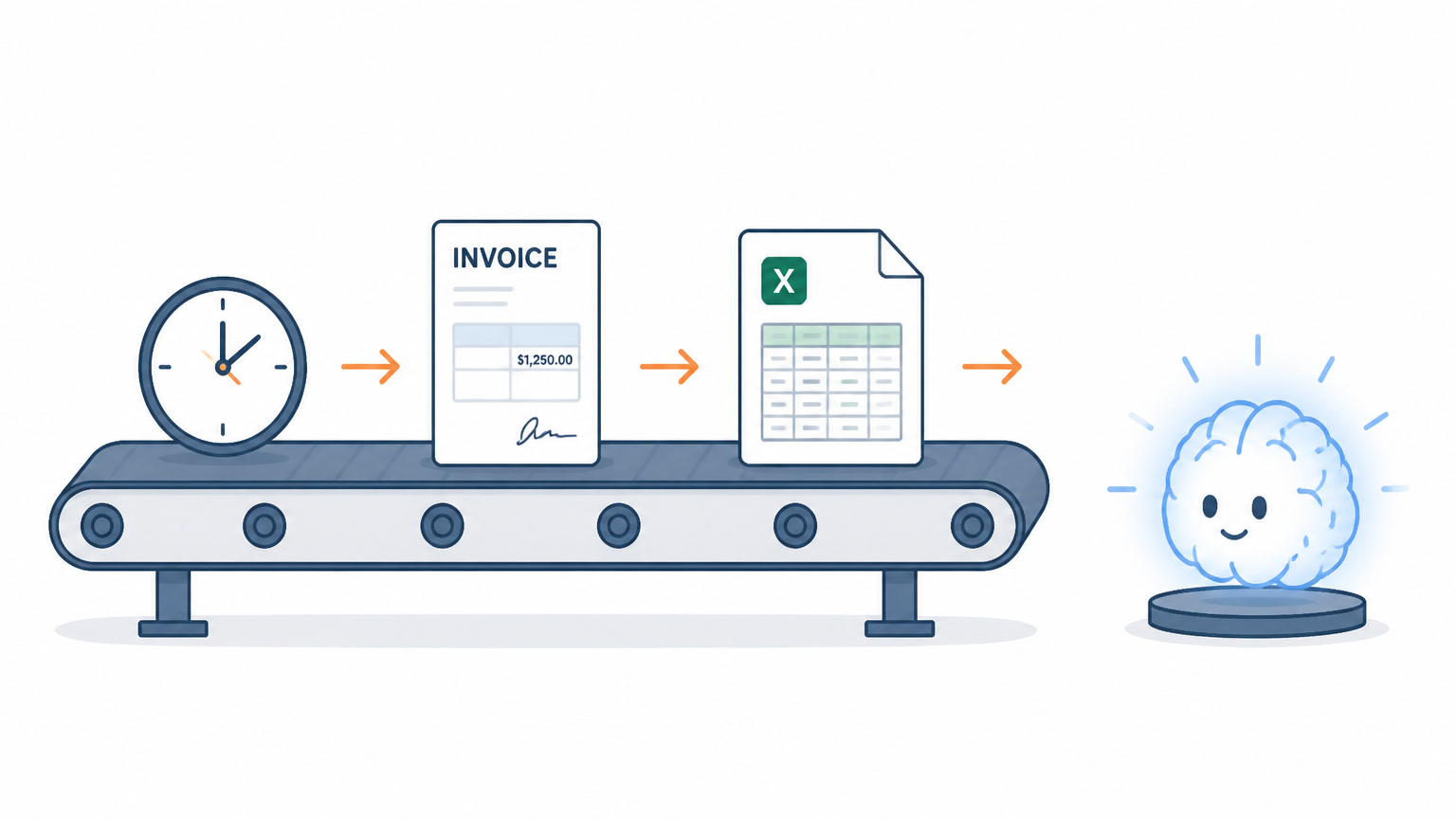
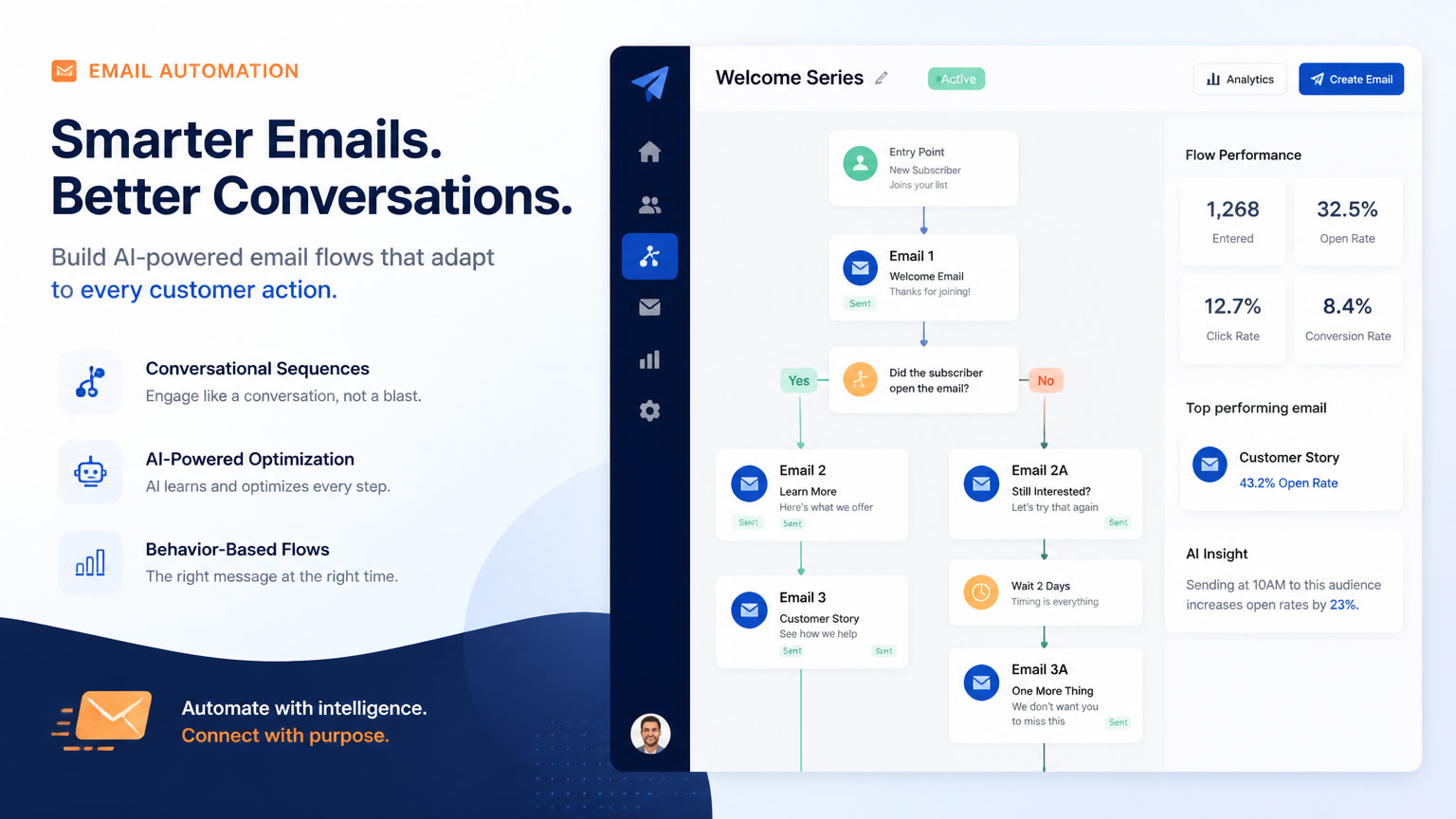
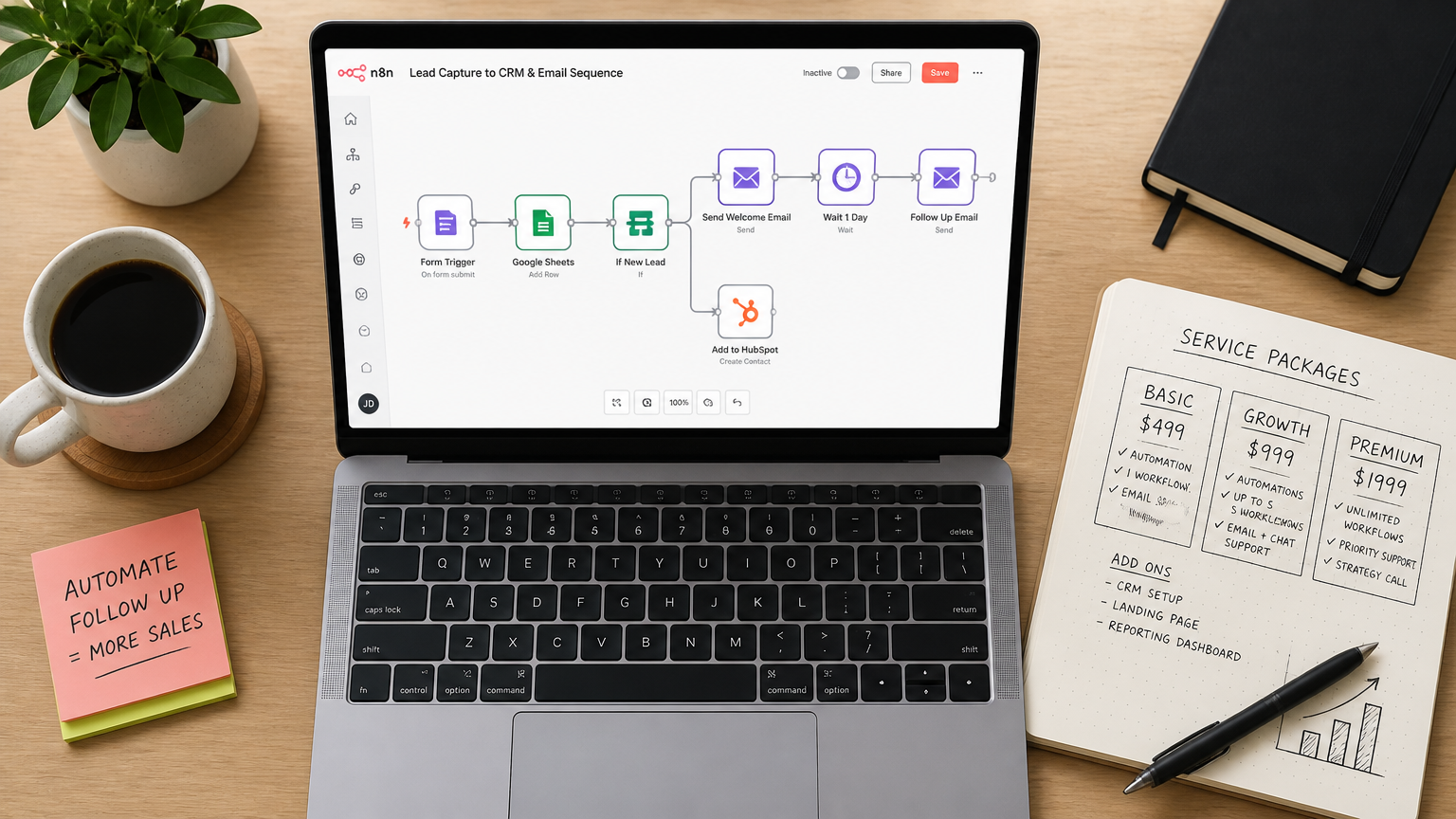
Tier 2: Workflow automation — $4,000-$12,000 to build, $400-$1,500/month. This is the sweet spot. You wire up n8n, Make, or Zapier to connect a client's CRM, inbox, calendar, and AI models. Lead scoring, automatic follow-up sequences, invoice processing, report generation. A solid workflow that saves 10-20 hours a week typically lands at $5,000-$8,000 on the build.
Tier 3: Custom AI agents and voice systems — $10,000-$30,000+ to build, $1,000-$5,000/month. Multi-agent systems using CrewAI or custom stacks. Voice agents on Vapi or Retell answering phones and booking appointments. At this tier, you stop quoting hours and sell outcomes. "I'll build a system that answers every inbound call, books the appointment, and texts the confirmation. $2,000/month, $6,000 setup."
Tier 4: Enterprise and white-label — $25,000-$150,000+. Once you have case studies and a team, you can sell to bigger companies. Most solo operators won't touch this tier in year one, but it's where the ceiling sits.
The pattern that actually works is build-plus-retainer. Always. The retainer is your salary. The build fee is your bonus.
The value-based pricing formula
The biggest mistake new automation freelancers make is pricing by the hour. If you charge $100/hour and a workflow takes you 5 hours to build, you made $500. But that same workflow might save the client $4,000/month. You left $3,500 on the table.
Here's the formula that works:
- Calculate hours saved per week
- Multiply by the client's fully loaded labor cost per hour
- Multiply by 4.3 (weeks per month)
- Charge roughly 35% of that monthly value as your retainer
- Charge roughly 3x the retainer as your build fee
Example: a small law firm spends 12 hours a week on intake calls and follow-up emails. A paralegal costs about $45/hour loaded. That's $540/week, or $2,322/month in wasted labor. Your retainer: around $810/month. Your build fee: around $2,400. Total year-one revenue from one client: roughly $12,100.
You can justify this math on a single call. The business owner already knows they're drowning in intake paperwork. They just didn't know someone could quantify it.
What your actual costs look like
This is where automation agencies have a structural advantage over most service businesses.
Automation platform: n8n self-hosted on a $10/month VPS handles unlimited client workflows. Make.com Core is $9/month for 10,000 operations. Zapier is $20-$100/month but rarely makes sense for agencies because the per-task pricing erodes margins.
LLM API costs: Claude Sonnet at roughly $3/$15 per million tokens input/output. GPT-5.2 around $1.75/$14. For most small business workflows, you're looking at $30-$80/month in API costs total across all clients.
CRM and data tools: Airtable free tier for small clients. GoHighLevel at $47-$97/month if you need a white-label CRM for the client.
Total overhead for 5-10 clients: $150-$300/month. Compare that with $8,000-$15,000/month in revenue. The margins are 90%+ on retainer work once the templates exist.
The first few builds are expensive in time, not money. Once you've built the same lead qualification workflow for three dentists, the fourth one is a configure-and-deploy job. That's where the margin really opens up.
What we've learned building automations for clients
At Mintec, we've built everything from simple WhatsApp follow-up flows to multi-channel lead pipelines. Here's what the work actually looks like:
The first conversation is everything. We sit with the client's team and watch them work. Not interview them. Watch them. The automation opportunity is always in the gap between what they think their workflow is and what they actually do. One client told us their lead response time was "pretty fast." We measured it: 47 hours average. That number became the pitch.
Scope creep kills margins. The single biggest risk in automation projects is "while you're in there, could you also..." We learned to lock scope hard on the first build. One workflow, one clear trigger, one measurable outcome. Additional workflows go in the retainer or the next project.
Documentation is a retention tool. When a client can see exactly what the automation does — trigger, steps, outputs, error handling — they trust it more and they renew. A monthly impact report showing "this workflow ran 347 times and saved approximately 86 hours this month" is the retention engine.
The retainer is not optional. Automations break. APIs change. Prompts need tuning as the client's data shifts. New products require new flows. If you don't have a retainer, you're doing free support work or watching the system degrade. Every retainer includes three things: tune the existing skill, ship one new workflow each month, and send the impact report.
The realistic timeline to $10K/month
From the data we've gathered from operators and our own experience:
Months 1-3: Build one or two demo automations for specific niches. Land your first 2-3 paying clients at lower rates ($500-$1,500 setup, $150-$300/month). You're buying case studies and proof. Revenue: $1,000-$4,000/month.
Months 4-6: Raise prices by 50-100%. Convert initial clients to standard retainers. Use case studies to pitch higher-value prospects. Target: 3-5 retainer clients plus one new build per month. Revenue: $4,000-$10,000/month.
Months 7-12: Standardize your service packages. Build a template library that handles 80% of delivery automatically. Add one or two new clients per month through referrals and repeat business. Revenue: $8,000-$15,000/month.
The operators who break through $15K/month typically have two things: a specific niche (real estate, dental, e-commerce) and a repeatable template for that niche's core workflow. When your fifth real estate agency client needs the same lead qualification system as your first, you're not building from scratch. You're adapting a template. That's where margin lives.
The mistakes that cost people money
From the same Reddit thread and our own experience:
Charging for the demo. The first 30-minute scoping call should be free. After that, a paid audit ($500-$1,500) separates serious clients from tire-kickers. Agencies using a "$5,000 AI Readiness Audit" as a gateway close bigger deals because the client is already invested.
Promising the wrong thing. AI automation is not magic. It won't fix broken processes, and it won't work on bad data. One operator told us they spent 8 hours building a Zapier integration for a client whose email platform Zapier didn't even support. Always audit the client's existing tools first.
Not capping usage. Without a cap, a client's voice agent taking 5,000 calls instead of 500 can wipe out three months of profit. Every agreement should state the included monthly volume and the per-unit overage rate.
Trying to sell "AI" instead of selling time saved. Nobody cares about GPT-4 or Claude or n8n. They care about the 10 hours a week they get back. Sell the outcome, not the technology.
Where the real leverage is
The most interesting thing happening in this space right now is what Foundation Capital calls "services as software." You start by building custom automation for individual clients. After six months, if three clients in the same industry want the same skill stack, you package it as a product and sell it as a vertical solution.
That's how solo operators become product companies. The service work funds the R&D. The templates become the product. The retainer revenue funds the transition.
For anyone thinking about getting into this: the technology is ready. The demand is there. The bottleneck is customer discovery, not coding. Go talk to 10 business owners. Ask them what task their staff does that's repetitive and time-consuming. The answer to that question is your first automation project.
Frequently Asked Questions
How much does it cost to build an AI automation for a small business?
A single workflow automation (lead follow-up, invoice reminders, support triage) typically costs $1,500-$8,000 to build, depending on complexity. Simple chatbots start around $1,500. Custom multi-agent systems for mid-size operations can run $15,000-$30,000+. Most agencies pair a one-time build fee with a monthly retainer.
Is it realistic to make $10K per month selling AI automation?
Yes, but not in month one. Solo operators typically reach $8,000-$15,000/month within 6-12 months by landing 3-5 retainer clients plus one or two build projects per month. The math: 5 clients at $1,500-$2,000/month in retainers plus $3,000-$8,000 per new build.
What tools do you need to start an AI automation agency?
The core stack costs under $100/month: an automation platform (n8n self-hosted, Make, or Zapier), an LLM API (OpenAI or Anthropic), and a CRM or database. n8n self-hosted on a $10 VPS is the most cost-effective option for agencies because you control unlimited workflows at near-zero marginal cost.