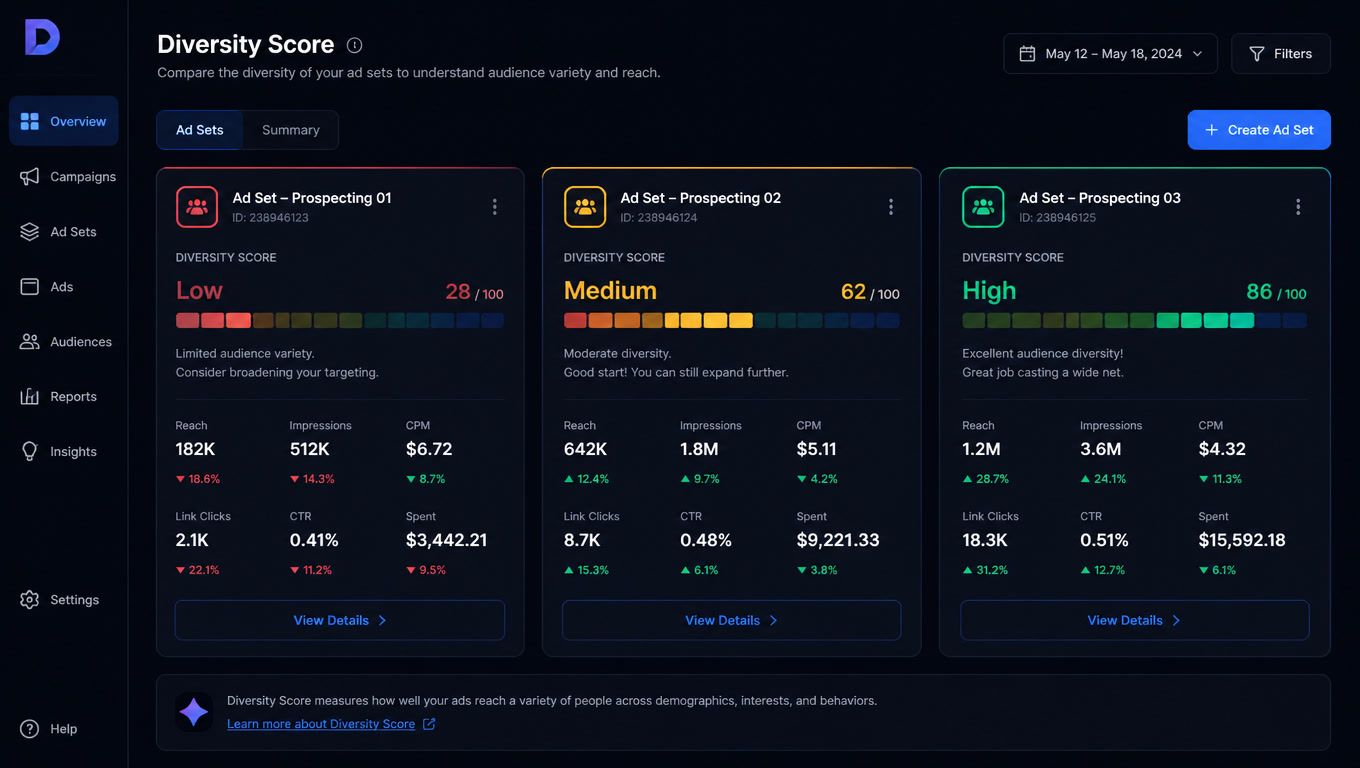
El Creative Diversity Score de Meta ya calificó tu conjunto de anuncios: por qué una puntuación baja significa menos alcance en Q4
La nueva métrica Creative Diversity de Meta ya está activa en el Administrador de Anuncios y limita directamente a cuántos segmentos de audiencia pueden llegar tus anuncios. Este es el marco para corregir las puntuaciones bajas antes de Q4.
El Creative Diversity Score de Meta ya calificó tu conjunto de anuncios: por qué una puntuación baja significa menos alcance en Q4
El 26 de agosto, Meta añadió sin mucho ruido una nueva columna al Administrador de Anuncios. Se llama Creative Diversity y califica cada conjunto de anuncios activo como Bajo, Medio o Alto según la variedad visual y temática de tus anuncios.
Si todavía no la has visto, ve a revisarla. Personalizar columnas a nivel de conjunto de anuncios, busca "Creative Diversity". Ahí está.
Gestionamos campañas de Meta en decenas de cuentas de clientes. Cuando la vimos por primera vez, supusimos que era otra métrica cosmética: algo que Meta usaría más adelante pero que no afectaba la entrega hoy.
Nos equivocamos.
Qué mide realmente la puntuación
Creative Diversity evalúa si las imágenes y videos dentro de un mismo conjunto de anuncios se ven realmente distintos entre sí, o si son diez variaciones de la misma foto de producto con otro titular.
Meta agrupa los anuncios que comparten el mismo estilo visual, fotograma de apertura, vocero, encuadre de producto o tema de mensaje en una sola entidad creativa. Es decir, 10 fotos de producto con pequeños cambios de color no cuentan como 10 opciones creativas. Cuentan como una.
No es la métrica la que hace el trabajo pesado. La métrica es una señal visible de algo que ya funciona por debajo: el Generative Recommender de Meta (Andromeda + Lattice) usa esta misma lógica para decidir qué anuncios se muestran a qué audiencias.
Cuando tu conjunto de anuncios puntúa Bajo, la IA de Meta trata tu grupo de creatividades como una sola entidad. Tiene menos segmentos de audiencia con los que emparejarte. El algoritmo tiene menos material con el que trabajar, así que muestra el mismo anuncio a las mismas personas una y otra vez, y tu alcance se estanca.
Por qué esto lo cambia todo para Q4
Meta eliminó las exclusiones de segmentación detallada. Está eliminando los controles de ubicación a nivel de conjunto de anuncios. Consolidó las estructuras de conjuntos de anuncios en Advantage+. Cada uno de esos cambios redujo las palancas manuales que controlan los anunciantes.
La diversidad creativa es ahora la principal palanca que te queda para influir en cómo Meta distribuye tus anuncios entre segmentos de audiencia.
En campañas estándar, eso es significativo. En las campañas Advantage+ Shopping (ASC), lo es todo. Las ASC dependen por completo de la IA de Meta para optimizar audiencias: no tienes controles manuales de audiencia. Tu grupo de creatividades es lo único que controlas.
Una puntuación de diversidad baja en una ASC limita directamente a qué segmentos de audiencia intenta llegar Meta. Ningún presupuesto ni estrategia de puja compensa un grupo de creatividades que el algoritmo agrupa en una sola entidad.
El momento importa. Los CPM se disparan en Q4. Las marcas que lleguen a noviembre con conjuntos de anuncios calificados como Bajo enfrentarán una doble penalización: la IA de Meta tiene menos segmentos que emparejar, y compiten en el entorno publicitario más caro del año.
La regla de Andromeda: 100 variaciones menores ≠ 10 creatividades realmente distintas
Esta es la parte que la mayoría de los anunciantes pasa por alto. El Generative Recommender no cuenta tus anuncios. Los agrupa según su huella visual.
Los anuncios con un Similarity Score superior al 60% dentro de un conjunto reciben supresión en la recuperación. El algoritmo agrupa las creatividades casi idénticas y limita su entrega en silencio. Sigues pagando por impresiones, pero el algoritmo deja de probar activamente tu creatividad en nuevos segmentos.
Lo que cuenta como "realmente distinto" no es lo que la mayoría de los equipos cree:
- Formato distinto: video vs. estático vs. carrusel. Es la señal de diversidad más fuerte.
- Identidad visual distinta: otra persona, otro escenario, otro contexto de producto. No el mismo modelo con otro fondo.
- Ángulo de mensaje distinto: centrado en el problema vs. prueba social vs. ancla de precio vs. comparación. Cambiar el titular sobre la misma imagen no cuenta.
- Gancho de apertura distinto: los primeros 3 segundos de tu video tienen su propia huella. Mismo fotograma de apertura = mismo grupo, aunque el resto sea diferente.
Lo probamos en tres cuentas en agosto. En todos los casos, 8 creatividades realmente distintas superaron a 20 variaciones menores en alcance y en costo por resultado único.
Cómo auditar tu situación actual (revisión de 5 minutos)
- Abre el Administrador de Anuncios → vista de conjuntos de anuncios → Personalizar columnas → agrega "Creative Diversity"
- Ordena por gasto. Empieza por los conjuntos con mayor gasto.
- Cualquier conjunto calificado como Bajo que gaste más de $50 al día es una prioridad para Q4.
- Cuenta las creatividades realmente distintas en cada conjunto Bajo. No el total, sino las familias creativas distintas.
- Si ves menos de 3 o 4 familias distintas, el algoritmo está agrupando tus anuncios y tu alcance tiene un techo.
El marco de 4 familias para Q4
Si llegas a Q4 con campañas Advantage+, construye un mínimo de 4 familias creativas distintas antes del 1 de octubre. Cada familia debe diferir en al menos dos de estas dimensiones:
| Dimensión | Qué significa realmente "distinto" |
|---|---|
| Formato | Video vs. imagen estática vs. carrusel vs. colección |
| Identidad visual | Estilo UGC vs. producción de estudio vs. testimonio de cliente vs. producto en contexto |
| Mensaje principal | Precio/valor vs. prueba social vs. urgencia/temporada vs. característica del producto |
| Gancho de apertura | Pregunta vs. dato sorprendente vs. historia visual vs. afirmación directa |
Cuatro familias que cumplan al menos dos dimensiones cada una superarán a 20 variaciones que Meta trata como la misma entidad.
Para cada familia creativa, prepara tres tamaños: cuadrado 1:1 (1080×1080), vertical 4:5 (mínimo 1440×1800 según la especificación de Meta) y vertical 9:16 (1080×1920). La herramienta de recorte del nuevo flujo de anuncios multimedia solo ofrece una proporción por categoría: no genera 4:5. Sube un 4:5 nativo para el feed. No dejes que la herramienta de recorte te lo quite.
Qué viene después
La puntuación está marcada como "estimada y en desarrollo", lo que significa que Meta está recopilando datos y ajustará la metodología. Pero el sistema de fondo (Andromeda, Lattice, Generative Recommender) ya está activo. La puntuación es una ventana visible a un mecanismo de entrega que lleva meses funcionando.
Nuestra lectura: Meta terminará convirtiendo Creative Diversity en una señal más dura, no más blanda. La tendencia desde octubre de 2025 ha sido eliminar palancas manuales y reemplazarlas con optimización basada en IA que premia la diversidad creativa. La puntuación es Meta haciéndolo explícito en la interfaz.
Empieza ya a registrar tu Creative Diversity score junto a tu CPA. Revisa si los conjuntos Medio/Alto realmente rinden distinto a los Bajo en tu cuenta. Esos datos importarán cuando prepares tus briefs creativos para Q4.
Gestionamos campañas de Meta para e-commerce, SaaS y empresas de servicios. Si tus conjuntos de anuncios puntúan Bajo y Q4 está a pocas semanas, hablemos de una auditoría creativa: mapearemos tus familias creativas actuales y construiremos una hoja de ruta de diversidad antes de octubre.
Preguntas Frecuentes
¿Qué es el Creative Diversity score de Meta?
Creative Diversity es una nueva métrica del Administrador de Anuncios que califica cada conjunto de anuncios como Bajo, Medio o Alto según la variedad visual y temática de tus anuncios. Se lanzó el 26 de agosto de 2026 y está marcada como 'estimada y en desarrollo'.
¿Por qué una puntuación baja de Creative Diversity perjudica el rendimiento?
El Generative Recommender de Meta (Andromeda + Lattice) agrupa los anuncios visualmente similares en una sola entidad creativa. Una puntuación baja significa que la IA de Meta tiene menos segmentos de audiencia con los que emparejar tu creatividad, lo que limita directamente el alcance y la adquisición de nuevos clientes, sobre todo en las campañas Advantage+ Shopping, donde no tienes controles manuales de audiencia.
¿Cómo reviso mi Creative Diversity score?
Abre el Administrador de Anuncios, selecciona la vista de conjuntos de anuncios, haz clic en Personalizar columnas y busca Creative Diversity. Muestra Bajo, Medio o Alto para cada conjunto activo. Si la columna aún no aparece, borra la caché del navegador y recarga.