
The Content Production Pipeline: From Idea to Distribution
Build a content production pipeline that turns one idea into multiple assets. From AI-assisted writing to automated distribution — the system that keeps your brand publishing consistently without burning out your team.
Most content teams operate in chaos: last-minute scrambles, inconsistent quality, no clear process from ideation to publication.
Scalable content production isn't about working harder. It's about building systems.
At Mintec, we've helped brands go from publishing 2-3 pieces per month to 20-30 pieces per month—with higher quality and less stress.
Here's how to build a content production pipeline that actually works.
The Content Production Crisis
Most content operations suffer from the same problems:
The Feast-or-Famine Cycle
- Week 1: Brainstorm ideas
- Week 2: Scramble to write
- Week 3: Rush to edit and publish
- Week 4: Realize you have nothing for next month
Result: Inconsistent output, burned-out team, missed opportunities.
The Quality vs. Quantity Dilemma
- Produce more content → Quality suffers
- Focus on quality → Can't keep up with demand
- Hire more writers → Costs explode, voice becomes inconsistent
The False Choice: You shouldn't have to choose between quality and quantity.
The Distribution Black Hole
You publish a great piece and then... nothing. No promotion plan, no repurposing strategy, no measurement of impact.
The Waste: 80% of content effort goes into creation, 20% into distribution. It should be the opposite.
The Five Stages of Scalable Content Production
Stage 1: Strategic Planning
Monthly Content Planning Session (2-3 hours):
- Review business goals and marketing objectives
- Analyze performance of previous content
- Identify content gaps and opportunities
- Map content to customer journey stages
- Create content calendar for next 30-60 days
Output:
- Content calendar with topics, formats, and deadlines
- Clear alignment between content and business goals
- Resource allocation plan
AI Assistance:
- Topic ideation based on search trends and competitor analysis
- Keyword research and SEO opportunity identification
- Content gap analysis
Stage 2: Research & Ideation
For Each Content Piece:
- Conduct keyword research
- Analyze top-performing competitor content
- Gather data, statistics, and expert quotes
- Create detailed content brief
Content Brief Template:
- Target Audience: Who is this for?
- Primary Goal: What should readers do after reading?
- Key Message: What's the one thing they should remember?
- SEO Keywords: Primary and secondary keywords
- Structure: Outline with H2/H3 headings
- Research Links: Sources and references
- Success Metrics: How we'll measure performance
AI Assistance:
- Automated research aggregation
- Competitor content analysis
- Outline generation based on top-ranking content
- Data and statistic sourcing
Stage 3: Content Creation
The Production Process:
Week 1: Batch Writing
- Writers work from detailed briefs
- Focus on getting ideas down, not perfection
- Use templates for consistent structure
- AI assists with first drafts and research
Week 2: Editing & Optimization
- Structural edit for flow and clarity
- SEO optimization (keywords, meta descriptions, internal links)
- Fact-checking and source verification
- Brand voice consistency check
Week 3: Design & Formatting
- Create custom graphics and visuals
- Format for web (headings, bullet points, white space)
- Add CTAs and conversion elements
- Optimize images for performance
Week 4: Review & Approval
- Final quality check
- Legal/compliance review (if needed)
- Stakeholder approval
- Schedule for publication
AI Assistance:
- First draft generation from briefs
- Grammar and style checking
- SEO optimization recommendations
- Image generation for custom graphics
Stage 4: Distribution & Amplification
Multi-Channel Distribution Strategy:
Day 1: Publish & Promote
- Publish on website
- Email to subscriber list
- Share on all social channels
- Post in relevant communities
Week 1: Organic Amplification
- Engage with comments and shares
- Reach out to mentioned sources
- Submit to content aggregators
- Share in Slack communities and forums
Week 2-4: Paid Promotion
- Boost top-performing social posts
- Run targeted ads to key segments
- Sponsor relevant newsletters
- Promote in industry publications
Ongoing: Repurposing
- Turn blog post into LinkedIn carousel
- Extract quotes for social media
- Create short video/audio clips
- Compile into monthly newsletter
AI Assistance:
- Auto-generate social media posts from long-form content
- Create multiple versions for A/B testing
- Optimize posting times based on engagement data
- Generate email subject lines and preview text
Stage 5: Measurement & Optimization
Track These Metrics:
Engagement Metrics:
- Page views and unique visitors
- Time on page and scroll depth
- Social shares and comments
- Email open and click rates
SEO Metrics:
- Keyword rankings
- Organic traffic growth
- Backlinks earned
- Domain authority impact
Business Metrics:
- Leads generated
- Conversions attributed
- Pipeline influenced
- Revenue impact
Content Performance Review (Monthly):
- Identify top performers (and why they worked)
- Analyze underperformers (and what to improve)
- Update content calendar based on insights
- Refine content strategy
AI Assistance:
- Automated performance dashboards
- Predictive content performance scoring
- Topic and format recommendations
- Optimization suggestions for existing content
Real-World Implementation: 3x Content Output in 90 Days
A B2B SaaS company was struggling with content production:
The Challenge:
- Publishing 4 blog posts per month
- No consistent process
- Quality varied wildly
- No clear ROI from content
Our Approach:
Month 1: Build the System
- Created content calendar template
- Developed content brief template
- Established editorial workflow
- Set up content management tools
Month 2: Implement AI Assistance
- Integrated AI for research and first drafts
- Set up automated SEO optimization
- Built social media repurposing workflow
- Created performance tracking dashboard
Month 3: Scale Production
- Increased to 12 posts per month
- Launched content repurposing program
- Implemented paid promotion strategy
- Trained team on new processes
Results After 90 Days:
- Publishing 12-15 pieces per month (3x increase)
- Average time-on-page increased 45%
- Organic traffic up 78%
- Content-attributed leads increased 210%
- Team stress decreased (better processes)
The Content Technology Stack
Planning & Collaboration
- Notion or Airtable: Content calendar and project management
- Google Docs: Collaborative writing and editing
- Slack: Team communication and approvals
Content Creation
- AI Writing Assistants: Claude, ChatGPT, or Jasper for drafts and research
- Grammarly: Grammar and style checking
- Hemingway: Readability optimization
- Canva or Figma: Graphics and visual design
SEO & Optimization
- Surfer SEO or Clearscope: Content optimization
- Ahrefs or SEMrush: Keyword research and competitor analysis
- Yoast or Rank Math: On-page SEO
Distribution & Promotion
- Buffer or Hootsuite: Social media scheduling
- Mailchimp or ConvertKit: Email marketing
- Zapier or Make: Automation workflows
Analytics & Measurement
- Google Analytics 4: Website analytics
- Google Search Console: SEO performance
- Custom Dashboards: Looker or Tableau for content ROI
Content Templates That Scale
Blog Post Template
- Hook: Compelling opening that addresses reader's pain point
- Problem: Define the challenge in detail
- Solution: Introduce your approach
- How-To: Step-by-step implementation
- Case Study: Real-world example
- Common Mistakes: What to avoid
- CTA: Clear next step
Social Media Repurposing Template
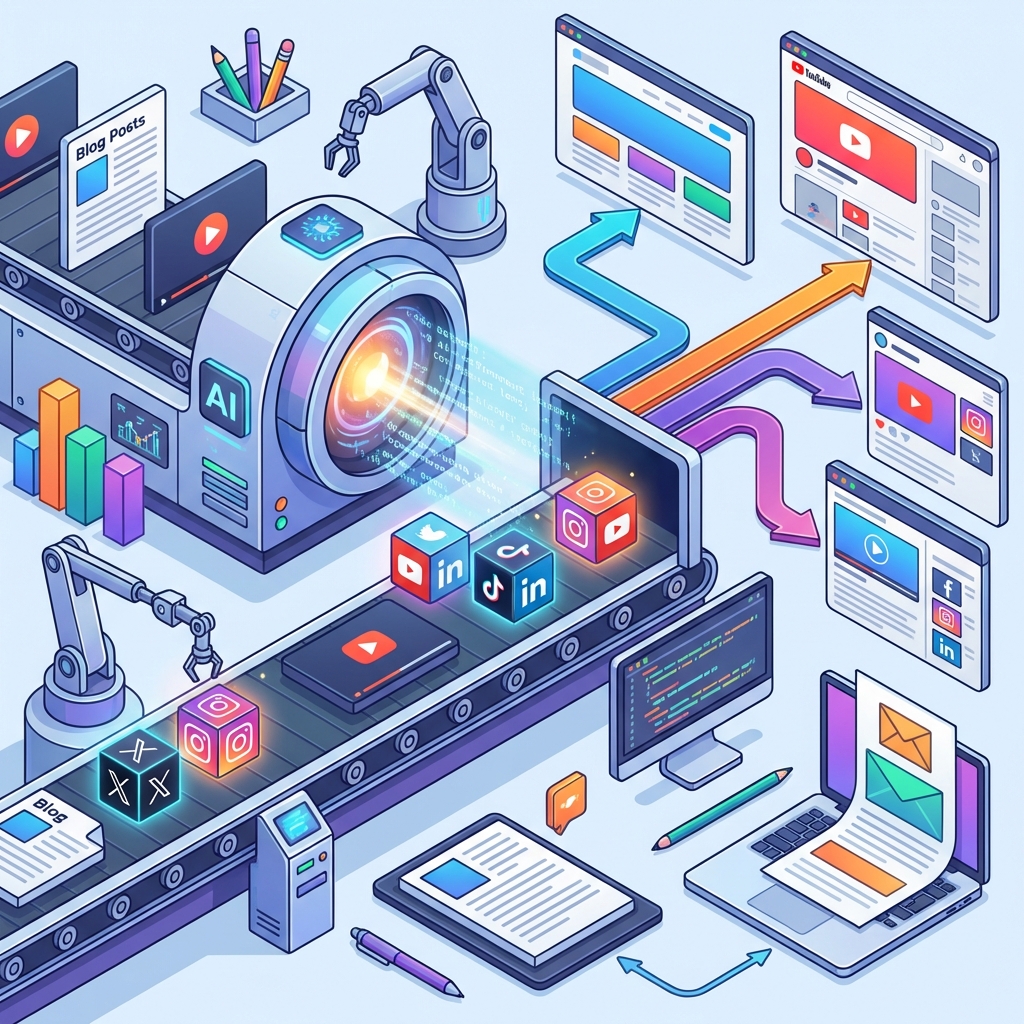
From one blog post, create:
- 5-7 LinkedIn posts (key insights)
- 10-15 Twitter/X threads (bite-sized tips)
- 3-5 Instagram carousels (visual summaries)
- 1 YouTube video (video version)
- 1 podcast episode (audio discussion)
Email Newsletter Template
- Subject Line: Curiosity-driven, benefit-focused
- Preview Text: Expand on subject line
- Opening: Personal, conversational
- Value: 3-5 key insights or resources
- CTA: Single, clear action
- P.S.: Additional value or urgency
Common Content Production Mistakes
Mistake #1: No Clear Strategy
Wrong: Create content about whatever seems interesting Right: Align every piece with business goals and customer journey
Mistake #2: Perfectionism Paralysis
Wrong: Spend weeks perfecting one piece Right: Ship good-enough content consistently, improve iteratively
Mistake #3: Ignoring Distribution
Wrong: Publish and hope people find it Right: Spend 80% of effort on distribution and promotion
Mistake #4: Not Repurposing
Wrong: Create once, use once Right: One piece of content → 10+ distribution formats
Mistake #5: No Performance Tracking
Wrong: Measure vanity metrics (views, likes) Right: Track business impact (leads, revenue, pipeline)
Getting Started: The 30-Day Content System Build
Week 1: Foundation
- Audit current content and performance
- Define content goals and success metrics
- Create content calendar template
- Set up collaboration tools
Week 2: Process
- Develop content brief template
- Map editorial workflow
- Assign roles and responsibilities
- Create style guide and brand voice document
Week 3: Production
- Plan first month of content
- Create detailed briefs for first 4 pieces
- Set up AI assistance tools
- Begin batch production
Week 4: Distribution
- Build social media templates
- Set up email sequences
- Create repurposing workflow
- Launch first pieces with full distribution
Related articles
- Content Repurposing: How to Turn One Article into 20 Assets Without Burning Out
- AI Podcasts and Synthetic Audio: The Content Frontier Nobody's Talking About Enough
- The Content Flywheel: Short-Form Video Automation
The Future of Content Production
AI isn't replacing content creators—it's elevating them:
From: Manual research → To: AI-assisted research aggregation From: Blank page syndrome → To: AI-generated first drafts From: One-off content → To: Systematic repurposing From: Gut-feel topics → To: Data-driven content strategy From: Siloed production → To: Integrated workflows
The brands winning with content aren't the ones with the biggest budgets. They're the ones with the best systems.
Schedule a Content Strategy Session to build your scalable content production pipeline.